


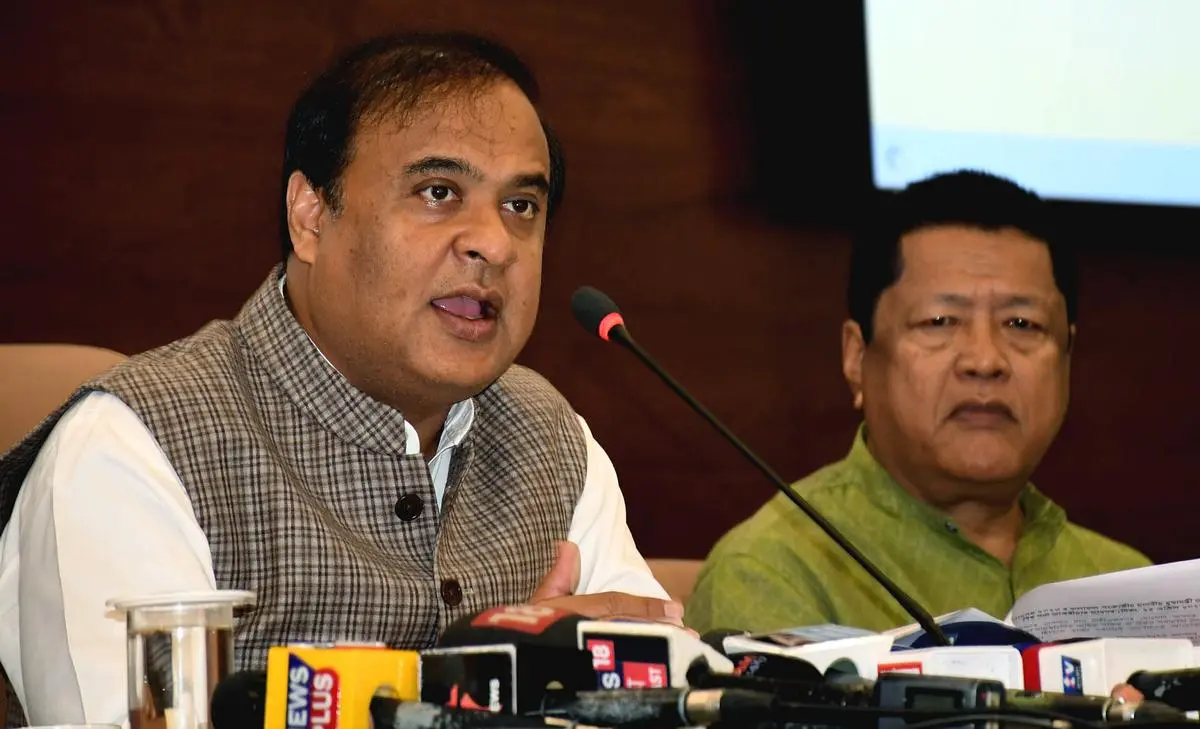
Assam Chief Minister Himanta Biswa Sarma has declared that the names of evicted people will be struck off the state’s voter list. The announcement came during his comments on ongoing eviction drives across Assam, sparking both support and criticism. By linking eviction to voter identity, the Chief Minister added a fresh political and legal dimension to the contentious issue.
The move has triggered debate over whether eviction should directly impact citizenship rights and voting eligibility. Sarma insisted that people living on government or encroached land cannot expect voting privileges. He further claimed that such actions are part of his government’s resolve to safeguard Assam’s resources and protect indigenous communities.
Read More: Mizoram Assam status quo after border tensions
Evicted voter list Assam: Himanta’s strong stand
Speaking at a public event, the Chief Minister explained that those evicted from government land or forest reserves will not only lose their homes but also their voting rights. According to him, voter rolls should include only lawful residents, not those squatting illegally.
Sarma pointed out that eviction is not only a matter of land management but also of demographic balance. He alleged that certain groups encroach on land to create vote banks and influence electoral outcomes. By striking such names off the voter list, he argued, the government is preventing manipulation of Assam’s democratic process.
The Chief Minister’s remarks highlight a growing emphasis on linking land ownership with voter identity. While eviction has long been a sensitive issue in Assam, this is the first time it has been tied so explicitly to voting rights.
Assam eviction drive and its impact
Assam has seen several large-scale eviction drives in recent years. Government agencies have cleared vast tracts of forest, agricultural, and government-owned land, citing illegal occupation. These operations, often involving police and paramilitary forces, have displaced thousands of families.
Supporters of the eviction drives argue that such steps are necessary to reclaim land for development, conservation, and indigenous rights. Critics, however, claim that the exercises often target marginalized communities, leaving them homeless and vulnerable. With the new link to voter eligibility, the stakes for those facing eviction have increased dramatically.
Residents fear that losing land will now automatically mean losing their democratic voice. Civil society groups have warned that the decision could push many into statelessness or prolonged legal battles.
Evicted voter list Assam and political implications
The announcement has significant political implications. Assam’s voter rolls have historically been a sensitive subject, especially with concerns over illegal migration from Bangladesh. The National Register of Citizens (NRC) process, completed in 2019, was intended to filter out illegal migrants, but it left more than 19 lakh people excluded.
By tying eviction to the voter list, the Chief Minister is effectively reinforcing his government’s stance on protecting indigenous rights. Political analysts suggest that this may consolidate support among Assamese communities that have long expressed concern about demographic shifts. However, it could also deepen divisions between communities, especially those accused of being encroachers.
Opposition parties have criticized the move as unconstitutional and discriminatory. They argue that voting rights should not depend on land ownership but on citizenship status. Striking names off the rolls based on eviction, they say, risks disenfranchising legitimate citizens.
Legal questions and challenges ahead
The decision raises key legal questions. Under Indian law, the right to vote is linked to citizenship and residency, not to property ownership. Critics argue that eviction alone cannot determine whether someone deserves to remain on the voter list. Lawyers have suggested that such a move could face court challenges if implemented.
Human rights groups have also raised alarms. They claim that linking eviction to voter rights violates constitutional protections. The fear is that marginalized groups, including minorities and the poor, will be disproportionately affected.
Nevertheless, the Chief Minister has maintained his firm position. He stated that the government will not allow illegal encroachment to destabilize the state’s social and cultural balance.
Broader context of eviction in Assam
The issue ties into Assam’s broader history of demographic anxieties. The state has witnessed decades of agitation over illegal migration and its effects on land, resources, and identity. Eviction drives are often presented as part of a strategy to safeguard Assam’s future.
By adding the voter list dimension, Sarma is signaling that his government intends to tighten control over both land and political participation. The move underscores the deep connection between land ownership and identity in the state.
Observers note that the decision could reshape Assam’s political landscape in the coming years. It may deter encroachments but also provoke strong resistance from affected groups. How the government manages this balance will be crucial in maintaining peace and stability.
The statement by Himanta Biswa Sarma has transformed the eviction debate into one with major political and democratic consequences. By declaring that the names of evicted people will be struck off the voter list, he has elevated the issue beyond land rights to voter identity.
Supporters view this as a bold step to protect indigenous communities and secure Assam’s future. Critics see it as an attack on the constitutional right to vote and a move that risks disenfranchising vulnerable groups.
As the debate intensifies, Assam finds itself at the crossroads of law, politics, and identity. The idea of linking eviction to voter eligibility will likely dominate state politics, shaping both governance and social relations in the years ahead.
Read More: Tripura Power Minister Launches Rs 126 Crore Transmission Project