


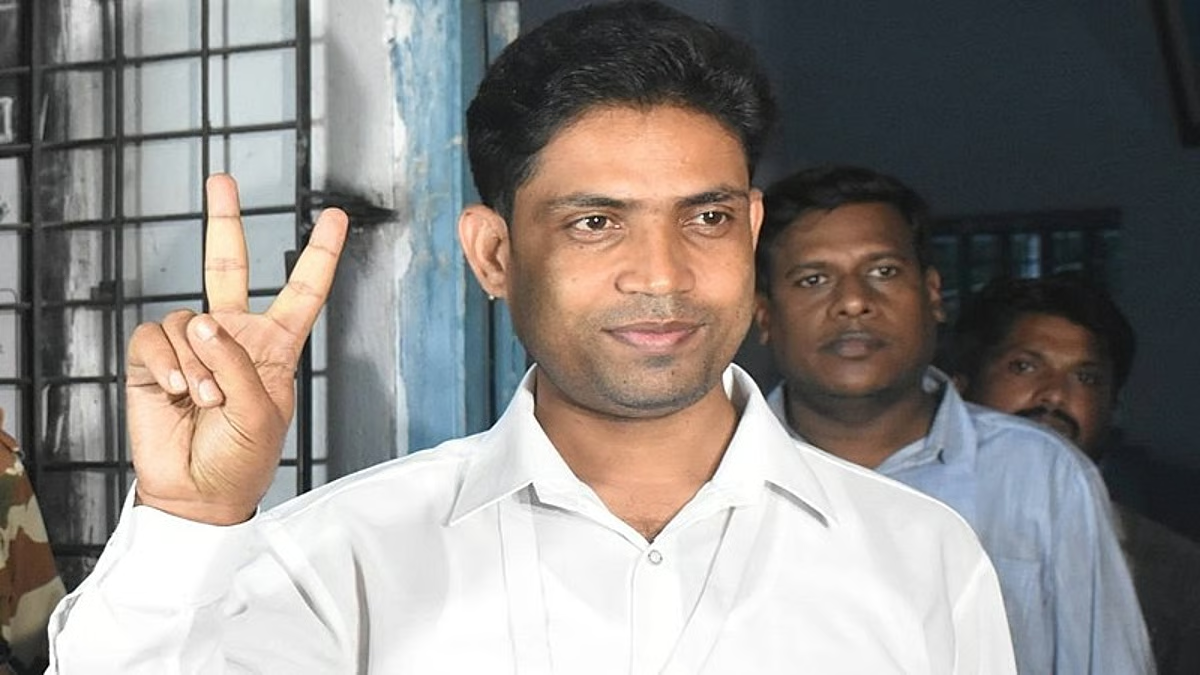
Falta Fray Shakeup emerged as one of the biggest political developments in West Bengal after Trinamool Congress candidate Jahangir Khan unexpectedly withdrew from the high-profile assembly repoll contest just days before voting. The surprise decision transformed the political atmosphere in the constituency and immediately triggered debate over strategy, pressure, and the future direction of the electoral battle. The withdrawal came as parties intensified campaigning and voters prepared for a closely watched repoll process.
India Myanmar Trade Route Restarts Cargo Movement
Manipur Solar Expansion Marks Major Energy Shift
Surprise Exit Changes Election Dynamics
The withdrawal created an unexpected turn in a constituency already under intense political attention. However, party officials moved quickly to clarify that the decision did not represent an official organizational position.
Meanwhile, Jahangir Khan stated publicly that development considerations influenced his decision. He referred to commitments linked to future growth plans for Falta and described his move as one intended to support peace and progress in the constituency.
Additionally, the Trinamool Congress stated that the withdrawal was a personal decision. Party representatives also indicated that they were still assessing the circumstances that led to the move.
Repoll Background Intensifies Political Interest
The constituency had already attracted national attention before the latest development. Earlier, election authorities ordered a complete repoll after citing serious concerns over electoral conduct and alleged disruption of the democratic process. The repoll was scheduled across all polling stations in the constituency.
Consequently, political parties treated Falta as a symbolic contest with wider implications beyond one assembly segment. Campaign activity increased sharply, and leaders from multiple parties visited the area to mobilize support.
At the same time, observers noted that repolls rarely remain local events once broader political narratives become attached to them.
Competing Narratives Emerge After Withdrawal
Falta Fray Shakeup gained further attention because competing explanations quickly emerged after the announcement. While Khan linked his decision to development expectations and local stability, Trinamool Congress leaders pointed to what they described as political pressure in the constituency.
Furthermore, party statements alleged that local organizational conditions had become difficult in recent weeks. The party also raised concerns about arrests and pressure on workers in the constituency following the election outcome.
However, political opponents rejected that interpretation and framed the withdrawal differently.
BJP Responds As Political Debate Escalates
Leaders from the Bharatiya Janata Party reacted sharply to the development and argued that the withdrawal reflected political realities on the ground. Statements from the ruling side suggested that electoral support patterns influenced the decision.
Meanwhile, campaign efforts continued across Falta despite the sudden change. Political workers remained active and attempted to maintain momentum in the final phase before polling.
Additionally, analysts observed that abrupt candidate exits often reshape voter calculations and campaign messaging.
Why Falta Became A High-Stakes Contest
The constituency developed into a focal point because of the unusual decision to conduct fresh voting and the broader political climate in West Bengal. Notably, every major development in Falta received statewide attention.
Political commentators suggested that the contest had evolved into a test of organizational strength, public perception, and campaign resilience. Consequently, the withdrawal carried implications beyond a routine electoral adjustment.
Moreover, local issues remained central to public conversations, including governance expectations, development commitments, and political stability.
Impact On Political Strategy Going Forward
Falta Fray Shakeup may influence how parties approach future election management and candidate selection. Several observers believe that unexpected developments during campaign periods often force rapid strategic recalibration.
Meanwhile, political organizations are expected to increase focus on local coordination and candidate engagement. Election planning could also receive renewed scrutiny in constituencies facing intense competition.
Furthermore, parties may reassess how public messaging interacts with fast-changing campaign conditions.
What Happens Next In Falta
Attention now turns toward polling and how voters respond after the sudden change in the contest. However, political analysts caution against drawing broad conclusions before final results become available.
Meanwhile, campaign narratives are expected to continue evolving until voting concludes. Different parties are likely to emphasize governance, electoral fairness, and local priorities.
Falta Fray Shakeup has already altered the tone of the repoll and introduced uncertainty into a contest that had become politically significant. Ultimately, the final outcome may shape how parties interpret strategy and momentum in future state elections.
FAQs
Why did Jahangir Khan withdraw from the Falta repoll?
He stated that development commitments and maintaining peace in Falta influenced his decision.
What did the Trinamool Congress say?
The party described the move as a personal decision and said it was not an official party position.
Why was a repoll ordered in Falta?
Election authorities ordered fresh voting after citing serious electoral concerns and alleged irregularities.
How did political opponents react?
Opposition leaders argued that the withdrawal reflected political conditions in the constituency.
How does Falta Fray Shakeup affect the election?
The development changed campaign dynamics and increased uncertainty ahead of polling.
What should voters watch next?
Attention will remain on turnout, campaign messaging, and the final voting outcome.