


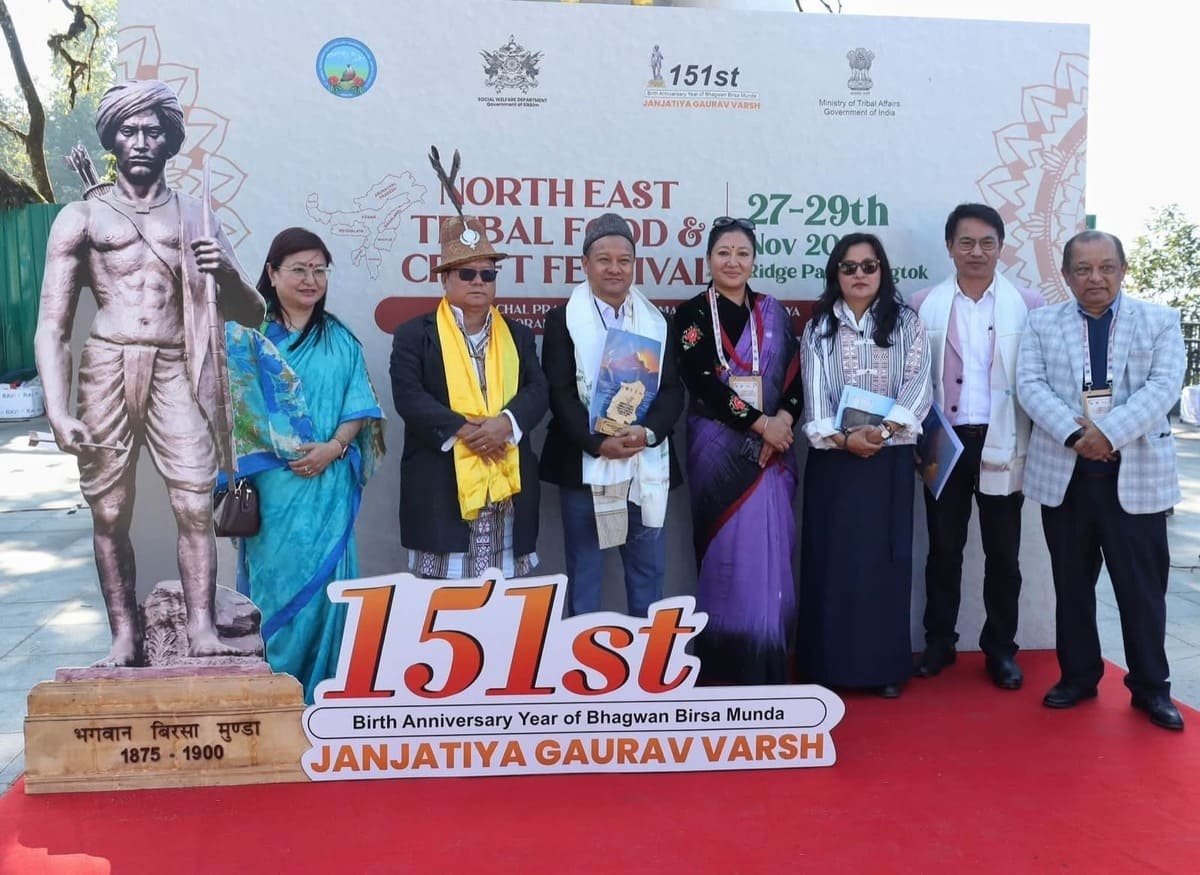
The first-ever Northeast Tribal Food and Craft Festival 2026 is bringing the indigenous cuisines, traditional crafts and cultural heritage of all eight Northeastern states to Ridge Park in Gangtok, Sikkim. The three-day festival, which began on November 27, will continue until November 29. Organised by the Tribal Research Institute (TRI), Sikkim, with support from the Union Ministry of Tribal Affairs, the event aims to preserve traditional knowledge and create livelihood opportunities for tribal artisans and entrepreneurs.
Nagaland Makes Hotel App Registration Mandatory for Out-of-State Guests Ahead of Hornbill Festival
Gangtok Hosts First-Ever Northeast Tribal Food and Craft Festival
Gangtok has become a meeting point for the cultural traditions of Northeast India as artisans, traditional food practitioners and cultural representatives gather for the inaugural festival.
The Social Welfare Department of the Government of Sikkim inaugurated the event at Ridge Park on November 27. The Tribal Research Institute, Sikkim, organised the programme under the department’s supervision, with support from the Ministry of Tribal Affairs.
The festival brings together representatives from Arunachal Pradesh, Assam, Manipur, Meghalaya, Mizoram, Nagaland, Sikkim and Tripura. Consequently, visitors can explore the region’s diverse indigenous food traditions, handicrafts and cultural expressions at one venue.
Chewang Norbu Lepcha, Chairman of the Primitive Tribe Welfare Board, attended the inauguration as the chief guest. Officials from the Sikkim government, the Ministry of Tribal Affairs and Tribal Research Institutes from other Northeastern states also participated.
According to the Sikkim Information and Public Relations Department, the festival aims to provide a common platform for tribal communities, artisans, craftsmen, traditional food practitioners and entrepreneurs.
Traditional Cuisines and Indigenous Crafts Take Centre Stage
Food and handicrafts form the main attractions of the three-day festival. Participating communities are presenting traditional dishes, indigenous food products and locally made crafts that reflect their distinct cultural identities.
Visitors can also explore traditional handloom products, bamboo and cane crafts, woodwork and traditional ornaments. These items represent generations of knowledge and craftsmanship passed down within tribal communities.
Moreover, the festival gives artisans an opportunity to display their work directly to visitors and potential buyers. This exposure can help traditional producers connect with wider markets and explore new business opportunities.
The event also highlights the importance of preserving indigenous food practices. Traditional recipes and food-processing methods often reflect local resources, community knowledge and cultural customs.
By bringing these traditions together, the festival encourages cultural exchange among the eight Northeastern states.
Cultural Performances Highlight Sikkim’s Tribal Traditions
The inaugural programme featured cultural performances by students of Eklavya Model Residential School (EMRS), Gangyap.
The students presented a seven-line prayer to Guru Rinpoche, followed by traditional Bhutia, Lepcha, Limboo and Sherpa dances and songs. A Lepcha traditional skit titled Atek and the Yeti also formed part of the programme.
These performances introduced visitors to Sikkim’s cultural traditions and added an artistic dimension to the festival.
Furthermore, the cultural programme highlighted the importance of passing indigenous knowledge and traditional performing arts to younger generations.
The chief guest and other dignitaries also visited the exhibition stalls after the inauguration. They explored traditional food, handicrafts and indigenous products displayed by participants from the Northeastern states.
Festival Promotes Livelihood Opportunities for Tribal Artisans
Beyond cultural celebration, the festival aims to strengthen livelihood opportunities for tribal communities.
Social Welfare Department Secretary Sarika Pradhan highlighted the importance of connecting artisans, self-help groups and traditional food practitioners with wider markets.
She also stressed the need to document indigenous knowledge systems and pass them on to younger generations. According to her, traditional food practices, handloom, bamboo and cane crafts, woodwork and ornaments represent important aspects of tribal identity.
The festival can therefore help traditional producers gain greater visibility while encouraging entrepreneurship among women, young people and local communities.
Additionally, direct interaction with visitors and buyers can help artisans understand market demand and identify opportunities to expand their businesses.
The initiative also reflects the growing importance of linking cultural preservation with sustainable livelihoods. Rather than treating traditional crafts only as cultural displays, the festival seeks to support the people who continue to practise and preserve them.
Ministry of Tribal Affairs Supports the Initiative
The Ministry of Tribal Affairs, Government of India, has supported the festival alongside the Sikkim government.
The event reflects an effort to bring tribal communities from different Northeastern states onto a shared platform. It also encourages cooperation among state departments, Tribal Research Institutes, artisans and traditional food producers.
During the inauguration, Chewang Norbu Lepcha emphasised the importance of protecting tribal customs, indigenous knowledge and traditional craftsmanship.
He also referred to Sikkim’s initiative of wearing traditional attire every Thursday, noting its role in strengthening cultural identity and encouraging pride in indigenous traditions.
Meanwhile, Special Secretary Bandana Chettri welcomed the participants and highlighted the festival’s potential to promote traditional products and create opportunities for local entrepreneurs.
The organisers hope that the event will encourage greater cultural exchange and cooperation across the region.
Governor Dushyant Gautam Visits Festival Stalls
Sikkim Governor Dushyant Gautam visited the ongoing festival at Ridge Park on November 28.
During his visit, he toured stalls displaying indigenous food products, traditional handicrafts, handloom items and locally made products from all eight Northeastern states.
His interaction with participating artisans and food entrepreneurs highlighted the importance of providing platforms for tribal communities to showcase their skills and products.
The Sikkim Express reported that the Governor’s visit encouraged participating artisans, stall owners and traditional food practitioners.
The second day of the festival continued to focus on cultural exchange, traditional knowledge and the entrepreneurial contributions of tribal communities.
Festival Continues at Ridge Park Until November 29
The first Northeast Tribal Food and Craft Festival will conclude on November 29, completing its three-day programme at Ridge Park in Gangtok.
The event offers visitors an opportunity to experience traditional cuisines, handicrafts and cultural performances from across the region. It also provides a platform for artisans and food practitioners to connect with wider audiences.
Social Welfare Department Secretary Sarika Pradhan has expressed hope that the festival will become a regular annual event across the Northeastern states.
If the initiative continues in future years, it could create a recurring platform for cultural exchange, traditional craftsmanship and tribal entrepreneurship.
Overall, the inaugural festival highlights the shared cultural richness of Northeast India while recognising the communities that preserve its indigenous traditions.
Frequently Asked Questions
1. What is the Northeast Tribal Food and Craft Festival?
The Northeast Tribal Food and Craft Festival is a regional cultural event showcasing indigenous cuisines, traditional handicrafts and tribal heritage from all eight Northeastern states.
2. Where is the festival taking place?
The festival is taking place at Ridge Park in Gangtok, Sikkim.
3. When will the 2026 festival conclude?
The three-day festival began on November 27 and will conclude on November 29, 2026.
4. Which states are participating in the festival?
All eight Northeastern states are participating: Arunachal Pradesh, Assam, Manipur, Meghalaya, Mizoram, Nagaland, Sikkim and Tripura.
5. Who organised the Northeast Tribal Food and Craft Festival?
The Tribal Research Institute, Sikkim, organised the festival under the state’s Social Welfare Department, with support from the Union Ministry of Tribal Affairs.
6. What are the main attractions of the festival?
The main attractions include traditional cuisines, handloom products, bamboo and cane crafts, woodwork, traditional ornaments and cultural performances.