


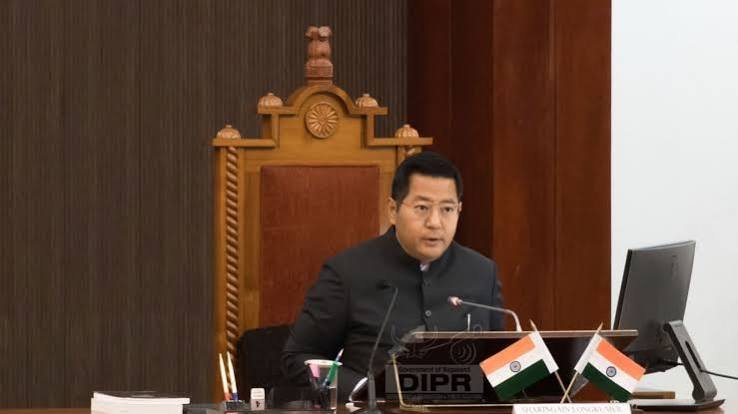
The FNTA Bill Eastern Nagaland has marked a major development in Nagaland’s political and administrative landscape after the Nagaland Legislative Assembly unanimously passed the Frontier Nagaland Territorial Authority (FNTA) Bill, 2026, on September 3. Chief Minister Neiphiu Rio described the legislation as an important step toward addressing development deficits in Eastern Nagaland. Moreover, the unanimous passage reflects broad legislative support for a new institutional framework aimed at accelerating development in the region.
Tripura Land Rights Draft Expected Within 15 Days After New Delhi Deliberations
FNTA Bill Eastern Nagaland Wins Unanimous Assembly Support
The Nagaland Legislative Assembly passed the Frontier Nagaland Territorial Authority Bill, 2026, without opposition on September 3.
Furthermore, the unanimous vote represents a significant legislative milestone for the proposed authority.
The legislation seeks to establish an institutional mechanism focused on development needs in Eastern Nagaland.
Chief Minister Neiphiu Rio highlighted the region’s longstanding development challenges while explaining the significance of the legislation.
Moreover, the passage demonstrates the state government’s effort to create a dedicated framework for addressing regional development concerns.
The FNTA Bill Eastern Nagaland therefore represents an important step in the state’s approach to reducing disparities between different parts of Nagaland.
FNTA Bill Eastern Nagaland Targets Development Deficits
Chief Minister Neiphiu Rio stated that the new authority will explicitly address development deficits in Eastern Nagaland.
The region has long featured in discussions about infrastructure, economic opportunities and access to public services.
Therefore, the proposed authority could provide a more focused institutional approach to regional development.
Furthermore, policymakers can use such a framework to identify local priorities and coordinate development programmes more effectively.
Improving infrastructure and expanding opportunities can also contribute to greater economic participation across Eastern Nagaland.
Additionally, the legislation places regional development at the centre of the proposed authority’s responsibilities.
The FNTA Bill Eastern Nagaland consequently carries significance beyond its legislative passage because its implementation will determine how effectively it responds to development gaps.
FNTA Bill Eastern Nagaland Creates New Administrative Framework
The Frontier Nagaland Territorial Authority represents a proposed institutional structure for addressing the specific development requirements of Eastern Nagaland.
Moreover, the legislation provides a formal framework through which the government can pursue its stated objectives for the region.
The unanimous passage also gives the proposed authority a strong legislative foundation.
However, the practical impact will depend on the implementation of the provisions contained in the legislation.
Authorities will need to establish the required administrative mechanisms and ensure effective coordination among relevant institutions.
Furthermore, clear implementation can help translate the objectives of the FNTA Bill Eastern Nagaland into tangible development outcomes for communities.
The coming stages will therefore remain important as the state moves from legislative approval toward implementation.
FNTA Bill Eastern Nagaland Marks Major Step for Regional Development
The Assembly’s decision has placed Eastern Nagaland’s development needs firmly within the state’s policy agenda.
Moreover, the unanimous approval could strengthen the government’s ability to pursue targeted development initiatives in the region.
Improved connectivity, public infrastructure, employment opportunities and access to essential services can play an important role in reducing regional disparities.
Meanwhile, local communities and stakeholders are likely to closely watch how the new authority takes shape and delivers on its stated objectives.
Consequently, the success of the FNTA Bill Eastern Nagaland will depend not only on the legislation itself but also on effective administration and implementation.
The September 3 decision has nevertheless created a significant new chapter in Nagaland’s efforts to address development concerns in Eastern Nagaland.
Conclusion
The Bill Eastern Nagaland has reached a historic legislative milestone after the Nagaland Legislative Assembly unanimously passed the Frontier Nagaland Territorial Authority (FNTA) Bill, 2026, on September 3. Chief Minister Neiphiu Rio said the authority will specifically address development deficits in Eastern Nagaland. Moreover, the unanimous approval provides a strong legislative foundation, while effective implementation will determine the authority’s long-term impact on regional development.
FAQs
1. What is the FNTA Bill Eastern Nagaland?
The FNTA Bill, 2026, provides the legislative framework for establishing the Frontier Nagaland Territorial Authority to address development needs in Eastern Nagaland.
2. When did the Nagaland Assembly pass the FNTA Bill?
The Nagaland Legislative Assembly passed the bill unanimously on September 3, 2026.
3. What did Chief Minister Neiphiu Rio say about the FNTA?
Chief Minister Neiphiu Rio stated that the new authority will explicitly address development deficits in Eastern Nagaland.
4. Why is the FNTA Bill significant for Eastern Nagaland?
The legislation creates a dedicated institutional framework focused on addressing the region’s development requirements.
5. What will determine the success of the FNTA Bill Eastern Nagaland?
Effective implementation, administration and delivery of development initiatives will determine how successfully the authority addresses regional disparities.