


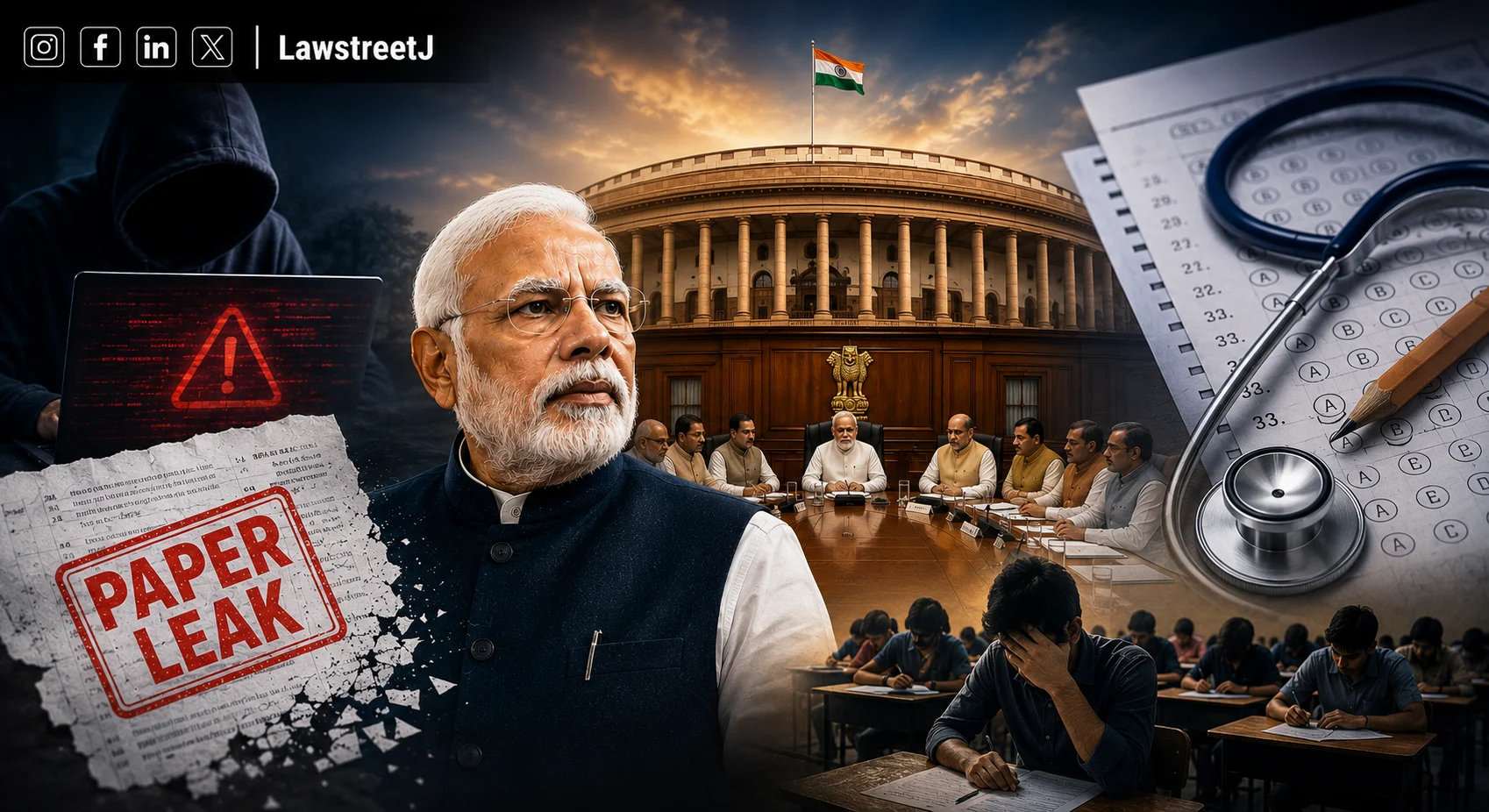
The Heavy Economic Fine Imposed provision in the proposed anti-paper leak legislation introduces stringent financial penalties for institutional cheating. Under the draft law, individuals convicted of organized examination-related malpractice could face fines of up to ₹10 crore, reinforcing the government’s efforts to curb large-scale examination fraud.
Heavy Economic Fine Imposed Under Draft Anti-Paper Leak Legislation
The Heavy Economic Fine Imposed provision represents one of the most significant features of the proposed anti-paper leak legislation. According to the available information, individuals convicted of institutional cheating may face financial penalties of up to ₹10 crore.
The proposed fine aims to strengthen legal action against organized examination malpractice that undermines the credibility of competitive and recruitment examinations. Moreover, the substantial financial penalty reflects the government’s intention to discourage institutional involvement in examination fraud.
Large-scale cheating operations often compromise fairness and public confidence in examination systems. Therefore, the proposed legislation seeks to establish stronger deterrents through both imprisonment and significant monetary penalties.
The financial penalty remains part of the draft legislation and will undergo the legislative process before becoming enforceable.
Heavy Economic Fine Imposed to Deter Organized Examination Fraud
The Heavy Economic Fine Imposed provision focuses on discouraging organized examination-related misconduct by introducing severe financial consequences. Strong economic penalties often complement criminal punishment by increasing the cost of engaging in unlawful activities.
Moreover, the proposed fine of up to ₹10 crore demonstrates the government’s commitment to protecting the integrity of examinations conducted for education, recruitment, and public employment.
Institutional cheating can affect thousands of candidates by compromising equal opportunities and merit-based selection. Consequently, stronger financial penalties seek to reduce incentives for individuals or organizations that facilitate examination fraud.
Although the draft legislation outlines the proposed fine, authorities have not yet released additional implementation details. Further clarification is expected during the parliamentary review process.
Draft Bill Includes Heavy Economic Fine Imposed for Institutional Cheating
The proposed legislation containing the Heavy Economic Fine Imposed provision forms part of broader reforms aimed at strengthening examination governance. The draft bill combines financial penalties with criminal sanctions to create a comprehensive legal framework against organized paper leaks.
Additionally, substantial fines may provide law enforcement agencies with stronger legal tools when pursuing individuals involved in institutional cheating. Financial penalties can also serve as a deterrent by targeting the economic benefits associated with organized examination fraud.
The proposal specifically addresses institutional cheating rather than routine administrative errors. Therefore, the legislation emphasizes action against deliberate and organized misconduct affecting examination integrity.
Meanwhile, Parliament will examine the proposed provisions before any final decision regarding the legislation is made.
Why the Heavy Economic Fine Imposed Provision Matters
The Heavy Economic Fine Imposed provision is significant because it introduces one of the strongest proposed financial penalties for examination-related offenses. Effective legal deterrents help protect the credibility of recruitment and educational examinations across the country.
Moreover, combining substantial fines with criminal penalties strengthens the government’s overall strategy against organized examination malpractice. Such measures may discourage individuals and institutions from participating in illegal examination activities.
Transparent examination systems are essential for maintaining public confidence and ensuring equal opportunities for candidates. Similarly, stronger legal provisions support institutions responsible for conducting fair and merit-based examinations.
Although the proposed fine of up to ₹10 crore remains subject to legislative approval, it signals the government’s intention to adopt a tougher approach toward organized institutional cheating.
Conclusion
The Heavy Economic Fine Imposed provision proposes financial penalties of up to ₹10 crore for individuals convicted of institutional cheating under the draft anti-paper leak legislation. The proposal highlights the government’s focus on strengthening legal measures against organized examination fraud.
Furthermore, the draft legislation combines significant economic penalties with criminal sanctions to reinforce fairness and transparency in competitive examinations. These measures aim to discourage organized malpractice while supporting the credibility of examination systems.
Overall, the Heavy Economic Fine Imposed proposal represents an important element of the broader legislative effort to protect examination integrity. As Parliament considers the draft bill, further official details will clarify the final scope and implementation of these proposed financial penalties.
FAQs
1. What is the Heavy Economic Fine Imposed provision?
The Heavy Economic Fine Imposed provision proposes fines of up to ₹10 crore for individuals convicted of institutional cheating.
2. Who could face the proposed ₹10 crore fine?
According to the draft legislation, individuals convicted of institutional cheating related to examination malpractice could face fines of up to ₹10 crore.
3. Why has the Heavy Economic Fine Imposed provision been proposed?
The proposed financial penalty aims to deter organized examination fraud and strengthen the integrity of competitive examinations.
4. Is the ₹10 crore fine currently in effect?
No. Based on the available information, the provision remains part of draft legislation and must complete the parliamentary process before becoming law.
5. What is the objective of the proposed financial penalty?
The objective is to impose stronger economic consequences on those involved in organized institutional cheating and reinforce public confidence in examination systems.