


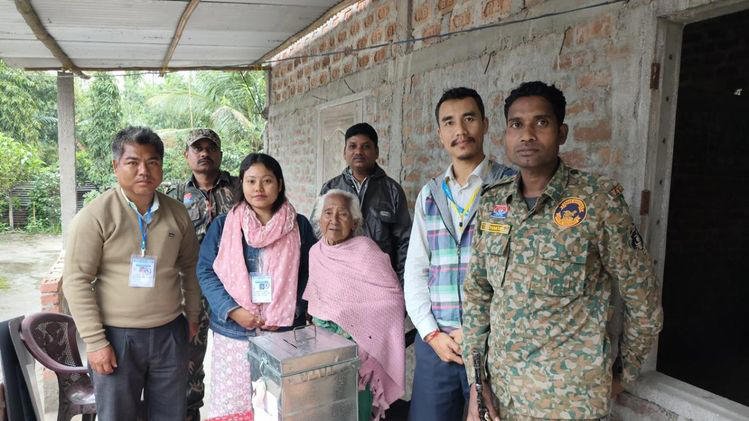
Home voting in Baksa has officially begun as part of the Assam Assembly Elections 2026, marking a significant step toward inclusive and accessible democratic participation. The initiative, introduced by the Election Commission, aims to ensure that elderly voters and persons with disabilities can exercise their right to vote without facing physical challenges or logistical barriers. As the polling process unfolds, officials in Baksa district have started visiting eligible voters at their homes, ensuring that no voice goes unheard in this crucial electoral exercise.
Read More: Tripura Education Infrastructure Expansion: Major Boost to Schools and Colleges in 2026
Inclusive Voting Initiative Gains Momentum
The launch of home voting in Baksa reflects a broader effort to strengthen electoral inclusivity in Assam. Authorities have identified voters above the age of 85 and individuals with benchmark disabilities as eligible for this facility. These voters had the option to apply for home voting in advance, and following verification, election teams have now begun reaching out to them.
This initiative not only enhances participation but also highlights the commitment of the Election Commission to ensure that every citizen can vote with dignity. For many older people and differently-abled individuals, traveling to polling stations can be difficult. Therefore, bringing the voting process to their doorstep removes a major barrier.
Officials in Baksa have deployed trained polling teams equipped with necessary materials, including ballot papers, secrecy folders, and security arrangements. The process is conducted under strict guidelines to maintain transparency and confidentiality.
How the Home Voting Process Works
The home voting process in Baksa follows a well-defined protocol to ensure fairness and credibility. Once a voter is approved for home voting, a polling team visits their residence on a scheduled date. The team typically includes polling officials, security personnel, and in some cases, representatives of political parties to maintain transparency.
Upon arrival, officials verify the voter’s identity using valid documents. After verification, the voter is provided with a ballot paper and a secure environment to cast their vote. The secrecy of the vote remains a top priority, and all necessary measures are taken to ensure that the voter can make their choice independently.
After the vote is cast, it is sealed in a secure envelope and transported to designated centers for counting. The entire process is recorded as per Election Commission guidelines to prevent any discrepancies.
This structured approach ensures that the integrity of the electoral process is maintained, even when voting takes place outside traditional polling booths.
Strong Administrative Preparedness in Baksa
The district administration in Baksa has made extensive preparations to ensure the smooth execution of home voting. Training sessions were conducted for polling officials to familiarize them with the process and guidelines. Additionally, awareness campaigns were carried out to inform eligible voters about the facility and how to apply for it.
Officials have also coordinated with local authorities and healthcare workers to identify and verify eligible individuals. This collaborative approach has helped streamline the process and minimize errors.
Security arrangements have been strengthened to ensure that the voting process remains free and fair. Authorities have emphasized that all protocols must be followed strictly to avoid any irregularities.
The administration has also set up monitoring systems to track the progress of home voting. Regular updates are being shared to ensure transparency and accountability throughout the process.
Positive Response from Voters
The introduction of home voting in Baksa has received a positive response from eligible voters and their families. Many older people have expressed relief and gratitude for the opportunity to vote without having to travel long distances or endure physical strain.
For individuals with disabilities, this initiative has made the electoral process more accessible than ever before. It has empowered them to participate actively in shaping the future of the state.
Families of voters have also appreciated the efforts of election officials, noting that the process is conducted in a respectful and organized manner. The presence of officials at their doorstep has instilled confidence in the system.
This positive feedback underscores the importance of such initiatives in strengthening democratic participation and ensuring that no one is left behind.
Challenges and Safeguards
While home voting in Baksa represents a major step forward, it also comes with certain challenges. Ensuring the secrecy of the vote in a home environment can be complex, especially in crowded households. However, officials have been trained to handle such situations and create a private space for voters.
Another challenge is maintaining strict security and preventing any undue influence. To address this, the Election Commission has implemented multiple safeguards, including the presence of polling agents and video recording of the process.
Logistical challenges, such as reaching remote areas and managing schedules, have also been addressed through careful planning and coordination. Authorities have ensured that all eligible voters are covered within the designated timeframe.
Despite these challenges, the system in Baksa appears to be functioning effectively, thanks to meticulous planning and execution.
A Step Toward Stronger Democracy
The implementation of home voting in Baksa is a testament to the evolving nature of India’s electoral system. By prioritizing accessibility and inclusivity, the Election Commission is setting a new standard for democratic participation.
This initiative not only increases voter turnout but also reinforces the idea that every vote matters. It ensures that even those who face physical limitations can contribute to the democratic process.
As Assam continues its electoral journey in 2026, the success of home voting in districts like Baksa could pave the way for wider adoption across the country. It reflects a commitment to making democracy more inclusive, transparent, and accessible for all.
In conclusion, home voting in Baksa has begun on a promising note, with strong administrative support and positive public response. As the process continues, it is expected to play a crucial role in enhancing voter participation and strengthening the democratic fabric of Assam.
Read More: Big Yaba Tablets Police Seizure Reviewed in Meeting