


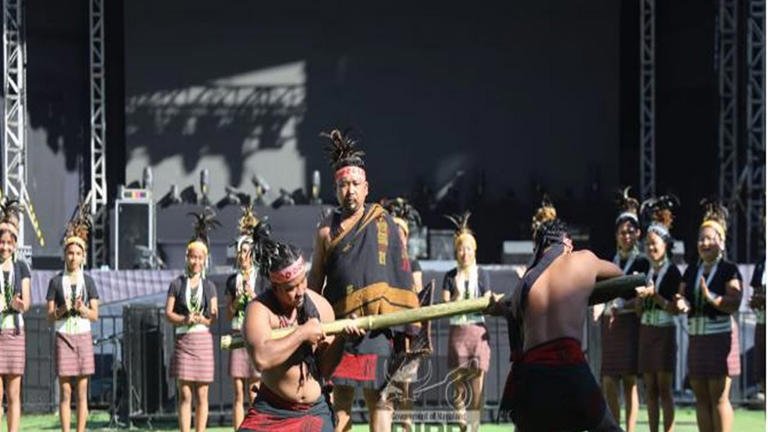
Day 4 of the Hornbill Festival 2025 brought a vivid celebration of heritage as several Naga groups presented traditional dances, rituals, crafts, and music at Kisama. The cultural showcase drew thousands of visitors who gathered to witness the living traditions of Nagaland. The festival, known as the “Festival of Festivals,” continues to serve as a bridge between generations and a stage for sharing indigenous identity with the world. The Hornbill Festival 2025 culture theme remained central throughout the day, reflecting pride, unity, and creative spirit.
Performers from various communities brought their distinct styles to the arena. Their dances featured colourful attire, rhythmic chants, and symbolic movements that depict stories of harvest, bravery, and communal harmony. Visitors cheered enthusiastically, especially during high-energy performances accompanied by traditional drums and bamboo instruments. The lively atmosphere highlighted how Nagaland’s heritage remains deeply rooted yet constantly evolving.
Read More: Manipur Issues Strong Peace Warning to Groups
Naga Cultural Expressions Shine on Day 4
Traditional music played a major role on Day 4. Several groups performed folk songs that carry historical memories, moral teachings, and seasonal celebrations. The melodies, combined with handmade instruments, created an immersive cultural experience. Many visitors said the performances offered meaningful insight into Nagaland’s identity and values. Because of this strong connection, the Hornbill Festival 2025 culture narrative became more vivid and relatable.
Handloom and handicraft stalls attracted large crowds as well. Skilled artisans demonstrated weaving, wood carving, pottery, and jewellery making. They explained the significance behind patterns, colours, and motifs that represent clan histories and local beliefs. These crafts not only preserve traditional techniques but also provide sustainable livelihoods. Moreover, the participation of young artisans showed that cultural knowledge is being passed on effectively.
Visitors also explored Morungs, the traditional community spaces that serve as cultural classrooms. Each Morung displayed unique architectural styles, household tools, and historical artefacts. Volunteers guided tourists through the exhibits and shared stories that highlight the strength of communal living. This interactive experience allowed guests to understand the depth of Naga heritage beyond stage performances.
Festival Strengthens Cultural Tourism
The Hornbill Festival 2025 culture showcase continued to boost tourism in Nagaland. Day 4 witnessed a rise in both domestic and international visitors. Many travelled specifically to experience the festival’s cultural richness. Local entrepreneurs benefited from the surge, as homestays, food stalls, and craft markets enjoyed significant footfall. Officials noted that cultural tourism creates new economic opportunities while promoting responsible travel.
Food stalls remained a major attraction. Guests enjoyed local dishes prepared with indigenous ingredients, such as smoked meat, millets, bamboo shoots, and seasonal herbs. Chefs explained the roots of each recipe, making the dining experience both educational and delicious. The popularity of local cuisine demonstrated how food plays a central role in expressing cultural identity.
Youth Take Lead in Preserving Hornbill Festival 2025 Culture
Youth participation increased noticeably this year. Many young performers, guides, and artisans took active roles in presenting their community traditions. Their involvement reflects the festival’s goal of empowering the next generation to carry forward cultural knowledge. According to several organisers, youth-led initiatives help ensure that traditional practices remain vibrant rather than symbolic.
Workshops on storytelling, folk music, and traditional sports also received strong responses. Participants learned techniques from experienced practitioners and gained hands-on exposure. These workshops encouraged collaboration between communities and built pride among younger audiences.
Visitors Celebrate Unity and Shared Identity
Day 4 also highlighted the spirit of unity among Naga groups. Despite distinct cultural elements, performers expressed shared values of resilience, respect, and community bonding. Many visitors found this unity inspiring, especially in a diverse state like Nagaland. The festival served as a reminder that culture can connect people, inspire learning, and strengthen collective identity.
Evening performances brought the day to a close with a mix of traditional and contemporary acts. Fusion music, cultural parades, and storytelling added freshness while maintaining cultural roots. The crowd responded with excitement, showing that tradition and innovation can coexist beautifully.
As the festival continues, organisers expect more cultural exchanges and larger audiences. The Hornbill Festival 2025 culture showcase on Day 4 reaffirmed the event’s role as one of India’s most significant celebrations of indigenous heritage. With every performance and exhibit, Nagaland’s cultural brilliance becomes more visible to the world.
Read More: Sonowal Leads Asom Diwas Celebration in Delhi Honouring Sukapha