


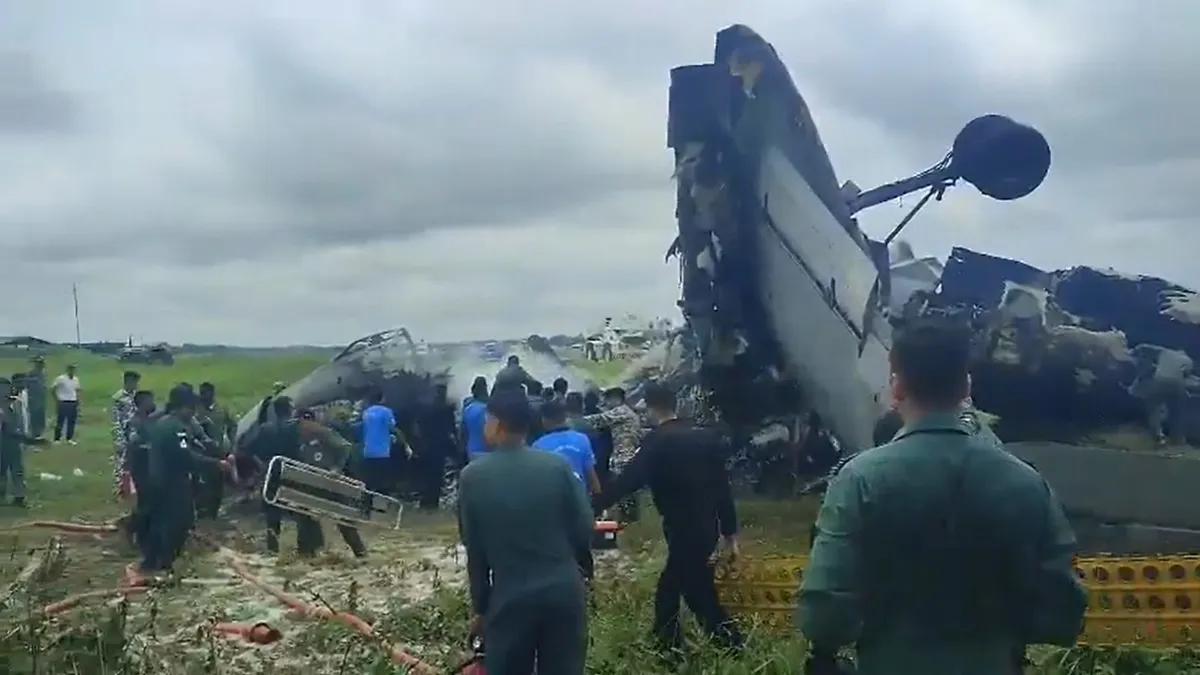
The IAF Crash in Jorhat has resulted in casualties after an Indian Air Force AN-32 aircraft crashed at the Jorhat airbase in Assam. Reports indicate that the pilot is feared dead, while the injured co-pilot has been admitted to a hospital for treatment. Authorities are monitoring the situation closely. The IAF Crash in Jorhat has emerged as a significant incident after an Indian Air Force AN-32 aircraft crashed at the Jorhat airbase in Assam. Moreover, casualties have been reported, with the pilot feared dead and the co-pilot sustaining injuries. The injured officer has been hospitalized for treatment. The incident has drawn attention to aviation safety and emergency response procedures within military operations.
ASDMA Identifies 366 Vulnerable Sites, Chunsali Tops the List
ONGC Pipeline Leak Triggers Panic Amid Fears of Repeat of 2020 Baghjan Incident
IAF Crash in Jorhat Involves AN-32 Aircraft
The IAF Crash in Jorhat occurred when an Indian Air Force AN-32 aircraft crashed at the Jorhat airbase. Furthermore, the accident resulted in casualties involving the crew members onboard.
The AN-32 aircraft has long been an important part of the Indian Air Force’s transport fleet. Consequently, incidents involving military aircraft attract considerable attention from defense authorities and the public.
Moreover, military aviation operations require strict adherence to safety procedures. Therefore, any accident involving service aircraft is closely examined.
Pilot Feared Dead Following the Crash
According to available reports, the IAF Crash in Jorhat claimed the life of the pilot, who is feared dead. Furthermore, the tragedy has prompted concern among defense personnel and observers.
Loss of life in aviation accidents represents a serious matter for armed forces around the world. Similarly, such incidents often lead to detailed reviews and investigations.
Consequently, authorities are expected to assess the circumstances surrounding the crash. Thus, further information may emerge as inquiries progress.
Injured Co-Pilot Undergoing Treatment
Another important aspect of the IAF Crash in Jorhat concerns the co-pilot, who sustained injuries and has been admitted to a hospital. Moreover, medical personnel are providing treatment to the injured officer.
Prompt medical response remains essential during emergency situations. Additionally, timely treatment can play a crucial role in supporting recovery.
Consequently, emergency and healthcare teams continue to remain actively involved. Therefore, attention remains focused on the condition of the injured officer.
Jorhat Airbase Witnesses Major Incident
The IAF Crash in Jorhat has brought attention to the Jorhat airbase, which plays an important role in military aviation operations in Northeast India. Furthermore, the base is strategically significant for logistical and operational activities.
Airbases are equipped with emergency mechanisms to address unforeseen situations. Similarly, trained personnel respond quickly during incidents involving aircraft.
Moreover, military establishments regularly conduct safety and preparedness exercises. Thus, emergency response systems form an important part of operational readiness.
Military Aviation Safety Remains a Priority
The IAF Crash in Jorhat highlights the importance of aviation safety within military operations. Furthermore, armed forces across the world maintain stringent standards to ensure operational security and reliability.
Aircraft accidents often lead to technical assessments and procedural reviews. Consequently, authorities seek to identify factors that may have contributed to such incidents.
Additionally, continuous training and maintenance remain essential components of aviation safety. Therefore, ensuring operational efficiency continues to be a major priority.
Authorities Expected to Review the Incident
Following the IAF Crash in Jorhat, authorities are expected to examine the circumstances surrounding the accident. Moreover, investigations are typically conducted to determine the cause and recommend preventive measures.
Review mechanisms are standard procedures after aviation incidents. Similarly, findings often contribute to strengthening safety protocols and operational practices.
Consequently, the outcomes of such reviews can help enhance future preparedness. Thus, the incident is likely to receive detailed attention from defense authorities.
Conclusion
The IAF Crash in Jorhat involving an Indian Air Force AN-32 aircraft has resulted in casualties, with the pilot feared dead and the co-pilot hospitalized after sustaining injuries. The incident at the Jorhat airbase has drawn widespread attention and highlighted the risks associated with aviation operations.
Moreover, emergency teams responded promptly, and medical personnel continue to provide treatment to the injured officer. Consequently, authorities are expected to review the circumstances surrounding the crash.
Looking ahead, investigations and assessments will remain important in understanding the incident and strengthening safety measures. Therefore, the IAF Crash in Jorhat represents a serious development for the Indian Air Force and the broader defense community.
FAQs
1. What happened in the IAF Crash in Jorhat?
The IAF Crash in Jorhat involved an Indian Air Force AN-32 aircraft that crashed at the Jorhat airbase in Assam.
2. Which aircraft was involved in the accident?
An AN-32 transport aircraft of the Indian Air Force was involved in the crash.
3. Were there any casualties in the incident?
Yes, reports indicate that the pilot is feared dead, while the co-pilot sustained injuries and was hospitalized.
4. Where did the crash occur?
The accident took place at the Jorhat airbase in Assam.
5. What happens after such aviation incidents?
Authorities generally conduct investigations and reviews to determine the cause and improve safety measures.