


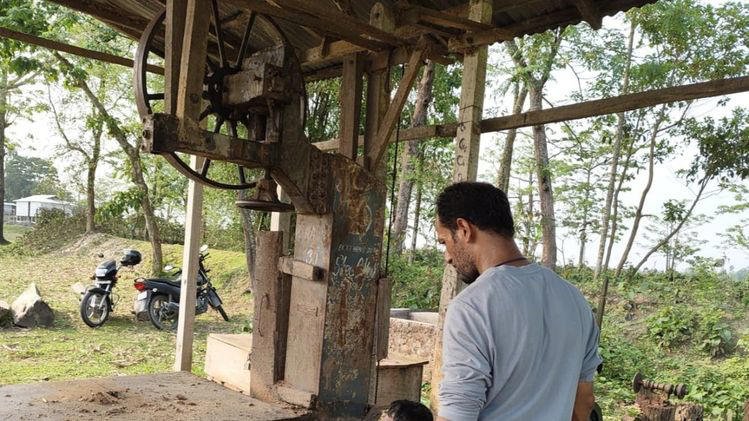
Authorities in Assam have busted an illegal timber mill operating in the riverine belt of Dhubri, dealing a blow to ongoing forest-related crimes in the region. Officials carried out the operation following specific inputs about unauthorized wood processing activities.
During the raid, enforcement teams discovered equipment used for cutting and processing timber. However, the operators fled the scene before officials could apprehend them. Consequently, authorities launched a search operation to trace those involved.
The incident highlights persistent challenges in curbing illegal timber activities in remote and riverine areas. These regions often provide cover for such operations due to difficult terrain and limited accessibility.
Read More: Arunachal Congress Forms Panels to Probe Mining, Highway Issues
Officials stated that the crackdown forms part of a broader effort to protect forest resources and prevent environmental degradation.
Operators flee as enforcement teams intensify action
As soon as authorities approached the illegal site in Dhubri, the operators abandoned the mill and escaped. Despite this, officials managed to seize machinery and partially processed timber from the location.
Enforcement teams have since intensified efforts to identify and apprehend the culprits. They are using local intelligence and conducting searches in nearby areas.
Moreover, officials have indicated that they will take strict action against those found involved. The authorities aim to send a strong message that illegal activities will not be tolerated.
The escape of the operators underscores the need for improved surveillance and coordination. Therefore, officials are exploring ways to strengthen monitoring systems in vulnerable zones.
Riverine areas remain hotspot for timber smuggling
The riverine belt of Dhubri has long been identified as a hotspot for illegal timber activities. The presence of waterways allows easier transportation of wood, making enforcement more challenging.
Additionally, dense vegetation and isolated locations provide cover for unauthorized operations. As a result, smugglers often exploit these conditions to carry out illegal activities.
Authorities have acknowledged these challenges and are working to address them. They have increased patrols and deployed additional personnel in sensitive areas.
Furthermore, collaboration with local communities has become a key strategy. Residents can provide valuable information that helps in identifying illegal operations.
By focusing on these areas, officials aim to reduce incidents of timber smuggling and protect natural resources.
Environmental concerns linked to illegal timber trade
Illegal timber activities pose serious environmental risks. Deforestation leads to loss of biodiversity and disrupts ecological balance.
In Assam, forests play a crucial role in maintaining environmental stability. Therefore, unauthorized logging can have far-reaching consequences.
Experts have warned that continued deforestation can increase vulnerability to climate-related risks. It can also affect local livelihoods that depend on forest resources.
Moreover, illegal timber trade often operates outside regulatory frameworks. This lack of oversight results in unsustainable practices that harm the environment.
Authorities have emphasized that combating such activities is essential for long-term conservation.
Strengthening enforcement and surveillance measures
Following the raid in Dhubri, officials have announced plans to strengthen enforcement mechanisms. They aim to improve coordination between forest departments and law enforcement agencies.
In addition, technology will play a greater role in monitoring activities. Tools such as satellite imaging and drone surveillance can help detect illegal operations.
Regular inspections and surprise raids will also continue. These measures can deter individuals from engaging in unlawful activities.
Furthermore, authorities are working to enhance legal frameworks. Strict penalties for offenders can act as a deterrent and reduce violations.
The focus on enforcement reflects a proactive approach to tackling forest-related crimes.
Role of local communities in preventing illegal activities
Local communities in Dhubri play a vital role in preventing illegal timber activities. Their involvement can significantly improve monitoring and reporting.
Authorities have encouraged residents to share information about suspicious activities. In return, they have assured protection and support for informants.
Community awareness programs have also been introduced. These initiatives educate people about the importance of forest conservation.
Moreover, involving communities in conservation efforts can create a sense of ownership. When people recognize the value of natural resources, they are more likely to protect them.
Such collaboration strengthens the overall response to illegal activities.
Ongoing investigation and search for culprits
The investigation into the busted timber mill in Dhubri is ongoing. Authorities are examining the seized materials to gather evidence.
They are also working to identify the network behind the operation. Illegal timber activities often involve multiple individuals and coordinated efforts.
Officials have indicated that arrests are likely once the culprits are traced. They remain confident that continued efforts will yield results.
In addition, they are reviewing intelligence inputs to prevent similar incidents in the future. This approach aims to address both immediate and long-term challenges.
A strong message against forest crimes
The busting of the illegal timber mill in Dhubri sends a strong message against forest crimes. Authorities have demonstrated their commitment to protecting natural resources.
By taking decisive action, they aim to deter others from engaging in illegal activities. The incident also highlights the importance of vigilance and enforcement.
As operations continue, the focus will remain on strengthening systems and improving coordination. These efforts are essential for safeguarding forests and ensuring sustainable development.
The case underscores the need for collective action. Government agencies, communities, and stakeholders must work together to address the issue effectively.
Read More: Tripura CM Calls TTAADC Result Learning for BJP