


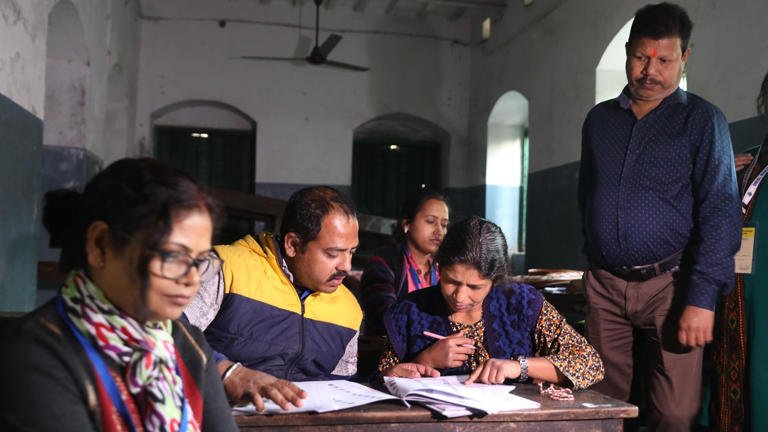
Assam has witnessed massive administrative changes over the last few years. One of the most significant issues involves the large-scale clearing of government lands. Currently, thousands evicted in Assam find themselves in a precarious position. While they struggle to rebuild their homes in temporary shelters, a new battle has emerged. These families are now clamouring to ensure their names appear in the updated voter lists.
Read More: Tripura’s Path to Prosperity: A Humanitarian Governance Model
The Struggle for Political Identity After Displacement
For those living in makeshift camps, a name on a document is more than just a piece of paper. It is a shield against further marginalization. After losing their physical hearths, thousands evicted in Assam fear they might also lose their political voice. Consequently, they are crowding local administrative offices and “Sewa Kendras” to submit their claims.
The urgency stems from the ongoing delimitation and voter revision processes in the state. Many families were moved far from their original polling stations. As a result, they now face the complex task of transferring their voting rights to new locations. Without this inclusion, they risk becoming “invisible citizens” who cannot vote in upcoming local or state elections.
Challenges Facing the Displaced Population
The path to inclusion is not easy for these families. Most of the thousands evicted in Assam lost their basic belongings during the demolition drives. This often included vital documents like birth certificates, old voter ID cards, and land records.
- Lack of Permanent Address: Since they currently live in temporary colonies, providing a “permanent address” for the voter list is a major hurdle.
- Document Verification: The strict verification process in Assam requires a clear paper trail, which many displaced persons no longer possess.
- Geographic Barriers: Many eviction sites are in remote areas. Traveling to district headquarters for hearings is a significant financial burden for the poor.
Despite these obstacles, the determination remains high. Community leaders argue that voting is a fundamental right that cannot be taken away simply because a person has been evicted. They believe that getting on the voter list is the first step toward demanding better rehabilitation and permanent housing.
The Role of Civil Society and Administration
Fortunately, some local organizations have stepped in to help. These groups assist thousands evicted in Assam by helping them fill out “Form 6” for new registration or “Form 8” for corrections. They also organize legal awareness camps to explain the importance of the electoral roll.
On the other hand, the district administrations have a difficult job. They must balance the law of the land with humanitarian needs. Election officials have stated that they are following the Election Commission’s guidelines strictly. However, the sheer volume of applications from evicted colonies has put a strain on the system. The government must ensure that no genuine citizen is left out of the democratic process during this transition.
Conclusion: A Fight for Recognition
The situation remains tense but hopeful. The struggle of the thousands evicted in Assam highlights a deeper issue in Indian democracy. It shows that even those who have lost everything still value the power of the vote. They see the voter list not just as a registry, but as a path to reclaiming their dignity.
As the revision period draws to a close, the focus stays on the “claims and objections” phase. For the displaced families of Assam, being counted is the only way to ensure they are not forgotten by the state.
Read More: Howrah-Anand Vihar Amrit Bharat Weekly Express: New Stoppages in Bihar Announced