


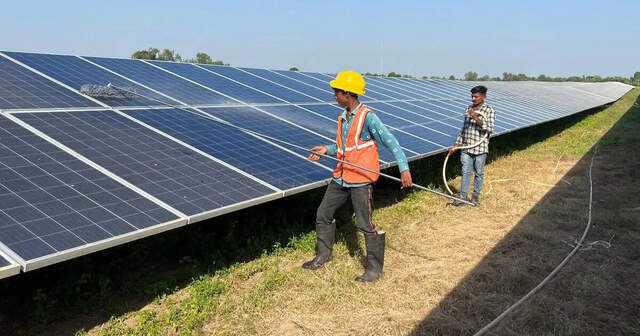
The India climate goals 2035 mark a significant step in the country’s journey toward sustainable development. The government has outlined an ambitious roadmap that focuses on expanding renewable energy, reducing carbon emissions, and ensuring long-term environmental stability.
As one of the fastest-growing economies in the world, India faces the dual challenge of sustaining growth while addressing climate change. Therefore, the new targets aim to strike a balance between economic development and environmental responsibility.
Importantly, these goals build on India’s previous commitments under global climate agreements. They reflect a stronger push toward clean energy and sustainable practices across sectors.
Read More: BJP deploys Manik Saha in Dharmadom, targets CPM
Focus on renewable energy expansion
A central pillar of the India climate goals 2035 is the expansion of renewable energy. The government plans to significantly increase the share of solar, wind, and other clean energy sources in the overall energy mix.
India has already made notable progress in renewable energy capacity. However, the new targets aim to accelerate this growth further. Large-scale solar parks, wind farms, and hybrid energy projects are expected to play a key role.
Additionally, the government is promoting rooftop solar installations and decentralized energy systems. These initiatives can help reduce dependence on fossil fuels and improve energy access in rural areas.
Moreover, investments in energy storage technologies are being prioritized. Efficient storage solutions are essential for managing the variability of renewable energy sources.
Reducing carbon emissions and enhancing sustainability
The India climate goals 2035 also emphasize reducing carbon emissions. The government aims to lower the carbon intensity of the economy through various measures.
Industries are being encouraged to adopt cleaner technologies. At the same time, stricter regulations are being implemented to control emissions.
Furthermore, the transition to electric mobility is gaining momentum. Electric vehicles (EVs) are expected to play a crucial role in reducing emissions from the transport sector.
The government is also focusing on sustainable urban development. Initiatives such as green buildings, improved public transport, and waste management systems contribute to this effort.
Strengthening policy and regulatory framework
To achieve the India climate goals 2035, a robust policy framework is essential. The government is introducing new policies and updating existing ones to support the transition to clean energy.
Incentives for renewable energy projects are being enhanced. These include subsidies, tax benefits, and easier access to financing.
Additionally, regulatory measures are being streamlined to facilitate project implementation. This helps reduce delays and encourages investment in the sector.
The government is also promoting public-private partnerships. Collaboration between different stakeholders can accelerate progress and ensure efficient resource utilization.
Role of technology and innovation
Technology plays a crucial role in achieving the India climate goals 2035. Innovations in renewable energy, energy storage, and carbon capture are essential for reducing emissions.
The government is supporting research and development in these areas. Startups and technology firms are being encouraged to develop innovative solutions.
Digital technologies are also being used to improve energy efficiency. Smart grids, data analytics, and automation can optimize energy usage and reduce wastage.
Moreover, advancements in battery technology are expected to enhance the adoption of electric vehicles. This will further contribute to emission reduction efforts.
Challenges in achieving climate targets
Despite the ambitious nature of the India climate goals 2035, several challenges remain. One of the primary concerns is financing. Large-scale investments are required to develop renewable energy infrastructure.
Additionally, the transition from fossil fuels to clean energy must be managed carefully. Ensuring energy security while reducing emissions is a complex task.
Another challenge is the integration of renewable energy into the existing grid. Variability in solar and wind power requires advanced grid management systems.
Furthermore, awareness and behavioral changes are important. Public participation is essential for the success of sustainability initiatives.
Global significance of India’s climate efforts
The India climate goals 2035 have global implications. As a major emitter, India’s actions can significantly influence global climate outcomes.
By adopting ambitious targets, India is demonstrating leadership in climate action. This can encourage other countries to strengthen their commitments.
Moreover, India’s focus on renewable energy can contribute to global technological advancements. Collaboration with international partners can accelerate progress.
The country’s efforts also highlight the importance of balancing development with sustainability. This approach is particularly relevant for other developing nations.
A roadmap for a sustainable future
The India climate goals 2035 represent a comprehensive roadmap for sustainable development. By focusing on renewable energy, emission reduction, and technological innovation, the country aims to address climate change effectively.
The success of these goals will depend on coordinated efforts across sectors. Government policies, private sector participation, and public awareness all play a crucial role.
In conclusion, the India climate goals 2035 reflect a strong commitment to environmental sustainability. While challenges remain, the roadmap provides a clear direction for the future. With consistent efforts and strategic planning, India can achieve its targets and contribute to global climate action.
Read More: Meghalaya to host Culinary Cascade Festival in Shillong