


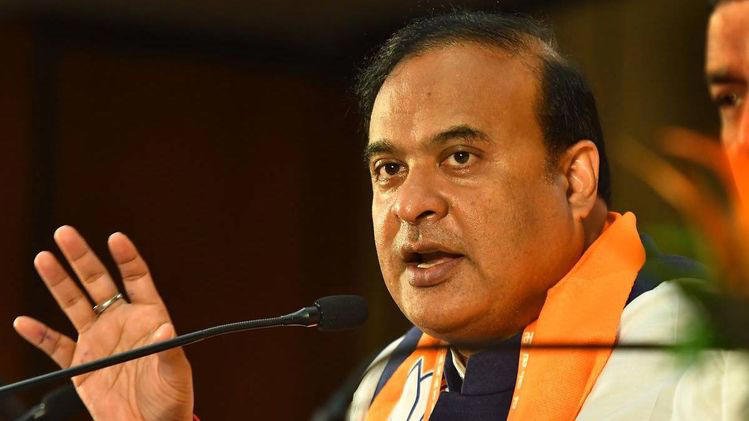
Infiltration a major threat to Northeast has been flagged by Assam Chief Minister Himanta Biswa Sarma, who said the issue poses serious demographic, social, and security challenges to the region. The Chief Minister stated that while Assam and Tripura have taken firm and proactive steps to curb infiltration, West Bengal must also respond decisively to prevent the problem from escalating further.
Moreover, Sarma stressed that infiltration is not a state-specific issue but a regional concern that demands coordinated action. He said unchecked infiltration affects law and order, resource distribution, and long-term stability in the Northeast.
Read More: Tripura accords top priority to tribal welfare: CM Manik Saha
Infiltration a major threat to Northeast, says Assam CM
Speaking on the issue, Himanta Biswa Sarma said infiltration continues to remain one of the biggest challenges facing the Northeast. He pointed out that porous borders and delayed administrative responses have allowed the problem to persist over decades.
According to him, infiltration alters demographic patterns and creates pressure on land, employment, and public services. Therefore, infiltration a major threat to Northeast must be addressed with urgency and political will across states.
Assam acting firmly against infiltration
The Chief Minister said Assam has adopted a strict and structured approach to tackle infiltration. Measures include intensified border surveillance, identification of illegal entrants, and legal action as per existing laws.
Additionally, Assam has strengthened coordination with central agencies and security forces. Sarma said the state government remains committed to protecting the rights of indigenous people. As a result, Assam has taken visible steps to curb infiltration and prevent its spread.
Tripura also taking decisive action
Sarma acknowledged that Tripura has also acted decisively against infiltration. He said the state government has tightened border management and improved coordination with security agencies.
Tripura’s efforts, according to the Assam CM, show that firm governance and cooperation with the Centre can yield results. Therefore, infiltration a major threat to Northeast is being addressed effectively where political intent exists.
Bengal must respond, warns Assam CM
While appreciating Assam and Tripura, Sarma said West Bengal must also respond with seriousness. He warned that failure to act in one state can undermine efforts made by others.
He added that infiltration routes do not follow political boundaries. Hence, if Bengal does not take strong action, pressure will continue to shift toward the Northeast. According to Sarma, infiltration a major threat to Northeast requires uniform action across eastern India.
Border security and administrative coordination
The Chief Minister emphasised the need for robust border security and administrative coordination. He said central and state governments must work together to strengthen fencing, surveillance, and monitoring.
Moreover, Sarma said timely detection and legal action are essential. Delays, he warned, only complicate the situation. Therefore, infiltration a major threat to Northeast can be controlled only through coordinated governance.
Impact on social harmony and resources
Sarma also spoke about the social consequences of infiltration. He said unchecked migration strains resources and can lead to social tension.
According to him, indigenous communities often feel insecure when demographic changes occur rapidly. Therefore, infiltration a major threat to Northeast affects not just security but also social harmony and economic stability.
Political responsibility and accountability
The Assam CM said political leadership must take responsibility rather than politicise the issue. He argued that infiltration should be addressed as a governance challenge, not an electoral tool.
He urged all states to rise above party lines and work in the national interest. Hence, infiltration a major threat to Northeast must be met with accountability and transparency.
Centre’s role in tackling infiltration
Sarma acknowledged the Centre’s role in strengthening border management and supporting state efforts. He said central agencies and forces play a crucial role in surveillance and enforcement.
However, he added that state-level cooperation remains equally important. Without administrative will at the state level, central efforts alone cannot succeed.
Way forward for the Northeast
Concluding his remarks, Himanta Biswa Sarma reiterated that infiltration a major threat to Northeast cannot be ignored any longer. He called for a unified strategy involving Assam, Tripura, West Bengal, and central authorities.
Overall, the Chief Minister’s statement underlined the urgency of the issue. By stressing that Assam and Tripura are acting while Bengal must respond, Sarma sought to push for coordinated regional action to safeguard the Northeast’s security, identity, and stability.
Read More: Mizoram minister inspects Tripura–Mizoram gas pipeline project in Agartala