


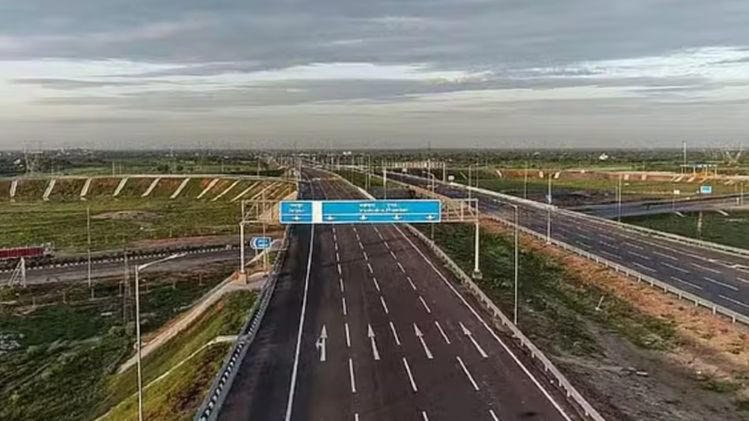
The Meghalaya government has started land acquisition for the Shillong-Silchar high-speed corridor, a ₹23,000 crore project that promises to transform connectivity in the region. This major infrastructure initiative aims to improve road travel between Meghalaya and Assam while boosting trade and tourism across the Northeast.
Chief Minister Conrad K. Sangma confirmed the land acquisition process during a recent update. He highlighted the project’s potential to reshape Meghalaya’s economy by offering faster, safer, and more reliable road access.
Read More: Meghalaya Bets Big on Flowers with ₹240 Cr Mission
Shillong-Silchar high-speed corridor to reduce travel time
The Shillong-Silchar high-speed corridor will span over 250 kilometres. It will link Shillong with Silchar, a key trade centre in Assam. Currently, the journey takes more than six hours due to poor road conditions, narrow routes, and frequent landslides. Once completed, the new highway will reduce the travel time to about three hours.
This corridor will not only improve connectivity within Meghalaya but also link the state to Barak Valley, Mizoram, Manipur, and parts of Tripura. Sangma noted that the project aligns with the central government’s vision of transforming Northeast India through better roads and infrastructure.
Government identifies priority zones for land acquisition
To move the project forward, the state has identified key areas for land acquisition in East Khasi Hills and Ri-Bhoi districts. These districts will serve as the initial sites for highway development. The Revenue and Transport Departments are working together to ensure a smooth process.
Officials have begun consultations with local communities and village councils. The government plans to acquire over 1,000 hectares of land for the project. Most of this land includes agricultural plots, forest stretches, and rural settlements.
CM Sangma assured that the compensation process will be fair and transparent. Landowners will receive adequate financial support, and the state will follow all required environmental and legal guidelines.
Corridor promises trade, tourism, and logistics boost
The Shillong-Silchar high-speed corridor is expected to unlock new trade opportunities. It will allow faster transport of goods, especially for industries dealing with perishables, construction material, and farm produce. Transport costs will drop, and more businesses will consider investing in the region.
Tourism will also benefit from this project. With smoother and quicker travel, Shillong can attract more visitors from neighbouring states and even Bangladesh. Sangma pointed out that better roads lead to increased footfall in hill stations, boosting the local economy.
The corridor will also play a role in strengthening India’s defence logistics. It will provide a quicker route for military movement and supplies in border areas of the Northeast.
Central support under Bharatmala Pariyojana
The highway will be built under the Bharatmala Pariyojana scheme, which aims to improve highway infrastructure across India. The National Highways & Infrastructure Development Corporation Ltd (NHIDCL) will execute the project, with Meghalaya’s PWD coordinating on the ground.
Funding will come in phases. Each phase will align with progress in land acquisition, environmental clearance, and survey completion. Satellite mapping and drone surveys have already begun to help in precise planning and alignment.
CM Sangma mentioned that the government aims to finish land acquisition within a year. Construction work is expected to begin in late 2026, depending on clearances.
Infrastructure push to drive Meghalaya’s growth
The Shillong-Silchar high-speed corridor is part of Meghalaya’s larger infrastructure roadmap. Projects such as the Western Bypass, the Jowai-Ratacherra road upgrade, and the Tura-Mankachar highway are already in progress.
Sangma said the state wants to develop world-class infrastructure to support economic growth, create jobs, and improve quality of life. Roads and highways are central to this mission, especially in a hilly state like Meghalaya where terrain challenges affect movement.
By investing in high-speed corridors, the government hopes to improve rural-urban connectivity, support farmers, and enable faster access to healthcare and education.
Environmental safeguards and public involvement
To protect the environment, the government is conducting a full Environmental Impact Assessment (EIA). The Forest Department is working with external experts to ensure minimal impact on biodiversity and forest cover. Officials will carry out compensatory afforestation in affected zones.
The project also includes strong social safeguards. Displaced families will receive compensation, housing support, and access to skill training. Those affected will also get priority in employment during the construction phase.
Local committees and grievance cells will monitor the land acquisition process. This setup ensures that community voices are heard and disputes resolved promptly.
With land acquisition now underway, the Shillong-Silchar high-speed corridor is moving closer to reality. This ₹23,000 crore project goes beyond road building—it promises to drive economic transformation, regional growth, and long-term development for Meghalaya and the Northeast.
Faster travel, better trade routes, increased tourism, and improved connectivity—this corridor brings all these possibilities closer for Meghalaya’s people.
Read More: Assam hill districts protests over Article 244(A): Powerful backlash erupted