


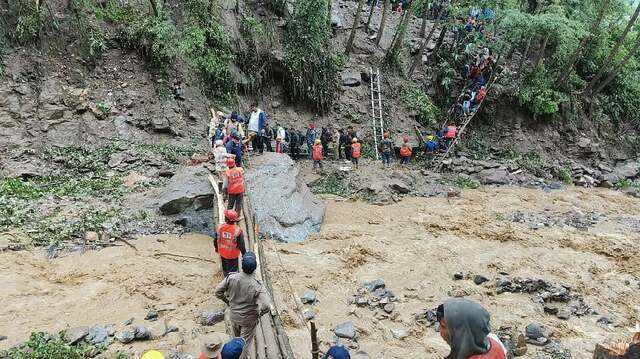
Heavy rainfall triggered landslides in parts of West Sikkim, disrupting normal life and affecting movement in several areas. The sudden landslides created difficulties for residents and travellers as debris blocked roads and access routes.
The situation also prompted a quick response from the Sashastra Seema Bal (SSB). Personnel carried out rescue operations and helped residents affected by the landslides.
West Sikkim has a mountainous landscape that makes several areas vulnerable to landslides during periods of intense rainfall. Heavy rain can loosen soil and rocks on steep slopes. The resulting debris can quickly cover roads and isolate communities.
The latest incident has once again highlighted the need for quick disaster response in the Himalayan state.
SSB Personnel Rescue Stranded Residents
SSB personnel played an important role in the rescue operation following the landslides. Teams reached affected locations and helped residents move away from areas affected by debris and road blockages.
Rescue personnel often face difficult conditions during such operations. Steep terrain, unstable slopes and continuous rainfall can make movement dangerous.
The SSB teams worked to ensure that affected residents reached safer locations. They also helped clear access routes where possible.
Their response provided immediate assistance to people who faced difficulties because of the landslides.
Heavy Rain Increases Landslide Risk
Sikkim receives significant rainfall during the monsoon season. The state’s mountainous terrain increases the risk of landslides when heavy rain continues for several hours or days.
Rainwater can enter cracks in the soil and rock. This process reduces the stability of slopes and can cause large sections of earth to move downhill.
Road construction and other development activities can also affect slope stability in some areas. However, natural factors remain a major cause of landslides across the Himalayan region.
Residents in vulnerable areas need to remain alert during periods of heavy rainfall. Authorities often advise people to avoid travelling through areas with visible cracks, falling rocks or fresh debris.
Roads Face Major Challenges
Landslides frequently affect road connectivity in Sikkim. Roads provide a vital link between villages, towns and essential services.
When debris blocks a road, residents can face difficulties accessing hospitals, markets and other important facilities.
Transport disruptions can also affect the movement of food and other essential supplies.
Clearing roads quickly therefore becomes an important part of disaster response. Local authorities and security forces may work together to remove debris and reopen routes.
However, teams must first assess the stability of the surrounding slopes. Clearing debris without checking the area can expose workers and residents to additional risks.
Rescue Teams Work in Difficult Terrain
Mountain rescue operations require careful planning. Sikkim’s steep slopes and narrow roads can make it difficult for rescue teams to reach affected communities.
Poor visibility can create additional challenges during heavy rainfall. Loose soil and falling rocks can also pose risks to personnel.
Despite these difficulties, trained security and disaster response teams can provide critical assistance.
The SSB has a strong presence in the region. Its personnel can respond quickly when emergencies affect remote areas.
Their involvement can help authorities reach communities that might otherwise remain isolated.
Importance of Early Warning Systems
Landslide-prone regions need effective early warning systems. Timely information can give residents more time to move to safer locations.
Authorities can monitor rainfall, soil movement and slope conditions in vulnerable areas. Modern technology can help detect signs of instability before a major landslide occurs.
Local communities also play an important role. Residents often notice changes in slopes before authorities can reach an area.
Cracks in roads, unusual water flow and falling rocks can signal a potential landslide. People should report such signs to local authorities as quickly as possible.
Need for Strong Disaster Preparedness
The latest landslides underline the importance of disaster preparedness in Sikkim.
Authorities need to keep emergency teams ready during periods of heavy rainfall. They also need equipment and supplies to clear roads and assist affected communities.
Local administrations can identify vulnerable locations before the monsoon season. They can also prepare evacuation plans for communities at higher risk.
Regular public awareness campaigns can help residents understand what to do during a landslide.
Schools and local organisations can also conduct disaster preparedness activities. Such efforts can improve community response during emergencies.
Protecting Vulnerable Communities
People living near steep slopes and landslide-prone roads face greater risks during heavy rain.
Authorities can identify these communities and provide them with timely warnings. They can also establish safe shelters in accessible locations.
Evacuation plans should consider the needs of elderly people, children and people with disabilities.
Emergency communication also matters. Mobile alerts, local announcements and community networks can help spread warnings quickly.
Strong coordination between local officials, security forces and residents can reduce confusion during a crisis.
Sikkim’s Need for Resilient Infrastructure
The recurring threat of landslides also highlights the need for stronger infrastructure in the Himalayan state.
Roads and bridges need designs that account for difficult terrain and extreme weather. Drainage systems can help control the flow of rainwater and reduce pressure on vulnerable slopes.
Engineers can also use slope stabilisation measures in high-risk areas.
Long-term planning can reduce the impact of future landslides. Authorities can combine infrastructure improvements with better monitoring and disaster preparedness.
SSB Response Highlights Importance of Coordination
The rescue operation in West Sikkim demonstrates the importance of coordination during natural disasters.
Security forces such as the SSB can provide manpower and specialised support during emergencies. Local authorities can coordinate evacuation, medical assistance and road restoration.
When these agencies work together, they can respond more efficiently.
The quick assistance provided to affected residents also shows the importance of maintaining emergency preparedness in remote Himalayan areas.
Looking Ahead
The West Sikkim landslides have disrupted movement and created difficulties for residents. The SSB’s rescue efforts provided important support to people affected by the incident.
The situation also highlights the continuing landslide risks that Sikkim faces during periods of heavy rainfall.
Authorities will need to focus on road restoration, slope monitoring and public safety in the affected areas. Long-term measures can also strengthen the state’s ability to respond to future disasters.
For residents of vulnerable regions, timely warnings and quick rescue operations can make a significant difference.
As rainfall continues to pose risks across the Himalayan region, strong disaster preparedness will remain essential. Sikkim’s experience shows why resilient infrastructure, effective early warnings and coordinated emergency response must remain key priorities.