


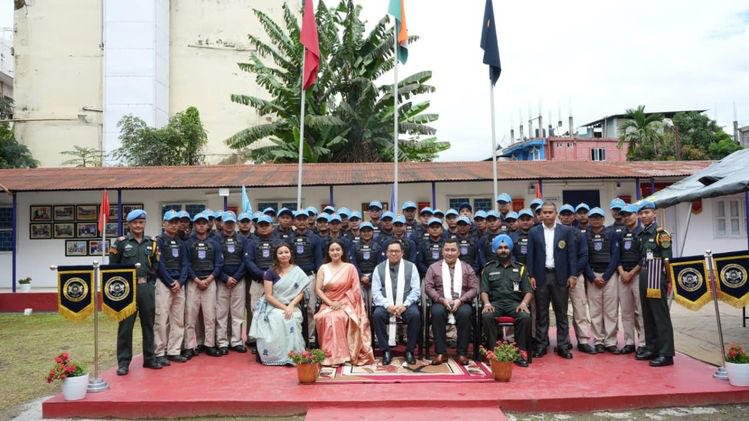
Amid concerns over unemployment in Manipur, entrepreneur Thangjam Dhabali Singh has urged young people to focus on skill development alongside academic education. Singh, chairman and managing director of the Babina Group of Companies, said practical skills can help young people explore more employment opportunities.
He made the remarks at a certificate and appointment letter distribution ceremony in Imphal on September 23. The event was held at the Homeland Academy of Tactical Security and Fire Safety at the Assam Rifles Sanjeevani Complex in North AOC.
The programme marked the completion of professional security training for the ninth batch of trainees. Singh attended the event as the chief guest. He encouraged young people to develop skills that can generate income and create opportunities for self-employment.
Read More: Suvendu Adhikari Flags Off Rs 94 Crore Firefighting Fleet in West Bengal
Entrepreneur Highlights Employment Challenge
Singh said Manipur is facing a serious employment challenge. He claimed that around five lakh educated youths are looking for jobs in the state.
According to Singh, the government’s capacity to provide employment remains limited compared with the number of job seekers. He therefore called for greater attention to private-sector employment, entrepreneurship and vocational training.
His comments come amid wider concerns about unemployment among educated youth in Manipur. A recent protest by the Manipur Youth Congress also focused on vacant government posts and recruitment opportunities. The organisation claimed that more than 50,000 government positions remain vacant.
Skill Training Alongside Academic Education
Singh said academic qualifications alone may not be enough in a competitive job market. He encouraged young people to develop at least one skill that can help them earn an income.
He stressed the importance of combining education with practical training. Skills can help young people pursue employment in different sectors. They can also support entrepreneurship and self-employment.
“Every youth should try to excel in at least one skill that can generate income,” Singh said at the programme.
His message focused on expanding career choices beyond traditional academic routes. He also urged young people to make use of skill-development programmes available through government and other institutions.
Security Training Creates Employment Opportunities
The event highlighted one example of how vocational training can connect young people with jobs.
The Homeland Academy conducted professional security training under an initiative supported by the Inspector General Assam Rifles (South). The programme focuses on practical skills required in the security sector.
The training includes physical preparedness, access control, surveillance and fire safety. Participants also receive training in emergency response, communication, workplace conduct and operational discipline.
A total of 50 trainees completed the ninth batch of the programme. They received certificates and appointment letters during the ceremony.
Reports said around 70% of the trainees were scheduled to leave Imphal on September 27 for employment opportunities in Kolkata and Tamil Nadu. More than 750 young people from Manipur have reportedly received training and placement through the initiative so far.
Private Sector Can Expand Job Options
Singh also stressed that the government alone cannot provide jobs for every young person. He encouraged youth to consider opportunities in the private sector.
Private companies can create employment across different fields. These include security services, healthcare, information technology, tourism, retail and other industries.
Entrepreneurship can provide another option. Young people with relevant skills can establish small businesses and services instead of depending only on formal employment.
Manipur University also highlights entrepreneurship and skill development as potential career pathways for educated youth. Its Department of Vocational Studies and Skill Development aims to support employability, entrepreneurship and self-employment.
Manipur Needs More Skilled Workers
Singh referred to the level of skill training in India and other countries. He said India needs to expand vocational education and practical training.
He cited Japan and South Korea as examples of countries that place strong emphasis on skill-based education. He argued that Manipur also needs a larger skilled workforce.
According to Singh, improving skills can help create both employees and entrepreneurs. A stronger skilled workforce can also make the state more attractive to businesses looking for trained workers.
His remarks placed skill development at the centre of the broader discussion about employment.
Youth Training Can Support Entrepreneurship
Skill development can also support young people who want to start businesses.
Training gives participants practical knowledge in specific areas. With additional support in finance, mentoring and marketing, such skills can potentially become the foundation for small enterprises.
Singh urged young people to look beyond conventional employment paths. He said they should consider becoming entrepreneurs and job creators.
A June 2026 workshop at Dhanamanjuri University also highlighted the need to strengthen employment and entrepreneurship pathways. The workshop found that many students had limited exposure to internships and formal vocational training.
Importance of Industry-Linked Training
The security training programme also demonstrates the value of linking training with actual employment.
Trainees did not only receive certificates. Many also received appointment letters for jobs outside Manipur.
Such programmes can give young people a clearer path from training to employment. They can also provide experience that may help participants pursue further opportunities.
Singh praised the Homeland Academy for creating such employment-linked training opportunities. He encouraged similar efforts to expand the range of skills available to Manipur’s youth.
Youth Encouraged to Build Professional Skills
Singh also advised trainees who are moving outside Manipur for work to maintain discipline and professionalism.
He said young workers should perform their duties sincerely and responsibly. Their performance can influence how employers view workers from the state.
The advice also reflects the wider challenge of creating more employment opportunities within Manipur. Until local opportunities expand, some young people may need to seek jobs in other states.
Building a reputation for skilled and disciplined workers could help create further employment opportunities in the future.
Employment Debate Continues in Manipur
The focus on skill training comes as unemployment remains an important concern among Manipur’s youth.
Recent discussions have highlighted the need to diversify employment beyond government jobs. Education, vocational training, internships, entrepreneurship and private-sector development have all emerged as potential areas of focus.
The state also has institutions working to promote vocational education and entrepreneurship. However, wider access to training and stronger links between skills and employment remain important.
Focus Shifts Towards Skills and Self-Reliance
Thangjam Dhabali Singh’s message has placed skill development and entrepreneurship at the centre of the employment discussion in Manipur.
The professional security training programme offers one example of an employment-linked model. Fifty trainees completed the latest batch, with many receiving appointment letters for jobs outside the state.
For Manipur’s young population, skill training can provide an additional pathway alongside formal academic education. Expanding such opportunities could help young people explore private-sector jobs, entrepreneurship and self-employment.
The wider challenge remains creating enough opportunities for the state’s growing pool of educated youth. Singh’s call is therefore for young people to build practical skills while also exploring new forms of employment and enterprise.