


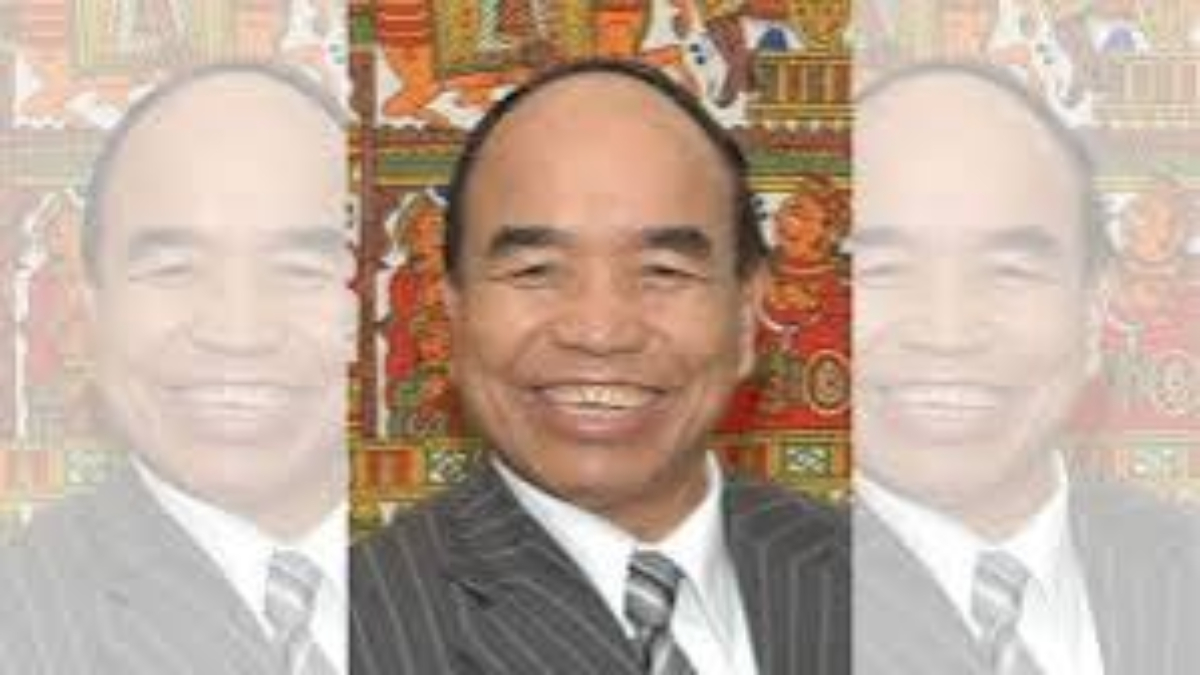
Former Mizoram Chief Minister Zoramthanga has called for a Manipur peace dialogue, saying the divisions in the state have become too deep for reconciliation without addressing the concerns of affected communities. Speaking in Delhi, he described the situation as difficult but said he believed the crisis could still be healed through consultation and sustained engagement.
Zoramthanga’s remarks come as Manipur continues to face serious tensions among different ethnic communities. The state has seen renewed violence, political disagreements and prolonged disruptions, making dialogue and confidence-building central issues in efforts to restore normalcy.
Manipur peace dialogue must address deep grievances
Zoramthanga said the divisions in Manipur could not be resolved simply by bringing opposing sides together. He compared the situation to a deep wound and stressed that reconciliation would require attention to the issues that caused the divisions.
“The problem of Manipur can also be healed by consulting the people and listening to their problem,” he said, according to India Today NE.
The former Mizoram chief minister also suggested that the Government of India could help find a way forward by engaging affected communities and taking their concerns into account. His remarks placed consultation at the centre of the proposed Manipur peace dialogue.
Why Manipur peace dialogue remains difficult
The conflict in Manipur began with large-scale ethnic violence in May 2023 involving the valley-based Meitei community and the hill-based Kuki-Zo community. More recently, tensions have also affected relations between Naga and Kuki-Zo communities in the hill districts.
Human Rights Watch reported in September that renewed violence between Naga and Kuki-Zo communities had added another layer to the conflict. It said at least seven people were killed in violence in late August, while the broader conflict since 2023 had caused hundreds of deaths and widespread displacement.
As a result, any Manipur peace dialogue would have to account for the concerns of multiple communities rather than focus on only one set of grievances.
Recent talks show room for engagement
Despite the challenges, recent developments have shown that dialogue remains possible.
On September 26, the United Naga Council agreed to temporarily suspend its economic blockade after a tripartite meeting involving the Centre and the Manipur government in Assam. The discussions addressed demands linked to security, the Suspension of Operations agreement and the deaths of six Naga men.
Earlier, Manipur Chief Minister Yumnam Khemchand Singh called for unity and mutual understanding among the state’s 36 communities. He also said discussions with civil society groups and stakeholders had helped efforts to restore movement along the Imphal-Guwahati route.
These developments indicate that negotiations can produce limited openings even when wider disagreements remain unresolved.
Government and communities face a complex task
The government faces the difficult task of combining security measures with political and community engagement. Recent meetings between security officials and civil society representatives in Jiribam also focused on dialogue, trust-building and peaceful coexistence between communities.
At the same time, disagreements over the Suspension of Operations agreement show how sharply positions remain divided. Some Meitei and Naga civil society groups have demanded its abrogation, while the Kuki Inpi Manipur has defended the arrangement as a framework for dialogue and said alleged violations should be addressed through established mechanisms.
Therefore, a workable Manipur peace dialogue would need broad participation and credible mechanisms for addressing competing concerns.
Listening remains central to a lasting solution
Zoramthanga’s comments also draw attention to the importance of listening before attempting to settle political differences. His own political career included participation in the negotiations that culminated in the 1986 Mizoram Peace Accord, although Manipur’s present conflict has different historical and political circumstances.
For Manipur, rebuilding trust will likely require sustained engagement, protection of civilians and attention to unresolved grievances. The recent suspension of the highway blockade demonstrates that negotiations can create immediate openings, even when deeper questions remain.
Zoramthanga did not present a quick solution. Instead, he argued that the state’s divisions, however deep, should not be treated as beyond repair. His call for consultation adds to growing demands for engagement among communities and stakeholders as Manipur searches for a path towards peace and normalcy.
NH-29 project now faces fresh blockade threat in Nagaland