


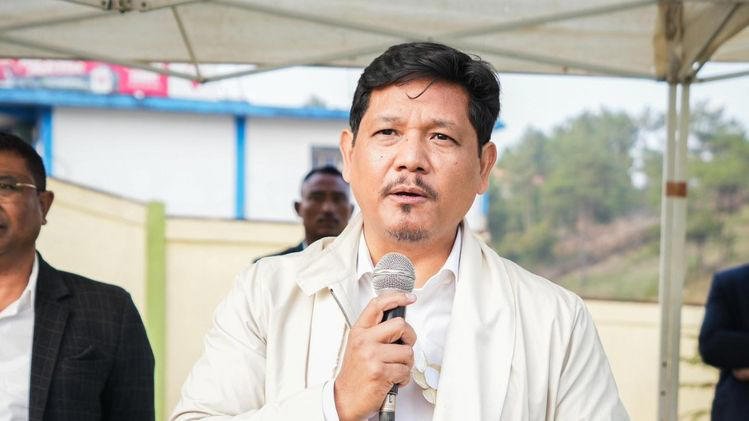
Meghalaya Chief Minister Conrad K. Sangma has welcomed the recently introduced women’s reservation bill, calling it a historic step toward inclusive governance. He stated that the move would empower women across the country while also strengthening democratic institutions. At the same time, the Chief Minister expressed hope that the bill could pave the way for an increase in parliamentary seats for Meghalaya.
The Meghalaya women’s quota bill has sparked conversations across political circles in the state. Leaders from various parties have acknowledged the importance of enhancing women’s participation in politics. Sangma highlighted that women in Meghalaya already play a crucial role in society. Therefore, their increased representation in legislative bodies would reflect the ground reality more accurately.
Moreover, the Chief Minister pointed out that Meghalaya has a unique social structure where women contribute significantly to family and community decision-making. As a result, providing them with greater political space would not only be symbolic but also practical.
Read More: Pradyot Debbarma Confident of Tipra Motha Win in TTAADC Polls
Call for Increased Representation for Meghalaya
While welcoming the bill, Sangma raised concerns about the current representation of smaller states like Meghalaya in Parliament. He argued that population-based seat allocation often leaves northeastern states underrepresented. Therefore, he urged the central government to consider revisiting seat distribution.
According to the Chief Minister, Meghalaya’s geographical challenges and cultural diversity require stronger representation at the national level. He noted that increasing the number of seats would ensure that the voices of the people are heard more effectively in Parliament.
Furthermore, Sangma emphasized that development issues in the Northeast differ from those in other regions. Hence, adequate representation becomes essential to address region-specific concerns. He added that the women’s reservation bill could act as a catalyst for broader electoral reforms, including seat expansion.
Political observers in the state believe that this demand aligns with long-standing concerns in the Northeast. Many leaders have consistently argued that equitable representation should not depend solely on population figures. Instead, factors such as geography, connectivity, and strategic importance should also play a role.
Women’s Empowerment in Meghalaya
The Meghalaya women’s quota bill resonates strongly in a state known for its matrilineal traditions. In many communities, lineage and inheritance pass through women. This cultural aspect already provides women with a degree of social authority.
However, despite this social standing, political representation of women remains limited. Sangma acknowledged this gap and stated that the bill would help bridge it. He added that encouraging women to enter politics would bring fresh perspectives and more inclusive policymaking.
Additionally, the Chief Minister stressed the importance of capacity building and leadership training for women. He suggested that political parties must actively support female candidates. Without such support, reservation alone may not achieve its intended impact.
Civil society groups in Meghalaya have also welcomed the bill. Many organizations have been advocating for greater participation of women in governance. They believe that the reservation policy will encourage more women to step forward and take leadership roles.
At the same time, experts have pointed out that implementation will be key. They argue that political will, along with institutional support, will determine the success of the initiative.
Political Reactions and Future Outlook
The Meghalaya women’s quota bill has received a mixed yet largely positive response from political parties. While most leaders have welcomed the move, some have raised questions about its implementation timeline and scope.
Opposition parties in the state have supported the idea of women’s reservation but have also demanded clarity on seat allocation. They have urged the government to ensure that smaller states do not lose out in the process.
Meanwhile, analysts believe that the bill could reshape the political landscape in Meghalaya. With more women entering the fray, electoral dynamics may change significantly. This shift could lead to more issue-based politics and greater focus on social welfare.
Sangma reiterated that the bill should not be seen in isolation. Instead, it must be part of a larger effort to strengthen democratic representation across the country. He expressed confidence that the central government would consider the concerns of northeastern states.
Looking ahead, the Chief Minister indicated that Meghalaya would actively engage with the Centre on this issue. He emphasized that collaboration between states and the Union government is essential for meaningful reform.
In conclusion, the Meghalaya women’s quota bill marks an important step toward gender equality in politics. At the same time, it has opened up discussions on representation and federal balance. As the debate continues, Meghalaya’s demand for increased seats highlights the need for a more inclusive approach to governance.
Read More: Women Quota Bill Proposes Lok Sabha Expansion to 850