


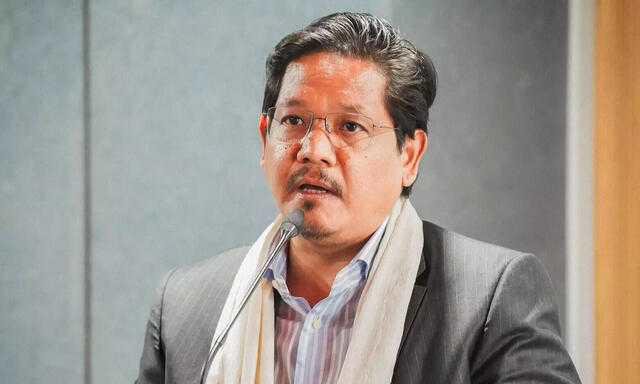
Meghalaya Chief Minister Conrad Sangma has assured residents living in disputed border regions that his government will continue development work in coordination with Assam. The statement comes amid ongoing efforts by both northeastern states to peacefully resolve long-standing boundary disputes while ensuring that local communities do not suffer due to administrative uncertainties.
The chief minister stressed that development and public welfare must remain a priority regardless of border disagreements. He stated that both Meghalaya and Assam are working together to maintain peace and improve infrastructure, healthcare, education, and connectivity in sensitive areas along the inter-state boundary.
Read More: BJP Appoints JP Nadda As Observer For Assam Legislature Party Election
His remarks have generated significant political and public attention because the Assam-Meghalaya border issue has remained one of the most discussed regional matters in Northeast India for decades.
Meghalaya Government Focuses On Border Area Development
Speaking during a public interaction, Conrad Sangma highlighted that the Meghalaya government has already initiated several development projects in border villages. He explained that people living in disputed regions should not feel neglected due to unresolved territorial claims.
According to the chief minister, the state government aims to strengthen road connectivity, improve healthcare facilities, and expand educational infrastructure in these areas. He added that welfare schemes and public services would continue without interruption.
The Meghalaya government has repeatedly maintained that residents in border regions deserve equal access to development opportunities. Therefore, authorities are attempting to ensure that essential government schemes reach remote settlements despite administrative challenges.
Officials believe improved infrastructure and better governance can help reduce tensions in sensitive locations. Consequently, both states have shown interest in maintaining regular communication regarding development initiatives near disputed stretches.
Coordination Between Assam And Meghalaya Gains Momentum
The coordination between Meghalaya and Assam has increased significantly over the past few years. Both state governments have held multiple rounds of talks to address border disputes through dialogue instead of confrontation.
Chief Minister Conrad Sangma stated that discussions with the Assam government remain constructive and positive. He noted that coordination between administrative officials from both states has helped maintain peace in several areas that previously witnessed tension.
The governments of Meghalaya and Assam had earlier signed agreements to resolve disputes in some contested sectors. Although several issues still remain pending, both sides continue negotiations to find mutually acceptable solutions.
Political analysts believe the emphasis on development cooperation reflects a more pragmatic approach by both governments. Instead of allowing disputes to stall progress, the states are trying to ensure that local communities continue receiving public services.
Border Residents Welcome Development Assurance
Residents living near disputed areas have welcomed the Meghalaya chief minister’s assurance regarding continued development. Many villagers stated that basic infrastructure, roads, electricity, drinking water, and healthcare facilities remain urgent priorities in remote settlements.
Several community leaders said that border residents often face difficulties due to uncertainty regarding administrative jurisdiction. Therefore, the promise of coordinated development has raised hopes among local populations.
People residing in these regions have long demanded better transportation and improved access to government welfare schemes. In many villages, poor road conditions and limited healthcare access continue to affect daily life.
The Meghalaya government has indicated that special attention will be given to such concerns. Moreover, officials stressed that development projects would proceed in consultation with local communities and administrative authorities.
Political Importance Of Assam-Meghalaya Border Talks
The Assam-Meghalaya border issue carries major political significance in Northeast India. The dispute dates back several decades and involves multiple stretches along the interstate boundary.
Over the years, disagreements occasionally led to tensions between local groups in some border areas. However, recent diplomatic engagement between the two state governments has helped create a more stable environment.
Political observers believe the current approach adopted by both governments reflects a shift toward cooperation and dialogue. Leaders from both states have repeatedly stated that peaceful resolution remains their primary objective.
The development-focused narrative is also politically important because residents in border regions often judge governments based on infrastructure delivery and administrative responsiveness. Therefore, visible development work could influence public perception positively.
Analysts further noted that maintaining peace in disputed areas remains crucial for economic growth and regional stability across the Northeast.
Infrastructure Projects Likely To Increase
Government officials hinted that more infrastructure projects could soon be launched in the border belt. These may include road upgrades, school buildings, health centres, drinking water schemes, and rural electrification initiatives.
The Meghalaya government has reportedly identified several villages requiring urgent development support. Coordination with Assam authorities is expected to help avoid administrative complications during project implementation.
Experts believe improved infrastructure could strengthen economic activity in border regions. Better roads and connectivity may encourage trade, tourism, and agricultural transport while also improving emergency services access.
Moreover, local youth may benefit from better educational and employment opportunities if development activities continue steadily in the coming years.
The state government has also stressed the importance of maintaining social harmony while executing projects in disputed locations.
Opposition Parties Closely Monitoring Developments
Opposition leaders in Meghalaya have been closely monitoring the government’s handling of border-related matters. While many welcomed the emphasis on development, some leaders urged the government to remain cautious regarding territorial interests.
Political debates surrounding the border issue often intensify during election periods. Therefore, the government’s strategy of balancing development with diplomatic negotiations is likely to remain under public scrutiny.
However, several observers pointed out that continued coordination between Assam and Meghalaya could reduce political tensions in the long run. The success of development initiatives may also strengthen public confidence in ongoing peace efforts.
Meanwhile, civil society groups have encouraged both states to prioritise dialogue, transparency, and community participation during future negotiations.
Development And Peace Remain Key Priorities
Chief Minister Conrad Sangma reiterated that peace and development must go hand in hand in border regions. He stated that ordinary residents should not face hardships because of unresolved administrative disputes.
The Meghalaya government believes coordinated governance efforts with Assam can help improve living conditions while creating a stable environment for future negotiations. Officials also stressed that dialogue remains the best path toward resolving sensitive interstate issues.
As discussions continue between the two northeastern states, residents of disputed areas hope that promises of development will translate into visible progress on the ground. Improved infrastructure and stronger administrative coordination could significantly transform daily life in these remote regions.
Read More: Mamata Banerjee Faces First Political Test In Civic Polls
The Meghalaya CM’s assurance has therefore emerged as an important political message, signalling that development, peace, and cooperation will remain central to the state’s approach in disputed border areas.