


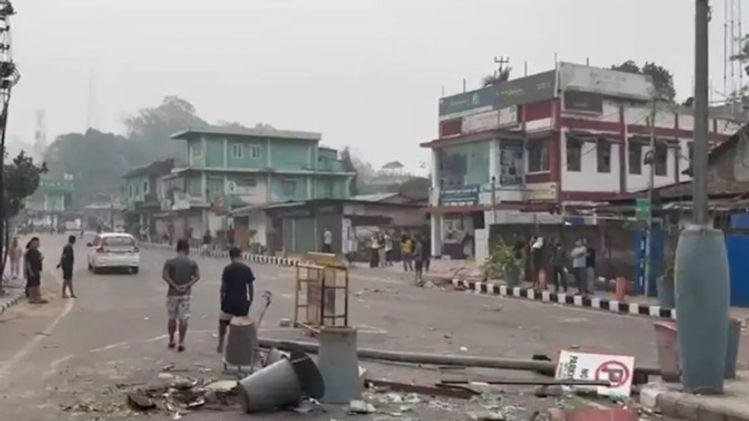
The Meghalaya government has constituted a judicial inquiry panel to investigate the recent unrest in the Garo Hills region linked to nomination-related disputes during the Autonomous District Council (ADC) elections. The decision comes after tensions escalated in several areas following allegations of irregularities, clashes between political supporters, and disruptions during the filing of nominations.
Officials said the judicial panel will examine the sequence of events that led to violence and public disorder during the nomination process. The inquiry is also expected to identify lapses in administration, security arrangements, and election management.
The unrest has triggered political concern across Meghalaya, especially because the ADC elections play a significant role in the governance structure of tribal areas in the state.
Read More: Tripura CM Manik Saha Reviews Public Services And Law And Order
Government Orders Judicial Inquiry
According to state officials, the Meghalaya government decided to initiate a judicial probe to ensure transparency and accountability. The inquiry panel will reportedly investigate complaints raised by political parties, candidates, and local organisations regarding disturbances during the nomination phase.
Authorities stated that the panel would collect evidence, examine official records, and interact with witnesses connected to the incidents.
The state government believes a judicial inquiry can help restore public confidence and reduce political tensions in the region.
Senior officials also indicated that the findings of the inquiry may lead to administrative recommendations aimed at preventing similar incidents in future elections.
The unrest reportedly affected parts of the Garo Hills region, where supporters of rival political groups clashed during the nomination process.
Tensions During ADC Nomination Filing
The disturbances reportedly began when groups of political workers gathered near nomination centres in different districts of Garo Hills. Several allegations emerged regarding attempts to obstruct candidates from filing nominations.
Eyewitness accounts suggested that heated confrontations took place between rival political supporters, leading to chaos in certain areas. In some locations, security personnel were deployed to control crowds and prevent further escalation.
Political parties accused each other of intimidation and disruption during the nomination process. Opposition leaders demanded strict action against those responsible for creating unrest.
Meanwhile, local authorities imposed additional security measures in sensitive areas to maintain law and order.
The incidents sparked widespread debate because the ADC elections hold strong political and cultural significance in Meghalaya’s tribal regions.
Importance Of Autonomous District Councils
Autonomous District Councils in Meghalaya function under the Sixth Schedule of the Indian Constitution. These councils possess administrative and legislative powers related to land, customs, local governance, and traditional institutions in tribal areas.
The Garo Hills Autonomous District Council remains an influential political institution in the region. Therefore, elections connected to the council often witness intense political competition.
Political observers noted that control over ADCs carries both administrative and symbolic importance for regional political parties.
The recent unrest has therefore raised concerns about the conduct of democratic processes in sensitive tribal regions.
Experts believe peaceful elections remain essential for maintaining trust in local self-governance institutions.
Opposition Parties Demand Accountability
Several opposition leaders criticised the government over the incidents and accused authorities of failing to ensure adequate security during the nomination process.
Some parties alleged that political interference contributed to the disturbances. They demanded impartial investigations and strict punishment for individuals involved in violence or intimidation.
At the same time, ruling coalition leaders defended the government’s response and stated that the judicial panel would independently examine all allegations.
Political debates intensified after videos and reports related to clashes circulated widely on social media platforms.
Civil society groups also called for restraint and urged political parties to maintain peace during the election process.
Security Tightened In Sensitive Areas
Following the unrest, security forces increased patrols in several parts of Garo Hills. Officials said preventive measures were introduced to avoid further clashes during the election campaign period.
Police authorities reportedly monitored politically sensitive zones and held meetings with community leaders to reduce tensions.
The administration also appealed to political parties and supporters to cooperate with law enforcement agencies and avoid provocative activities.
According to officials, maintaining peace remains a priority because any prolonged unrest could affect voter confidence and election participation.
Authorities further warned against the spread of misinformation and inflammatory content online.
Judicial Panel Expected To Submit Findings
Government sources indicated that the judicial inquiry panel would submit a detailed report after examining all aspects of the unrest. The report may include recommendations regarding election procedures, crowd management, and administrative preparedness.
Legal experts believe judicial inquiries often play an important role in politically sensitive situations because they provide an independent mechanism for fact-finding.
The Meghalaya government has reportedly assured full cooperation to the panel during the investigation process.
Observers say the findings could shape future election-related security planning in tribal regions of the state.
Political Significance Of Garo Hills
The Garo Hills region occupies a major place in Meghalaya’s political landscape. Political parties invest heavily in the area because of its electoral importance and influence on regional governance.
ADC elections in particular attract strong political mobilisation due to the councils’ authority over traditional and local administrative matters.
Over the years, competition among regional and national parties has intensified in the region. As a result, election periods occasionally witness political tensions and confrontations.
Analysts believe the latest unrest reflects the growing intensity of political rivalries in Meghalaya’s tribal belts.
However, many community leaders have stressed the importance of preserving peace and democratic values during elections.
Concerns Over Democratic Processes
The incidents surrounding the nomination process have triggered broader concerns regarding electoral management and political conduct in local body elections.
Experts argue that fair and peaceful nomination procedures remain fundamental to democratic systems. Any attempt to obstruct candidates or intimidate voters can weaken public trust in institutions.
The Meghalaya government’s decision to establish a judicial panel is therefore being viewed as an effort to reassure citizens that accountability mechanisms remain active.
Political analysts also believe the inquiry could become a crucial test for the state administration’s handling of politically sensitive issues.
Focus On Restoring Public Confidence
As the judicial inquiry begins, the Meghalaya government faces the challenge of restoring public confidence and ensuring peaceful elections moving forward.
Leaders across party lines have appealed for calm and urged supporters to avoid violence. Community organisations have also encouraged constructive political engagement instead of confrontation.
The outcome of the judicial probe may influence future discussions on election security, political accountability, and governance in Meghalaya’s tribal regions.
For now, attention remains focused on how the inquiry panel proceeds and whether its recommendations can help prevent similar unrest in upcoming elections.
Read More: Experts Discuss Digital Transformation Of Assamese Media