


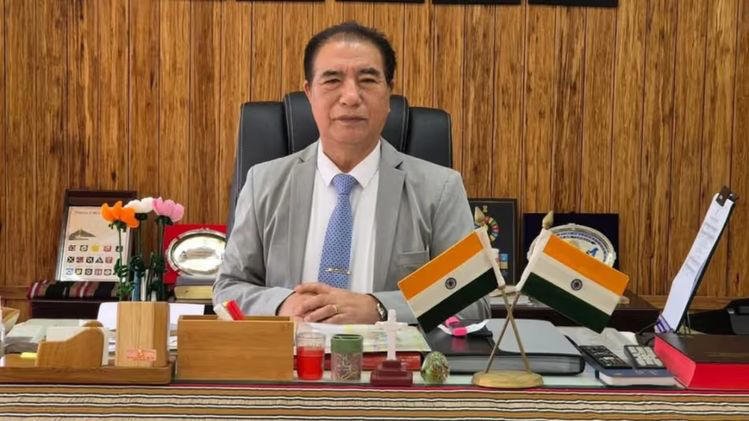
Mizoram has nearly 50,000 hectares of land suitable for rubber cultivation, Chief Minister Lalduhoma said, highlighting the state’s strong potential to emerge as a key player in natural rubber production. He said rubber farming can significantly boost farmers’ income while strengthening Mizoram’s agro-based economy.
Read More: Tripura Agar Industry Eyes Rs 2,000 Cr Turnover
Speaking on agricultural development, the Chief Minister said Mizoram’s climate and soil conditions favour rubber cultivation. He added that expanding rubber plantations can provide sustainable livelihoods and reduce dependence on traditional farming practices.
The emphasis on Mizoram rubber cultivation potential reflects the state government’s focus on diversification and long-term agricultural growth.
Climate and soil favour rubber farming
Chief Minister Lalduhoma said Mizoram’s agro-climatic conditions suit rubber cultivation. Adequate rainfall, moderate temperature, and suitable terrain support healthy rubber growth.
He noted that rubber plantations thrive in several districts of the state. Existing plantations have already shown promising results in terms of yield and quality.
The Mizoram rubber cultivation potential, he said, remains underutilised. With proper planning and support, the state can expand coverage significantly.
Rubber cultivation offers steady income
The Chief Minister said rubber farming provides stable and long-term income to farmers. Unlike seasonal crops, rubber offers regular returns over several years.
He explained that once plantations mature, farmers can generate consistent earnings. This stability helps reduce financial uncertainty in rural areas.
Mizoram rubber cultivation potential, Lalduhoma said, can transform the economic outlook of farming households across the state.
Government support and policy focus
The state government has prioritised rubber cultivation under its agricultural development strategy. Lalduhoma said support includes plantation assistance, training, and market linkage.
Farmers receive guidance on scientific cultivation methods. The government also works with agencies involved in rubber development.
The Mizoram rubber cultivation potential will grow further through coordinated policy efforts, the Chief Minister added.
Employment and rural development benefits
Rubber plantations generate employment at various stages, including planting, maintenance, and tapping. This labour demand supports rural livelihoods.
Lalduhoma said the expansion of rubber farming can create jobs within villages. Reduced migration, he added, remains an important social benefit.
The Mizoram rubber cultivation potential supports inclusive development by involving small and marginal farmers.
Market demand supports expansion
The Chief Minister said demand for natural rubber remains strong due to its use in multiple industries. Tyres, footwear, and medical products rely heavily on rubber.
He noted that domestic demand continues to grow. This trend offers farmers assurance of market access.
The Mizoram rubber cultivation potential aligns with national efforts to boost domestic rubber production and reduce imports.
Focus on sustainability and land use
Lalduhoma stressed that rubber expansion must follow sustainable practices. Plantation planning will avoid forest degradation and respect ecological balance.
He said the government encourages cultivation on suitable non-forest land. Scientific land-use planning ensures long-term sustainability.
Mizoram rubber cultivation potential, he said, must balance economic gain with environmental responsibility.
Training and capacity building
The Chief Minister highlighted the importance of farmer training. Rubber cultivation requires technical knowledge, especially during early stages.
Training programmes focus on planting techniques, disease management, and tapping practices. These efforts help improve productivity and quality.
Mizoram rubber cultivation potential increases when farmers receive consistent technical support.
Value addition and processing scope
Beyond cultivation, Lalduhoma pointed to opportunities in rubber processing. Value addition can increase farmer earnings and create new enterprises.
Processing units can support local employment and reduce transportation costs. Rubber sheets and other products offer higher market value.
The Mizoram rubber cultivation potential extends across the value chain, from plantations to processing and marketing.
Encouraging youth participation
The Chief Minister said rubber farming can attract young people to agriculture. Long-term income prospects and organised cultivation models make it appealing.
He said the government aims to promote agripreneurship among youth. Rubber plantations can support modern and business-oriented farming.
Mizoram rubber cultivation potential, he added, can help renew interest in agriculture among the younger generation.
Strengthening Mizoram’s agricultural economy
Rubber cultivation complements Mizoram’s broader agricultural diversification efforts. The state aims to reduce dependence on shifting cultivation.
Lalduhoma said rubber farming supports land stability and planned agriculture. This shift improves productivity and income security.
The Mizoram rubber cultivation potential fits into the state’s long-term agricultural vision.
Way forward
The Chief Minister said the government will continue to promote rubber cultivation through policy support and farmer engagement. Expansion plans will proceed in phases.
He expressed confidence that Mizoram can emerge as a major rubber-producing state in the region. With nearly 50,000 hectares suitable for cultivation, the scope remains vast.
The focus on Mizoram rubber cultivation potential reflects a strategic push toward sustainable agriculture, rural prosperity, and economic resilience. By harnessing its natural advantages and supporting farmers, Mizoram aims to turn rubber cultivation into a key driver of growth and stability.
Read More: Why Assam Can Attract Semiconductor Investment: CM