


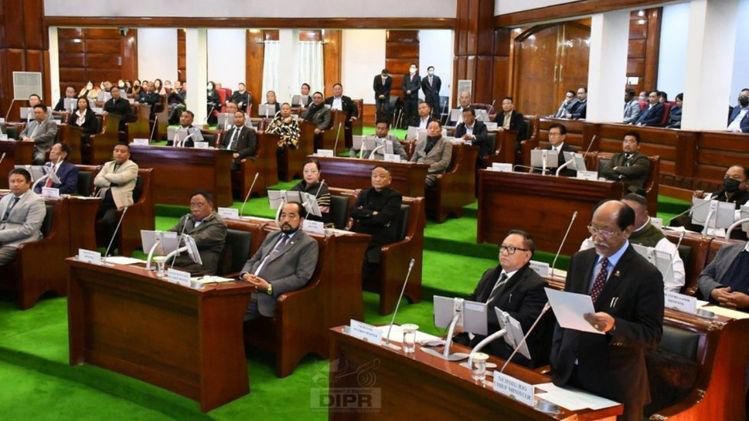
The Nagaland Legislative Assembly has adjourned its ongoing budget session until March 25. Speaker Sharingain Longkumer announced the decision at the end of the latest sitting in Kohima. The Assembly will reconvene on March 26 for the second phase of the session.
The next phase will focus mainly on the presentation and discussion of the state budget for the financial year 2026–27. Lawmakers will also debate key policy matters and departmental spending plans.
The break between the two phases gives legislators and government departments time to prepare for detailed financial discussions.
Read More: Pradyot Kishore Debbarma Highlights Tiprasa Rights During Tipra Motha Bike Rally in Lembuchara
First phase of the budget session concludes
The first phase of the budget session began earlier this month at the Nagaland Legislative Assembly in Kohima. Members attended several sittings during this period. They discussed government policies, development priorities, and administrative matters.
Legislators also raised questions about public welfare programmes and infrastructure projects. Ministers responded to those questions and shared updates about ongoing initiatives.
Members highlighted issues from their constituencies. These included road connectivity, public services, and employment opportunities. The discussions helped draw attention to development needs across the state.
After completing the scheduled business, the Speaker adjourned the Assembly until March 25. The break forms part of the planned structure of the budget session.
Speaker confirms second phase schedule
Speaker Sharingain Longkumer confirmed that the Assembly will resume on March 26. The House will meet again at the Assembly Hall in Kohima.
The second phase will focus on financial business. The government will present the state budget for the upcoming fiscal year during this stage of the session.
The announcement gives lawmakers time to study policy issues and prepare their responses. Departments also use this period to finalize financial documents and reports.
The second phase often attracts greater attention. Budget discussions affect governance, development planning, and public spending.
State budget likely to dominate proceedings
The state budget forms the central agenda of the upcoming phase. The budget outlines the government’s financial plans for the next fiscal year. It includes estimates of revenue and proposals for public spending.
After the government presents the budget, members of the Assembly will debate the proposals. They will examine how funds are distributed across departments and sectors.
These discussions allow legislators to question the government about policy priorities. They also help ensure transparency in financial planning.
Sectors such as health, education, agriculture, and infrastructure may receive strong attention during the debates. Lawmakers often push for increased allocations for development programmes in their constituencies.
MLAs to examine departmental demands
During the second phase, the Assembly will also review departmental demands for grants. Each government department seeks approval for its planned spending.
Members analyze those proposals and ask questions about implementation. Ministers then explain the objectives and expected outcomes of their programmes.
This process ensures accountability in the use of public funds. It also allows lawmakers to highlight issues affecting their districts.
After debates, the Assembly votes on the demands for grants. Once approved, the government gains authority to spend funds for the financial year.
Why the adjournment is important
The pause between the two phases serves an important purpose. It allows legislators to study financial documents before debates begin.
Government departments also use the break to finalize policy details and budget proposals. This preparation improves the quality of discussion in the Assembly.
Budget debates often involve complex financial data. Lawmakers need time to understand the numbers and review development plans.
The adjournment therefore helps ensure a more structured and informed debate when the Assembly resumes.
Importance of the budget session for governance
The budget session represents one of the most important periods in the legislative calendar. It shapes the government’s economic priorities for the coming year.
Through the budget, the government outlines how it plans to raise revenue and spend public money. The Assembly plays a crucial role in reviewing these plans.
Members question ministers and propose changes during the debates. This process strengthens democratic accountability.
The final approval of the budget allows the government to implement development programmes and public services.
Role of the Nagaland Assembly
The Nagaland Legislative Assembly serves as the central law-making body of the state. It debates policies, passes legislation, and reviews government decisions.
Budget discussions form a major part of its responsibilities. Lawmakers represent the interests of their constituencies during these debates.
They raise issues related to infrastructure, healthcare, education, and rural development. Their participation ensures that different regions receive attention in policy planning.
The Assembly also acts as a platform for addressing social and economic challenges across Nagaland.
Regional importance of the session
Nagaland holds an important position in Northeast India. The state continues to focus on development, connectivity, and welfare initiatives.
Decisions taken in the Assembly influence policy planning across the region. Budget allocations affect infrastructure projects, social programmes, and economic development.
Legislative discussions also highlight regional challenges and opportunities. Leaders often focus on improving connectivity, promoting tourism, and strengthening rural economies.
Therefore, the budget session in Kohima attracts attention beyond the state.
What to expect when the Assembly resumes
The Nagaland Assembly will reconvene on March 26 after the adjournment period. The government will present the state budget for 2026–27 during this phase.
Lawmakers will examine the financial proposals in detail. They will debate policy priorities and spending plans for key sectors.
The Assembly will also review departmental demands for grants. Ministers will respond to questions raised by legislators.
After the debates conclude, the House will approve the budget and related financial proposals. These decisions will guide Nagaland’s development plans for the upcoming financial year.
For now, the Assembly remains adjourned until March 25. However, attention will soon shift to the second phase of the session in Kohima. The discussions beginning on March 26 will shape the state’s financial direction and policy priorities for the year ahead.
Read More: Assam Hosts State-Level Viksit Bharat Youth Parliament