


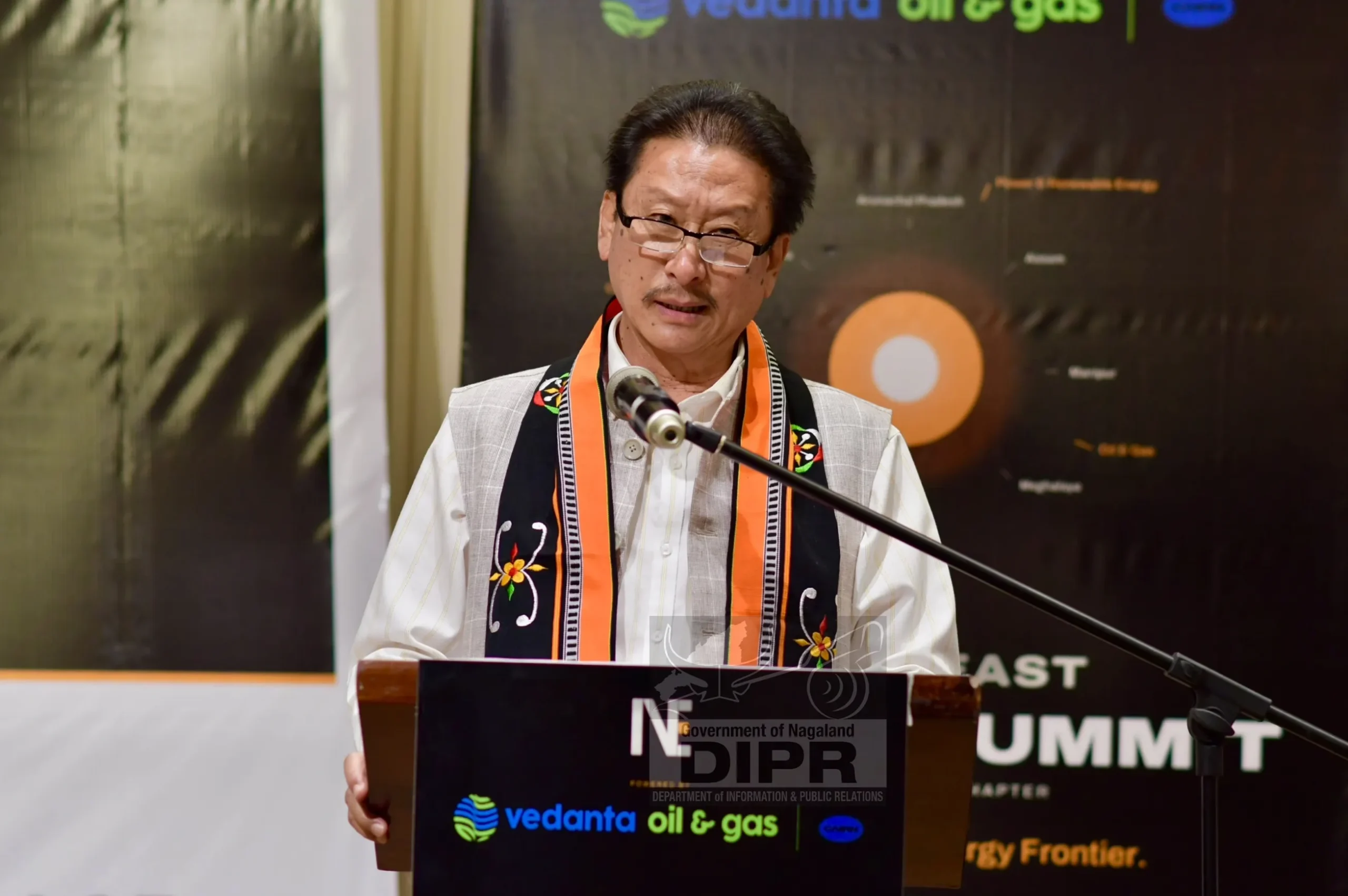
Nagaland will require at least 715 MW of power generation capacity by 2034–35 to meet its growing electricity needs, Power Minister K.G. Kenye has said. With peak demand projected to rise from the present 203 MW to 482 MW, the state plans to expand hydropower, solar energy, battery storage and transmission infrastructure.
Nagaland Makes Hotel App Registration Mandatory for Out-of-State Guests Ahead of Hornbill Festival
Nagaland Faces Rising Electricity Demand by 2035
Power and Parliamentary Affairs Minister K.G. Kenye highlighted Nagaland’s future electricity requirements at the Power Ministers’ Conference of States and Union Territories in New Delhi on November 27 and 28, 2026.
Referring to the Central Electricity Authority’s (CEA) Resource Adequacy Plan 2035, Kenye said Nagaland would need at least 715 MW of generation capacity by 2034–35. The projection reflects the growing gap between the state’s available power resources and its future electricity requirements.
Nagaland’s current peak power demand stands at approximately 203 MW. However, the CEA projects that this figure could reach 482 MW by 2034–35.
The minister also highlighted the state’s limited local generation capacity. Nagaland currently generates only 39.4 MW of electricity through its own installed facilities. Its total installed capacity, including allocations from the Central Sector, stands at 241.4 MW.
These figures underline the challenge facing the state. Although central allocations help meet electricity requirements, Nagaland needs stronger local generation and reliable infrastructure to support future demand.
Three Hydroelectric Projects in the Pipeline
The Nagaland Government is pursuing three major hydropower projects to strengthen its electricity generation capacity.
The proposed projects include:
- Lower Tizu Hydroelectric Project: A proposed 42 MW project with an estimated cost of ₹514.12 crore.
- Zungki Hydroelectric Project: A proposed 24 MW project with an estimated cost of ₹368.53 crore.
- Tizu Valley Hydroelectric Project: A proposed 24 MW project with an estimated cost of ₹366.22 crore.
The Lower Tizu and Zungki projects have received approval from the Department of Economic Affairs. They are currently undergoing due diligence by the Asian Development Bank.
Meanwhile, the government has proposed the Tizu Valley project under the External Aided Project funding route.
Together, these three projects would add 90 MW of planned hydropower capacity. However, timely implementation remains essential if Nagaland wants to achieve its long-term generation targets.
Nagaland Seeks 500 MW Solar Power Allocation
Apart from hydropower, the state wants to accelerate solar energy development.
Kenye urged the Union Ministry of Power to allocate at least 500 MW of solar power to Nagaland from the Centre’s proposed 30,000 MW solar reserve. He also requested financial assistance through Viability Gap Funding (VGF).
The minister identified solar power as an important option for reducing Nagaland’s dependence on electricity sourced from outside the state. Furthermore, renewable energy could help diversify its generation mix and improve long-term energy security.
However, solar generation depends on weather conditions and daylight availability. Therefore, the state also plans to strengthen energy storage facilities to improve supply reliability.
Battery Storage Projects Proposed at Zhadima and Niuland
Nagaland has proposed two Battery Energy Storage System (BESS) facilities to support its renewable energy plans.
The proposed facilities will have the following specifications:
- Zhadima: 25 MW/100 MWh battery storage facility.
- Niuland: 25 MW/100 MWh battery storage facility.
Each project carries an estimated investment of ₹127 crore.
Battery storage systems can store electricity when generation exceeds immediate demand and release it when required. Consequently, these facilities could help Nagaland manage fluctuations in solar power generation and improve grid stability.
The minister stressed that central support and an adequate solar power allocation would help the state make better use of battery storage infrastructure.
₹1,900 Crore Plan to Strengthen Transmission Infrastructure
Rising electricity demand will require more than additional generation. Nagaland must also strengthen its transmission network to transport power reliably across the state.
Kenye informed the conference that the Central Electricity Authority and the Nagaland Government had prepared a Transmission Plan for 2034–35.
The plan proposes:
- Approximately 770 MVA of additional transmission capacity.
- Around 963 circuit kilometres of new transmission lines.
- Reconductoring or restringing of 277 circuit kilometres of existing lines.
- An estimated investment of ₹1,900 crore.
The state has also submitted a proposal worth ₹898.89 crore for developing and strengthening the 132 kV Western Intra-State Transmission System.
Additionally, Nagaland has sought ₹604 crore for urgent modernisation of its transmission and sub-transmission networks. The proposal has been submitted to the North Eastern Regional Power Committee for consideration of funding under the Power System Development Fund.
These improvements will play an important role in supporting the projected 482 MW peak demand by 2034–35.
₹1,355 Crore Distribution Plan and Smart Metering
Nagaland is also preparing its electricity distribution network for future consumption.
The proposed Distribution Perspective Plan for 2034–35 carries an estimated cost of ₹1,355.17 crore. It includes approximately 685.55 MVA of additional distribution transformer capacity and 5,576.21 circuit kilometres of associated 33 kV, 11 kV and low-tension lines.
The plan aims to support a projected total connected load of 1,163.55 MVA. It also anticipates that the number of electricity consumers, including existing connections, will reach 5,72,485.
Meanwhile, the state is implementing smart metering under the Revamped Distribution Sector Scheme (RDSS).
The ongoing programme covers 3,17,210 consumers at an estimated cost of ₹328.17 crore. However, another 2,55,275 consumers remain outside the current coverage.
Kenye said Nagaland would need additional financial assistance of ₹139.94 crore to extend smart metering to these remaining consumers.
Smart meters can help improve billing accuracy, monitor electricity consumption and strengthen distribution management.
Centre’s Support Crucial to Meeting Nagaland’s Power Target
The minister’s presentation highlighted the need for coordinated investment across generation, transmission and distribution.
Nagaland has identified several projects and tied up approximately 668 MW through existing and proposed projects, power purchase agreements and no-objection certificates issued to private developers. Nevertheless, delays in project implementation remain a major concern.
Therefore, the state has urged the Union Government to provide financial and infrastructural support to accelerate these initiatives.
The proposed hydropower projects, solar allocation, battery storage facilities and network upgrades will collectively determine whether Nagaland can meet its projected electricity requirements.
Conclusion
Nagaland’s requirement for 715 MW of generation capacity by 2034–35 highlights the scale of its future energy challenge. With peak demand expected to reach 482 MW, the state must expand local generation while improving its transmission and distribution networks.
Power Minister K.G. Kenye’s appeal for central assistance reflects the urgency of accelerating these projects. Their timely implementation could reduce Nagaland’s dependence on external power supplies and provide a stronger electricity foundation for households, businesses and industrial development.
Frequently Asked Questions (FAQs)
1. How much power generation capacity will Nagaland need by 2035?
Nagaland will require at least 715 MW of generation capacity by 2034–35, according to the Central Electricity Authority’s Resource Adequacy Plan 2035.
2. Who announced Nagaland’s future power requirement?
Nagaland Power and Parliamentary Affairs Minister K.G. Kenye announced the projection at the Power Ministers’ Conference in New Delhi on November 27–28, 2026.
3. What will Nagaland’s peak electricity demand reach by 2035?
The state’s peak electricity demand is projected to rise from approximately 203 MW to 482 MW by 2034–35.
4. Which hydropower projects is Nagaland pursuing?
Nagaland is pursuing the 42 MW Lower Tizu, 24 MW Zungki and 24 MW Tizu Valley hydroelectric projects.
5. How much solar power has Nagaland sought from the Centre?
Minister K.G. Kenye has requested an allocation of at least 500 MW of solar power from the Centre’s proposed 30,000 MW reserve, along with financial support.
6. What are the proposed battery storage projects in Nagaland?
The state has proposed two 25 MW/100 MWh Battery Energy Storage System facilities at Zhadima and Niuland. Each facility carries an estimated cost of ₹127 crore.