


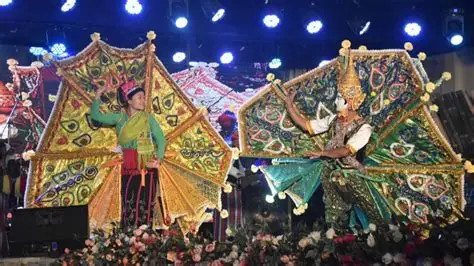
Arunachal Pradesh’s Namsai district turned vibrant and festive as the Tai Khamti community celebrated the Poi Pee Mau Tai Festival with great cultural pride. Known as the Tai New Year, the festival marks renewal, gratitude, and unity within the community. This year, the celebrations brought together monks, elders, youth, and visitors from across the region, making the Poi Pee Mau Tai Festival a significant cultural event in Namsai.
Read More: Tripura Approves Two New State Universities
Namsai Immersed in Festive Spirit
As the celebrations began, Namsai witnessed colourful decorations, traditional music, and the warm fragrance of incense drifting through community grounds. The Tai Khamti people prepared days in advance, cleaning their homes, decorating temples, and organizing cultural programs to mark the new year. The festival brought a renewed energy to the district, attracting locals and visitors eager to experience the rich heritage of the Tai Khamti community.
Traditional rituals played a central role. People gathered at monasteries early in the morning to offer prayers for peace and prosperity. Monks chanted age-old scriptures as devotees made offerings of flowers, rice, and lamps. Families dressed in traditional attire, filling the streets with colour and elegance. The sound of traditional instruments echoed across the area, signaling the start of ceremonies that have been passed down through generations.
The festival grounds featured stalls showcasing local crafts, traditional food, and handmade fabrics. These attractions provided visitors with a deeper appreciation of Tai Khamti culture. Youth groups performed folk dances, while elders shared stories about the origins and values embedded in the Poi Pee Mau Tai Festival.
Cultural Significance of the Tai New Year
The Poi Pee Mau Tai Festival represents more than a new year for the Tai Khamti community. It is a celebration of spirituality, identity, and continuity. The rituals performed during the festival highlight the community’s deep respect for nature, ancestors, and Buddhist teachings. Through ceremonies like bathing sacred statues, offering prayers, and lighting lamps, the Tai Khamtis express gratitude for the past year and pray for blessings in the coming one.
Beyond spiritual rituals, the festival strengthens social ties. Families visit each other, exchange greetings, and share traditional meals. These interactions reaffirm bonds across generations. Community leaders emphasised that the festival helps preserve the cultural identity of the Tai Khamti people, especially as younger generations engage more with modern influences.
The celebration also encourages reflection. Many Tai Khamti households set aside time for meditation and quiet prayer, reinforcing the values of compassion, patience, and unity. Elders expressed that the festival reminds the community of its shared heritage and responsibility to uphold cultural traditions.
A Showcase of Tai Khamti Art, Dance, and Cuisine
One of the highlights of the Poi Pee Mau Tai Festival is the cultural showcase that brings together music, dance, and craftsmanship. Performers presented traditional dances known for their graceful movements and symbolic storytelling. Each performance reflected themes of harmony, renewal, and reverence.
Local artisans displayed intricate wood carvings, textiles, and handmade ornaments. These crafts represent a significant part of the Tai Khamti artistic heritage. Visitors appreciated the detailed designs, which often incorporate motifs inspired by nature and Buddhist iconography.
Food also played an essential role in the celebrations. Families prepared traditional dishes such as khau lam (rice cooked in bamboo), ging pak (herbal soup), and various preparations of sticky rice. The sharing of food symbolised friendship and community bonding. Many visitors also enjoyed sampling authentic Tai Khamti cuisine, which remains deeply connected to the landscape and local produce of Namsai.
Community Leadership and Broader Participation
Local leaders, monks, and cultural organisations worked together to organise the festival smoothly. Their efforts ensured that every part of the event reflected the cultural integrity and spirit of the Tai Khamti community. Several cultural and youth groups also contributed to the day’s events, especially through performances and community services.
Attendance extended beyond the Tai Khamti community. People from neighbouring districts and nearby states visited to witness the celebrations. The inclusivity shown during the festival demonstrated how cultural events can bring diverse groups together in shared appreciation.
Officials highlighted the role of the Poi Pee Mau Tai Festival in promoting tourism and cultural awareness. They said that such events help showcase Arunachal Pradesh’s vast cultural diversity while encouraging future generations to embrace their heritage.
The Poi Pee Mau Tai Festival transformed Namsai into a vibrant hub of culture, spirituality, and community strength. The celebrations not only marked the Tai Khamti new year but also highlighted the importance of preserving traditions and embracing unity. As the festival concluded, participants carried forward renewed hopes, deeper cultural pride, and a strong sense of togetherness.
For visitors and locals alike, the festival served as a reminder of the beautiful diversity that defines Arunachal Pradesh, making the Poi Pee Mau Tai Festival one of the region’s most cherished cultural events.
Read More: Nagaland Invites Visitors for Hornbill Fest and Scenic Escapes