


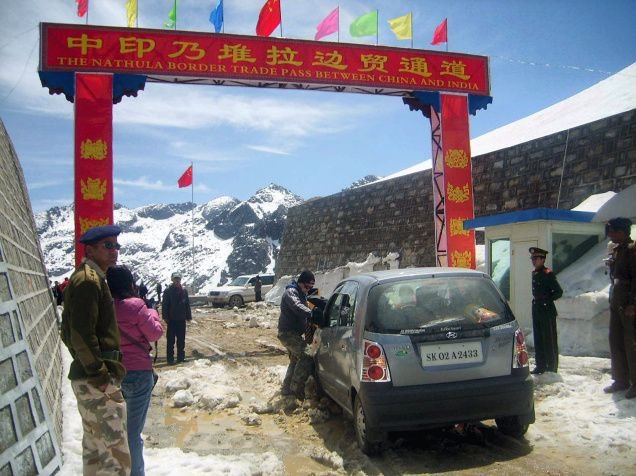
A Renewed Push for Himalayan Trade Revival
The demand for the Nathu La border trade reopening gained strong momentum in Parliament this week, with BJP MPs urging the Centre to restore the historic trade route that once connected Sikkim to Tibet. Lawmakers emphasized that reopening the Nathu La border trade is not merely a diplomatic gesture but a lifeline for thousands of families in Sikkim and Arunachal Pradesh who depend on cross‑border commerce for income.
The renewed demand comes at a time when border communities continue to face economic strain due to limited trade routes, disrupted tourism, and restricted market access. Lawmakers argued that reopening Nathu La could serve as a powerful economic catalyst for the entire northeastern region.
Why Nathu La Matters: A Historic Trade Artery
A Pass That Once Powered Local Economies
Nathu La, located at 14,140 feet, has historically been one of the most important trade links between India and Tibet. After remaining closed for decades following the 1962 conflict, it was reopened in 2006, enabling controlled bilateral trade. Local traders in Sikkim exported goods such as textiles, processed food, and handicrafts, while importing items like wool, yak products, and traditional Tibetan goods.
However, the route was suspended again due to geopolitical tensions and pandemic‑related restrictions. Since then, border communities have repeatedly urged the Centre to restore trade, citing rising unemployment and shrinking economic opportunities.
BJP MPs Highlight Livelihood Crisis in Border States
During the Parliamentary session, BJP MPs stressed that the closure of Nathu La has disproportionately affected small traders, transporters, porters, and local markets in Sikkim and Arunachal Pradesh. They argued that reopening the route would:
- Boost local entrepreneurship
- Revive traditional Himalayan trade networks
- Strengthen India’s presence in border regions
- Improve socio‑economic stability in remote villages
One MP noted that “border security is strongest when border communities are economically strong,” urging the government to prioritize the issue in upcoming bilateral dialogues.
Economic Ripple Effects Across the Northeast
A Potential Game‑Changer for Regional Development
Experts believe that reopening Nathu La could integrate the Northeast more deeply into trans‑Himalayan trade circuits. It would complement India’s Act East Policy, which aims to enhance connectivity and economic cooperation with Southeast Asia.
The move could also support:
- Tourism growth in Sikkim, especially around Tsomgo Lake and Nathula
- Logistics and warehousing expansion in border districts
- Cultural exchange between Himalayan communities
- Employment generation for youth in remote areas
For readers interested in broader regional development initiatives, you can explore India’s Act East Policy on the official MEA website (external link suggestion: mea.gov.in).
Government Response & Next Steps
While the Centre has not announced a formal reopening timeline, officials have acknowledged the concerns raised. The Ministry of Commerce and Industry is expected to review the feasibility of resuming trade, considering both security and diplomatic factors.
Local governments in Sikkim and Arunachal Pradesh have also expressed readiness to support infrastructure upgrades, including road improvements, customs facilities, and digital monitoring systems.
A Call to Strengthen Border Economies
The push to reopen Nathu La is more than a policy debate—it is a call to protect the economic dignity of India’s border communities. As Parliament continues to deliberate, stakeholders across the Northeast are watching closely, hopeful that the historic trade route will once again open its gates.
READ MORE: Nagaland, Arunachal Strengthen Ties at Hornbill