


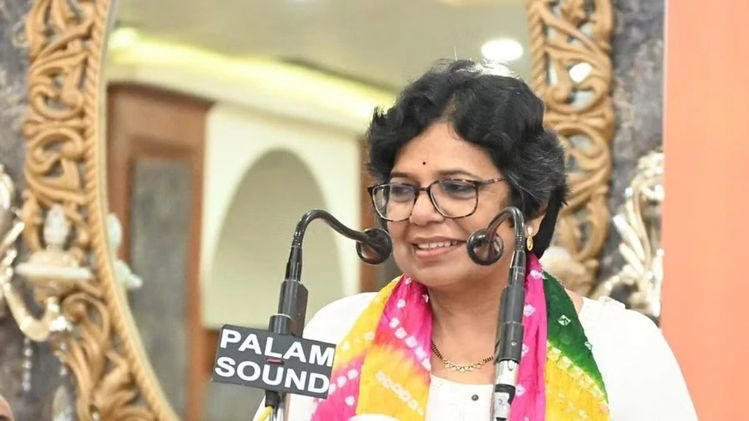
National Commission for Women (NCW) chairperson Vijayak R Rahatkar reviewed women’s safety measures in Assam during her two-day official visit to the state, held on August 6 and 7. The visit aimed to assess government initiatives, law enforcement responsiveness, and shelter infrastructure for women across various vulnerable categories.
Her engagement included meetings with state officials, police, women’s welfare institutions, and survivors, as she evaluated the efficacy of Assam’s protective mechanisms. The NCW chairperson reviews women’s safety concerns periodically across states, and Assam featured prominently this time due to growing cases of gender-based violence in recent reports.
Read More: Centre Acts on Tripura NH Woes After CM’s Push
Key meetings with government and police officials
On August 6, Rahatkar met Assam Chief Minister Himanta Biswa Sarma and Women and Child Development Minister Ajanta Neog at Dispur. She discussed the state’s efforts to reduce crimes against women and sought better coordination between police and welfare departments.
According to officials present at the meeting, she appreciated the Assam government’s initiatives but urged faster implementation of schemes focused on women’s security. The NCW chairperson reviews women’s safety to ensure nationwide standards, and she emphasised creating a centralised response system through the 112 emergency helpline.
Rahatkar later chaired a detailed review meeting with senior police officials, including Assam DGP Gyanendra Pratap Singh. She stressed the need for gender-sensitisation of police personnel and increased patrolling in vulnerable zones, especially near educational institutions, marketplaces, and transport hubs.
Shelter homes and legal aid under scanner
During her visit, Vijayak R Rahatkar also inspected shelter homes and short-stay facilities for women in distress. She interacted with residents and examined their access to legal aid, counselling, healthcare, and rehabilitation.
She visited the State Home for Women in Guwahati and found certain gaps in mental health counselling and vocational training. The NCW chairperson called for timely audits of such institutions and increased budgetary support.
Moreover, she held a consultation with representatives from the Assam State Legal Services Authority to evaluate how well legal aid services reach women, especially those from rural and tribal areas. Rahatkar pointed out the importance of awareness campaigns to ensure that women understand their rights and legal entitlements.
Interaction with survivors and civil society
A crucial part of the visit involved direct interaction with survivors of domestic abuse, sexual violence, trafficking, and cybercrime. Rahatkar spent time at One-Stop Centres and NGOs that support women in conflict situations.
Survivors shared both appreciation for fast police action in some cases and concerns about delays in the justice system. The NCW chairperson assured them of continued institutional support and committed to follow-up action in some of the highlighted cases.
She also convened a roundtable with civil society groups working in women’s rights and child protection. The discussion centred around the need for better surveillance in high-risk areas and involving communities in prevention strategies.
Assam government’s response and roadmap
Following the NCW chairperson’s visit, the Assam government reaffirmed its commitment to prioritise women’s safety. Chief Minister Sarma directed departments to prepare a compliance report on the NCW’s recommendations within two weeks.
WCD Minister Ajanta Neog stated that Assam would enhance capacity in shelter homes, recruit more female officers in the police force, and expand legal awareness drives through schools and colleges.
State authorities also announced plans to link all One-Stop Centres with the 112 emergency helpline for faster victim response, especially in remote districts. A new monitoring mechanism will track progress on NCW’s recommendations, which the chief minister’s office will review monthly.
Nationwide effort for safer spaces
The NCW chairperson reviews women’s safety not just to inspect but also to collaborate with state systems. Rahatkar stressed that the Commission’s approach was not punitive but reformative, aiming to bridge gaps in state mechanisms and empower local administrations.
She added that Assam’s initiative to digitise police records and expand forensic labs will significantly support conviction rates in gender violence cases. The NCW, she said, will also conduct workshops for Assam police and judiciary to strengthen their handling of sensitive cases.
Her visit concluded with a press briefing where she highlighted the importance of collective responsibility in ensuring women’s dignity and safety. “Empowerment begins when a woman feels safe — physically, emotionally, and legally. Assam must lead the way in the Northeast,” Rahatkar said.
Read More: Assam hill districts protests over Article 244(A): Powerful backlash erupted