


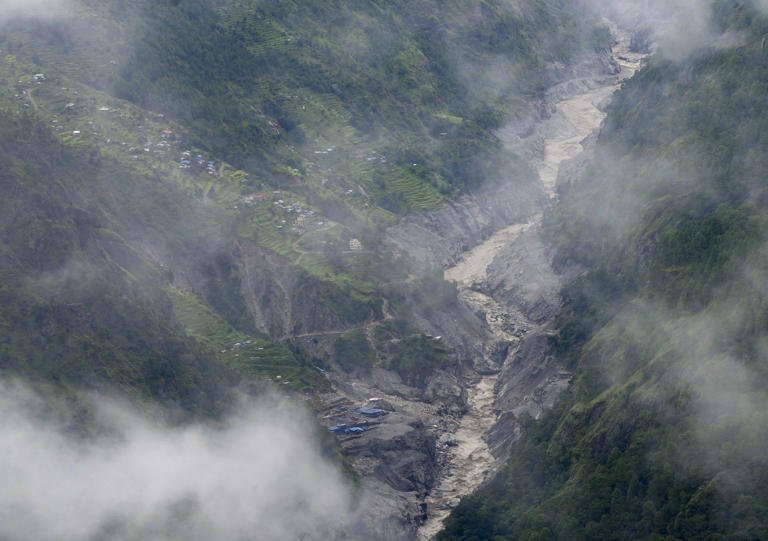
Nepal has sought Chinese assistance to rebuild the Rasuwagadhi road after severe flooding damaged the important border route. The road connects Nepal with the Rasuwagadhi border point near China and plays a key role in trade and transport.
The damage has disrupted movement along an important route between the two countries. Nepal now wants China to support reconstruction and help restore reliable connectivity.
The request comes as Nepal continues to assess the impact of natural disasters on its transport infrastructure.
The Rasuwagadhi route holds strategic and economic importance for Nepal. It provides access to the China border and supports the movement of goods between the two countries.
Floods Damage a Key Border Route
Heavy rainfall and flooding can cause extensive damage to roads in Nepal’s mountainous regions. Strong water flows can wash away sections of roads, damage bridges and weaken surrounding slopes.
The Rasuwagadhi route faces additional challenges because of its mountainous terrain.
Flood damage can create major problems for communities and businesses that depend on the road. Transport operators may face delays, while traders can struggle to move goods across the border.
The disruption can also affect the supply of essential commodities in nearby areas.
Restoring the route has therefore become an important priority for Nepal.
Rasuwagadhi’s Importance for Nepal-China Trade
Rasuwagadhi serves as an important crossing point between Nepal and China.
The route provides a connection between Nepal’s northern districts and Tibet. It also supports bilateral trade and the movement of goods.
Traders rely on functioning roads to transport products efficiently.
Any prolonged closure can increase transportation costs and create delays.
The route also supports local economic activity. Businesses, transport operators and communities benefit from cross-border movement.
For Nepal, rebuilding the road means more than repairing damaged infrastructure. It also means restoring an important economic connection with China.
China Plays a Major Role in Infrastructure
China has supported several infrastructure projects in Nepal over the years.
The two countries have worked together on roads, bridges and other connectivity projects.
China’s proximity and technical capabilities make it an important partner for Nepal’s northern infrastructure.
Nepal can also benefit from Chinese experience in constructing roads in challenging mountainous environments.
The latest request for assistance reflects the wider infrastructure relationship between the two countries.
However, reconstruction will require detailed technical assessments. Engineers will need to determine the extent of the damage and identify the safest approach.
Reconstruction Will Require Technical Expertise
Rebuilding a flood-damaged mountain road can present complex engineering challenges.
Authorities need to assess unstable slopes and damaged road sections before beginning major construction.
Engineers may also need to strengthen drainage systems. Better drainage can reduce the risk of future damage from heavy rainfall.
Retaining walls and slope protection can provide additional stability in vulnerable areas.
Bridge repairs may also form part of the reconstruction process if flooding has affected crossings along the route.
Nepal and China can work together to develop a reconstruction plan based on these requirements.
Connectivity Matters for Local Communities
The Rasuwagadhi route also matters to people living in northern Nepal.
Remote communities often depend on roads to access markets, hospitals, schools and government services.
When roads become unusable, residents can face serious difficulties.
Transport disruptions can also increase the cost of essential goods.
Reopening the route can therefore support both trade and local livelihoods.
Authorities may need temporary arrangements while permanent reconstruction continues.
Such measures can help communities manage the disruption.
Natural Disasters Pose a Growing Infrastructure Challenge
Nepal’s mountainous geography makes infrastructure vulnerable to landslides, floods and other natural hazards.
Climate-related changes can also increase the intensity of extreme weather in some areas.
Roads that cross steep slopes require careful planning and regular maintenance.
Authorities need to consider disaster resilience when rebuilding damaged infrastructure.
A stronger road can reduce future disruption and protect public investment.
Nepal can use the reconstruction of the Rasuwagadhi route as an opportunity to improve its resilience against future floods.
Rebuilding the Route Could Boost Trade
Restoring the road can provide economic benefits for both Nepal and China.
A reliable transport connection can make cross-border trade more efficient.
Nepali businesses can access goods and markets more easily. Chinese goods can also reach Nepal through established routes.
Improved connectivity can support tourism and other economic activities in border regions.
For Nepal, stronger northern connectivity can also diversify its transport options.
The country has historically depended heavily on southern routes for international trade. Improved connections with China can provide additional opportunities.
Nepal-China Cooperation Gains Importance
The reconstruction request highlights the broader relationship between Nepal and China.
Infrastructure cooperation remains an important part of bilateral engagement.
Both countries have an interest in maintaining safe and reliable border connectivity.
Nepal needs infrastructure that can withstand difficult geographical and climatic conditions. China has experience with large-scale infrastructure projects in mountainous regions.
Cooperation could therefore benefit both sides.
At the same time, Nepal will need to ensure that reconstruction projects meet its environmental, financial and technical requirements.
Need for Long-Term Planning
Repairing the immediate damage will solve only part of the problem.
Nepal also needs long-term planning for roads in flood-prone and landslide-prone areas.
Authorities can improve early warning systems and monitor vulnerable sections during periods of heavy rain.
Regular maintenance can also prevent minor damage from becoming major failures.
Emergency response plans can help reopen roads more quickly after disasters.
These measures can strengthen Nepal’s overall transport network.
Looking Ahead
Nepal’s request for Chinese assistance to rebuild the flood-damaged Rasuwagadhi road highlights the importance of the route for trade, connectivity and local communities.
The road provides a vital link between Nepal and China. Flood damage has disrupted movement and created economic challenges for people who depend on the route.
China’s technical and infrastructure expertise could support Nepal’s reconstruction efforts. However, engineers must first assess the damage and develop a safe and durable plan.
The rebuilding process also offers Nepal an opportunity to strengthen the route against future floods and landslides.
A resilient Rasuwagadhi road could improve cross-border trade and support communities in Nepal’s northern region.
As Nepal works to restore its damaged infrastructure, cooperation with China could play an important role. Rebuilding the route will not only restore a damaged road but also help strengthen one of Nepal’s important connections with its northern neighbour.