


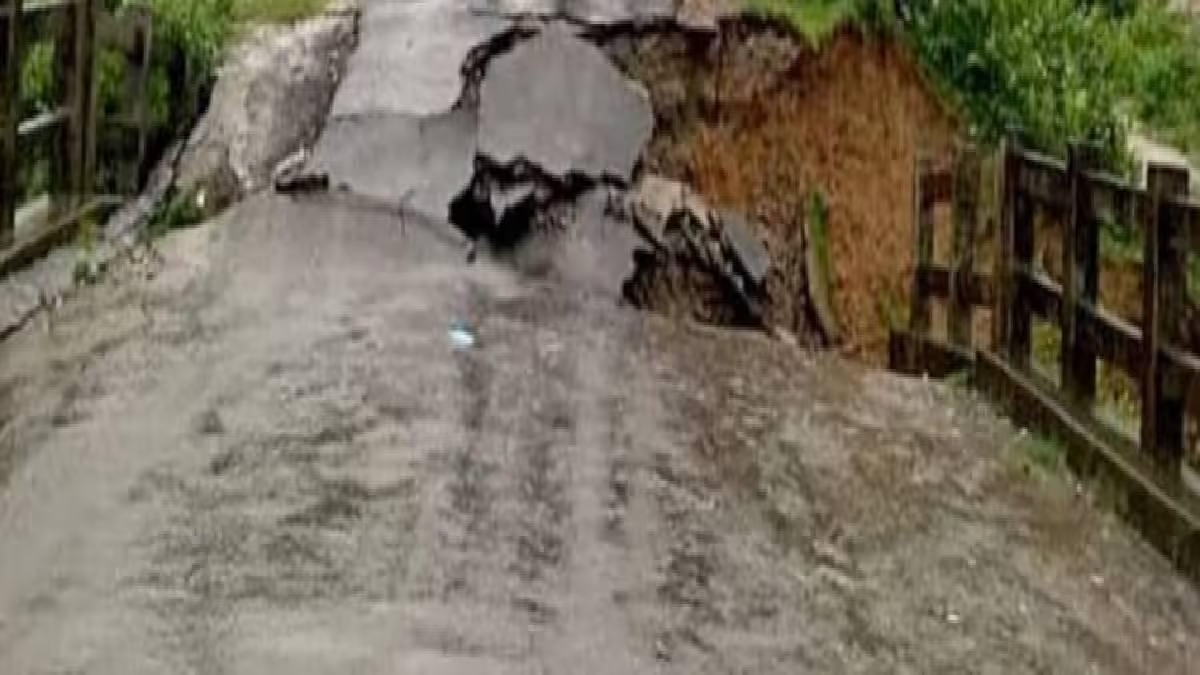
NH 702 Culvert Clearance has reportedly helped restore delayed cargo movement in Mon district after Red Cross volunteer divisions cleared a heavily blocked culvert along the highway. The intervention addressed a major drainage obstruction that had disrupted the movement of vehicles. Moreover, the incident highlights the importance of quick community-level responses along critical road corridors in Nagaland.
Meghalaya’s Wettest Regions Face Rising Drought Risk Amid Changing Rainfall Patterns
NH 702 Culvert Clearance Addresses Major Roadside Blockage
According to the reported update, Red Cross volunteer divisions carried out clearance work on a severely blocked culvert along NH 702 in Mon district. The obstruction had affected traffic movement and delayed cargo transit.
The volunteers focused on removing accumulated material that had restricted the culvert. Consequently, water and roadside drainage could flow more effectively, while vehicles regained improved passage through the affected stretch.
NH 702 serves as an important road corridor in Nagaland. Government information describes the highway as connecting Changtongya with Longleng, Longching, Mon, Lapa and Tizit before continuing toward Assam.
Therefore, disruptions along the Mon section can affect more than local traffic. Cargo vehicles using the corridor depend on predictable road conditions to move goods between communities and markets.
Moreover, the highway forms part of the wider road network connecting eastern Nagaland with other parts of the state and neighbouring Assam.
Cargo Transit Gains Relief After Culvert Obstruction
The reported blockage had particularly affected cargo movement. When drainage structures become clogged, heavy rainfall can increase water accumulation and further complicate road conditions.
Therefore, clearing a culvert can have significance beyond the immediate obstruction. Effective drainage helps protect road surfaces while reducing the risk of prolonged waterlogging around the highway.
The reported Red Cross intervention also demonstrates how volunteer organisations can contribute during local infrastructure disruptions. Trained community volunteers can assist with immediate response activities when circumstances permit.
However, volunteer intervention does not replace permanent road maintenance. Regular inspections, drainage cleaning and engineering assessments remain important for maintaining highway infrastructure.
Furthermore, cargo operators require dependable connectivity because delays can affect delivery schedules and increase transportation difficulties.
NH 702 covers a substantial stretch within Nagaland. Government records list 177 kilometres of the route, including sections through Changtongya, Longleng, Longching, Mon and Tizit.
Consequently, keeping vulnerable drainage points clear can support the reliability of the broader transport corridor.
Mon Connectivity Depends on Better Drainage Maintenance
Mon district’s location makes road connectivity particularly important for communities and commercial activity. The district includes NH 702 as one of its major highway corridors.
Additionally, the highway connects areas that rely heavily on road transport for the movement of people, agricultural products and other goods.
Drainage infrastructure therefore plays an important role in maintaining road accessibility, especially during periods of heavy rainfall. Blocked culverts can allow water to accumulate around roads and create additional pressure on vulnerable stretches.
The reported clearance provides immediate relief, but authorities and local organisations will need to monitor similar locations. Moreover, identifying frequently blocked culverts could help shift the response from emergency clearance toward preventive maintenance.
Community participation can also strengthen this process. Local residents and volunteer groups often identify drainage problems quickly because they use the roads regularly.
At the same time, technical agencies must assess whether recurring blockages require structural improvements. Larger or damaged culverts may need repair, replacement or capacity upgrades rather than repeated manual clearance.
Therefore, NH 702 Culvert Clearance represents both an immediate connectivity intervention and a reminder of the importance of maintaining roadside drainage infrastructure.
NH 702 Culvert Clearance Highlights Community Response
The reported clearance operation demonstrates how community organisations can contribute to maintaining essential connectivity during local disruptions. Red Cross volunteer divisions played a practical role in addressing the obstruction and helping restore cargo movement.
Furthermore, the incident highlights the relationship between transportation and emergency preparedness. Road blockages can quickly affect supply chains, particularly in areas where alternative routes remain limited.
Regular coordination between district authorities, road agencies and community organisations could therefore improve responses to similar disruptions.
Meanwhile, highway agencies can use reports of recurring drainage problems to identify vulnerable points for preventive maintenance. Such measures could reduce the frequency and duration of traffic interruptions.
The broader objective should remain reliable all-weather connectivity. For Mon and other eastern districts, dependable roads support economic activity, public services and access to markets.
However, the exact scale of the reported cargo delay and the duration of the culvert blockage were not independently available in the sources reviewed. Those details should therefore remain attributed to the local report.
Overall, the clearance demonstrates the value of timely intervention when a drainage obstruction affects a strategic road corridor. NH 702 Culvert Clearance has reportedly helped ease the immediate disruption, while longer-term maintenance remains essential for reliable movement.
Conclusion
NH 702 Culvert Clearance reportedly restored delayed cargo movement in Mon after Red Cross volunteer divisions cleared a heavily blocked culvert. The episode highlights the importance of functioning drainage infrastructure along NH 702, a major corridor connecting several parts of Nagaland with Assam. Moreover, continued preventive maintenance could help reduce similar disruptions in the future.
FAQs
1. What happened along NH 702 in Mon?
A culvert was reportedly heavily blocked, disrupting movement and delaying cargo traffic.
2. Who carried out the reported clearance operation?
Red Cross volunteer divisions reportedly carried out the clearance work.
3. Why is NH 702 important for Mon?
NH 702 passes through Mon and connects the district with Longleng, Longching, Tizit and other parts of the regional road network.
4. Why can blocked culverts affect highway traffic?
Blocked culverts can restrict drainage, allowing water and debris to accumulate around roads and potentially disrupt vehicle movement.
5. Does the clearance resolve the wider road-maintenance issue?
It reportedly addressed the immediate obstruction, but regular inspection and preventive drainage maintenance remain important.