


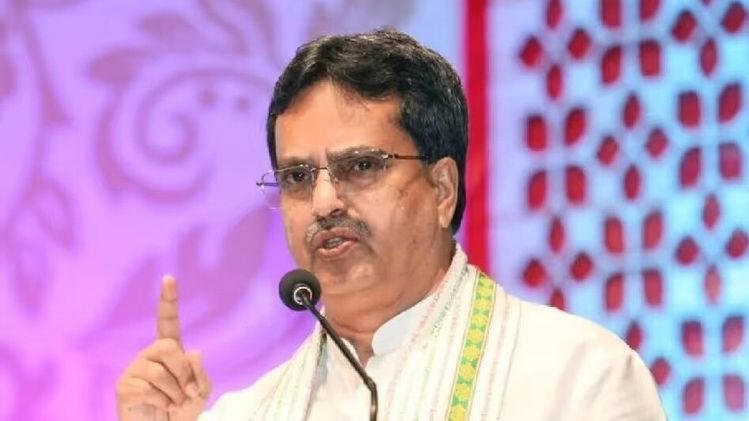
Tripura Chief Minister Manik Saha has strongly criticized the opposition over the stalled women’s reservation bill, stating that their actions amount to an insult to women across the country. His remarks have intensified the political debate surrounding the long-pending legislation, which aims to increase women’s representation in legislative bodies.
The Chief Minister made these comments during a public address, where he accused opposition parties of deliberately obstructing progress on the bill. According to him, the delay reflects a lack of commitment toward empowering women in governance.
Read More: Tripura CM visits post-poll violence hit areas
Tripura CM attacks opposition over reservation bill delay
Manik Saha said that the repeated stalling of the women’s reservation bill raises serious questions about the priorities of opposition leaders. He argued that while the ruling government has shown intent to push for reforms, opposition parties have continued to create hurdles.
He further stated that women across India have been waiting for meaningful representation in decision-making bodies. However, political disagreements have slowed down the process. As a result, the issue has become a point of contention between the ruling party and its critics.
The Chief Minister emphasized that empowering women is not just a political promise but a necessity for inclusive development. Therefore, he urged all parties to rise above differences and support the bill.
Focus on empowering women in governance
The women’s reservation bill seeks to allocate a significant percentage of seats in legislative bodies for women. Supporters argue that such a measure is essential to bridge the gender gap in politics.
Manik Saha highlighted that greater representation would allow women to contribute more effectively to policy-making. He noted that women leaders often bring unique perspectives, especially on issues like health, education, and social welfare.
Moreover, he pointed out that several states have already implemented reservation policies at the local level with positive results. These examples, he said, demonstrate the potential benefits of extending such measures to higher levels of governance.
Political tensions rise over stalled legislation
The stalled reservation bill has become a flashpoint in national politics. While the ruling party has accused the opposition of obstruction, opposition leaders have defended their stance, citing procedural and policy concerns.
Manik Saha dismissed these arguments, calling them excuses to delay progress. He asserted that if there was genuine commitment, the bill could have been passed much earlier.
This exchange of accusations has led to heightened tensions between political parties. As debates continue, the issue remains unresolved, leaving many questioning the future of the legislation.
Reactions from political leaders and civil society
The Chief Minister’s remarks have drawn mixed reactions from various quarters. Leaders from the ruling party have supported his statement, echoing concerns about the delay in passing the bill.
On the other hand, opposition leaders have criticized his comments, accusing him of politicizing a sensitive issue. They have argued that meaningful reforms require thorough discussion and consensus.
Civil society organizations have also weighed in on the matter. Many groups have called for constructive dialogue rather than political confrontation. They believe that cooperation among parties is crucial to achieving lasting change.
Importance of women’s representation in India
Women’s representation in Indian politics has been a long-standing issue. Despite progress in recent years, the number of women in legislative bodies remains relatively low.
Manik Saha stressed that increasing participation is essential for a balanced and inclusive लोकतांत्रिक system. He argued that policies affecting women should ideally be shaped with greater input from women leaders.
Experts agree that representation can lead to more equitable policy outcomes. For instance, studies have shown that women legislators often prioritize social welfare and community development initiatives.
Government’s commitment to the bill
The Tripura government, under the leadership of Manik Saha, has reiterated its support for the women’s reservation bill. Officials have stated that they will continue to advocate for its passage at the national level.
The Chief Minister also highlighted various initiatives undertaken in Tripura to support women’s empowerment. These include programs focused on education, skill development, and financial inclusion.
He emphasized that while state-level efforts are important, national legislation is necessary to bring about comprehensive change.
Challenges and the way forward
Passing the women’s reservation bill requires consensus among political parties. However, differences in opinion have made this process challenging.
Manik Saha called for a collaborative approach to resolve these issues. He urged leaders to prioritize the interests of women over political considerations.
At the same time, analysts believe that public pressure could play a role in pushing the bill forward. Increased awareness and advocacy may encourage parties to find common ground.
Conclusion
The statement by Tripura Chief Minister Manik Saha has brought renewed attention to the stalled women’s reservation bill. By accusing the opposition of insulting women, he has intensified the debate on the issue.
As discussions continue, the focus remains on finding a path toward consensus. The passage of the bill would mark a significant step toward gender equality in Indian politics. Until then, the issue is likely to remain a key topic in political discourse across the country.
Read More: India’s diplomatic stance highlighted in weekly briefing