


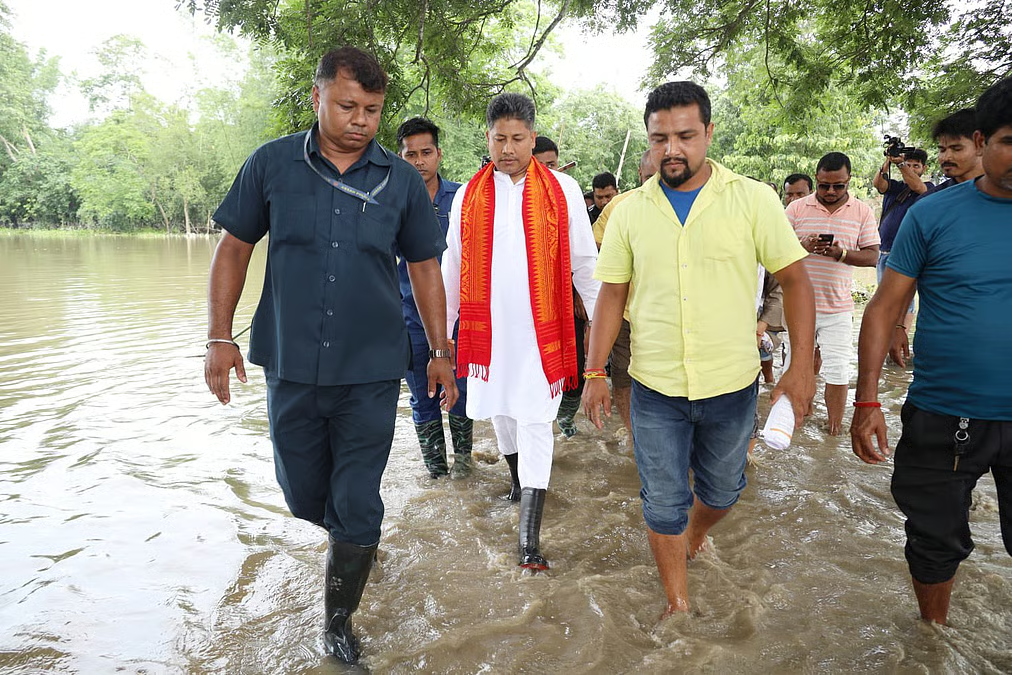
Assam Water Resources Minister Pijush Hazarika on Sunday stressed the urgent need to revive and maintain natural water bodies across the state. He said these reservoirs, if restored and managed effectively, can significantly reduce the devastation caused by floods and serve as essential water storage sources.
The minister was speaking while leading a large-scale cleanliness drive in Jagiroad, aimed at raising awareness about the ecological and economic benefits of preserving water bodies. The event drew active participation from local residents, government officials, and community leaders.
Natural Water Bodies as Flood Buffers
Hazarika highlighted that Assam’s recurring flood crisis is partly due to neglect of its natural reservoirs, ponds, and wetlands.
“When maintained well, these water bodies act as natural sponges, storing excess rainwater and easing flood pressures,” he said.
He added that revival efforts should not be limited to urban zones but must also include rural and remote areas.
The minister also underlined the need for scientific interventions alongside traditional knowledge to manage these ecosystems better. This, he said, will help not only in flood control but also in ensuring sustainable water availability during dry seasons.
Community-Driven Cleanliness Mission
During the Jagiroad cleanliness drive, teams removed large amounts of silt, plastic waste, and encroachments from local water channels.
Hazarika personally joined the workers, emphasizing that government initiatives must be complemented by public participation to succeed.
“Flood control starts with keeping our water bodies clean and obstruction-free,” he noted.
The campaign also focused on educating the community about the dangers of dumping garbage into rivers, ponds, and drains. Awareness posters were distributed, and volunteers explained the long-term benefits of ecological upkeep.
A Long-Term Vision for Flood Management
According to Hazarika, the revival of natural water bodies is not just an environmental goal but also an economic necessity.
He stated that degraded wetlands not only worsen floods but also harm fisheries, agriculture, and biodiversity.
By restoring them, Assam can protect livelihoods, boost eco-tourism, and ensure climate resilience.
The Water Resources Department plans to collaborate with the Environment and Forest Departments, NGOs, and local councils to identify and prioritize water bodies for immediate restoration.
Hazarika mentioned that mapping of these resources using modern technology like GIS is underway.
Learning from Traditional Practices
Hazarika pointed out that Assam has a rich history of traditional water conservation practices.
From ancient village ponds to community-managed wetlands, these systems once ensured a balance between human needs and natural cycles.
He urged that these indigenous methods be integrated into modern flood mitigation plans.
Citing examples from other states and countries, he said that community-led restoration projects have shown remarkable success when combined with government backing.
This model, he believes, can be replicated across Assam to create a sustainable and low-cost solution to flood woes.
Jagiroad as a Model Project
The minister expressed hope that the Jagiroad cleanliness initiative would become a model for other districts.
Regular monitoring, community engagement, and strict action against encroachment are part of the follow-up plan.
Local authorities have been instructed to conduct monthly reviews and report on the condition of restored water bodies.
Residents welcomed the move, saying that clean and functional water bodies would also help recharge groundwater and improve sanitation in the area.
Many local farmers believe such projects can bring long-term benefits to agriculture, which often suffers during both floods and droughts.
Action for Citizens
Hazarika ended his address by appealing to all citizens to join the movement for reviving Assam’s natural water bodies.
He emphasized that government efforts will fail without public support, and that the health of rivers, ponds, and wetlands is a shared responsibility.
“Every piece of plastic we stop from entering a drain, every encroachment we prevent, and every pond we help restore brings us closer to a flood-resilient Assam,” he said.
For more updates on Assam’s environmental initiatives and water management strategies, follow the Assam Water Resources Department and stay informed about local cleanliness drives in your area.