


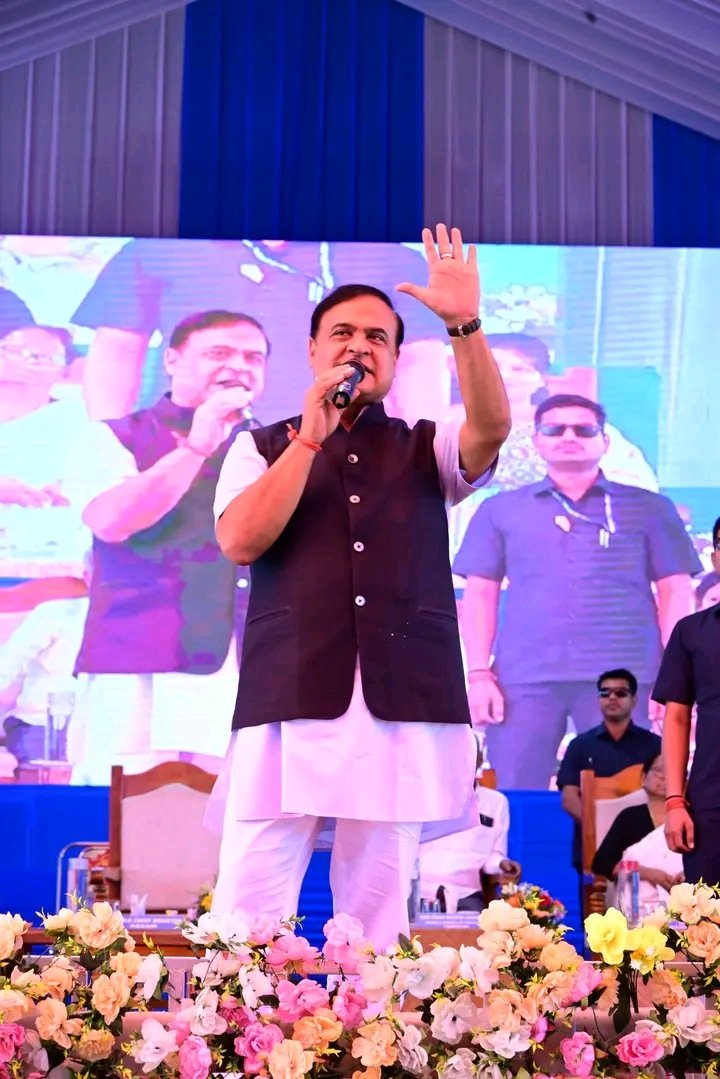
Guwahati: Assam Chief Minister Himanta Biswa Sharma on Friday offered a rare, data-driven assessment of Assam’s upcoming electoral landscape, stating that the Bharatiya Janata Party (BJP) and its allies are positioned to win a maximum of 103 seats in the 126-member Assam Legislative Assembly owing to demographic and constituency patterns.
Explaining the limits of the party’s electoral reach, the Chief Minister said, “In Assam, we can’t win more than 100 seats. That is the population pattern. We can contest in 103 of the 126 seats in Assam. But it does not mean that we can’t contest in other seats.” Sharma clarified that the BJP’s “organic footprint” aligns with these 103 constituencies, marking the realistic upper boundary of winnable seats.
Pointing to the impact of the recent delimitation, Sharma noted that the state’s political map has undergone substantial changes. “Earlier BJP would have contested in 90 constituencies. But after the delimitation, 10–15 new constituencies have formed where there is no MLA today. Organically, we can bring forward youth and women this time,” he said, signaling a push for refreshed leadership within the party.
Touching on the nuanced voting patterns among Assam’s Muslim communities, the Chief Minister said the BJP is steadily gaining ground among indigenous Assamese Muslims. “BJP will get Assamese Muslims’ vote, but will not get Miya Muslim vote,” he asserted, drawing a sharp demographic distinction that often shapes electoral outcomes in the state.
Political analysts say Sharma’s detailed and unusually candid breakdown highlights a strategic recalibration ahead of the next Assembly election — one that blends realism with calculated optimism. The remark also positions the BJP’s strategy around demographic realities, organisational expansion, and targeted outreach as Assam enters a crucial political season.