


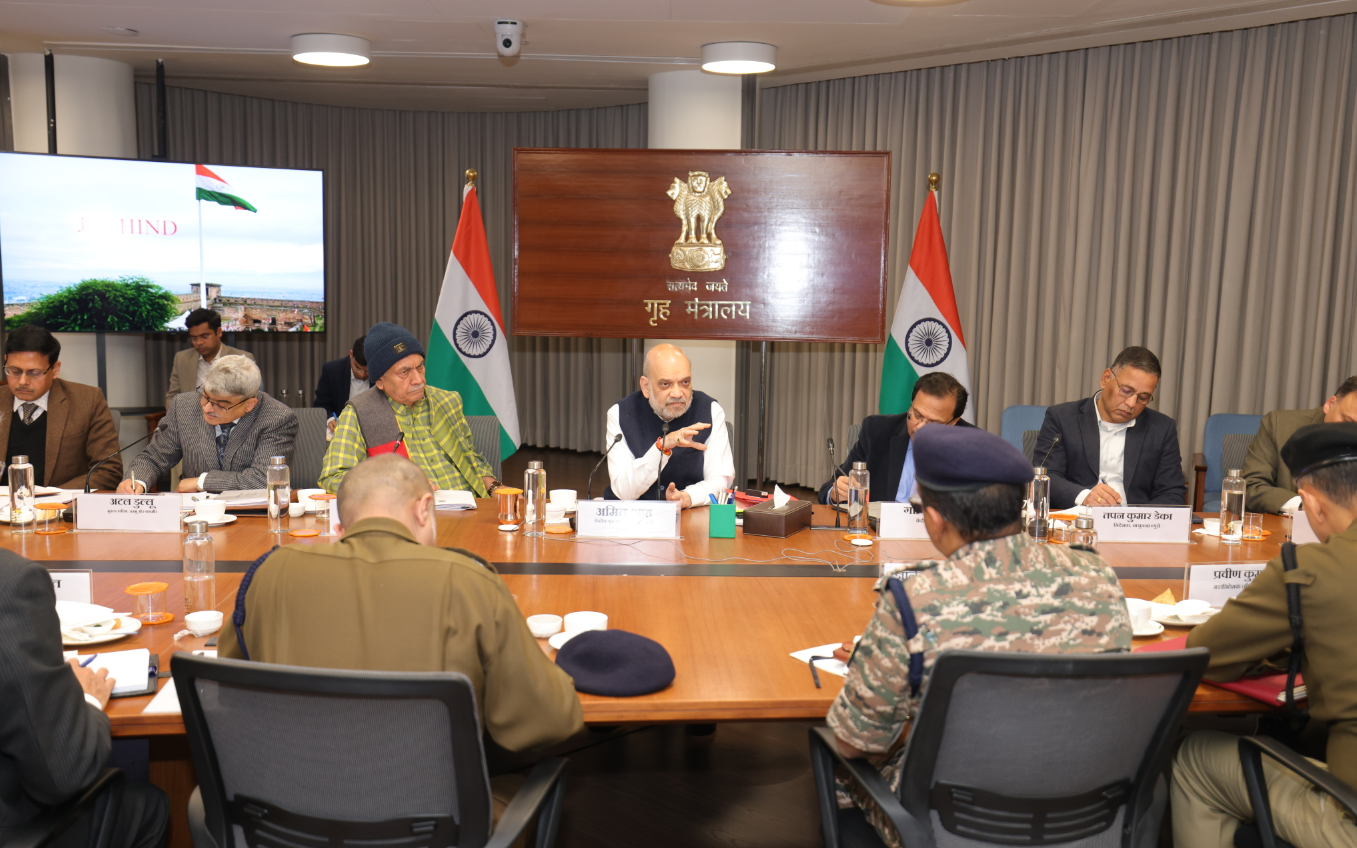
The Total Territorial Defense Model took center stage during a high-level security meeting chaired by Union Home Minister Amit Shah in Salbagan. The new security framework aims to strengthen border management and counter illegal infiltration, arms trafficking, and narcotics smuggling through coordinated action involving local administrations, village representatives, and the Border Security Force (BSF).
Advanced Smart Border CCTV Upgrade Strengthens Tripura Security
Inspiring Asiatic Bear Cubs Release Marks Conservation Success
Total Territorial Defense Model Introduced at High-Level Meeting
Union Home Minister Amit Shah unveiled the Total Territorial Defense Model during a major security review meeting in Salbagan. Moreover, the initiative seeks to establish a comprehensive security network that integrates local governance structures with border management agencies.
The framework focuses on improving coordination among various stakeholders. Additionally, authorities expect the model to enhance surveillance and strengthen responses to security challenges in border regions.
Focus on Illegal Infiltration and Cross-Border Threats
A key objective of the new model involves preventing illegal infiltration across international borders. Furthermore, authorities aim to improve monitoring mechanisms and strengthen intelligence gathering at the grassroots level.
Officials believe that coordinated efforts can help identify suspicious activities more effectively. Consequently, the model emphasizes information sharing among local communities and security agencies.
Combating Arms Trafficking and Narcotics Smuggling
The Total Territorial Defense Model also targets arms trafficking and narcotics-related activities. Moreover, these issues remain significant concerns in several border areas due to their impact on public safety and regional security.
Authorities plan to enhance cooperation between enforcement agencies and local administrative bodies. Therefore, the framework seeks to improve the detection and prevention of illegal networks.
Village Sarpanches Assigned Key Role
Village sarpanches will play an important role within the proposed security structure. Additionally, local representatives can provide valuable information regarding developments within their communities.
The model encourages grassroots participation in security-related efforts. Furthermore, officials believe that local involvement can improve awareness and strengthen preventive measures.
Patwaris and District Administrations Integrated
Patwaris and district administrations form another critical component of the security blueprint. Moreover, these officials possess local knowledge and administrative reach that can support effective implementation.
Authorities expect administrative coordination to improve communication and reporting systems. As a result, security agencies may receive more timely information from local areas.
BSF Positioned at the Core of the Framework
The Border Security Force remains central to the implementation of the Total Territorial Defense Model. Furthermore, the BSF will work closely with local stakeholders to strengthen border vigilance and operational effectiveness.
Enhanced coordination can improve the ability to respond to emerging threats. Consequently, authorities view the BSF’s role as essential to the success of the initiative.
Interconnected Security Network Planned
The model proposes an interconnected system linking village-level representatives, administrative officials, and security forces. Moreover, this structure aims to ensure a seamless flow of information across different levels of governance.
Efficient communication often strengthens security operations. Therefore, officials have emphasized the importance of coordination and accountability within the proposed framework.
Amit Shah Highlights Cooperative Security Approach
During the meeting, Amit Shah highlighted the value of collective responsibility in maintaining security. Additionally, the framework reflects a strategy that combines local participation with institutional support.
Authorities believe that cooperative approaches can improve outcomes in border management. Furthermore, community engagement may help strengthen long-term security efforts.
Total Territorial Defense Model Aims to Strengthen Border Security
The Total Territorial Defense Model represents a comprehensive approach to addressing multiple security challenges simultaneously. Moreover, the initiative seeks to create a robust system capable of responding to infiltration, trafficking, and other cross-border concerns.
Officials have indicated that coordination and vigilance will remain key priorities. Consequently, the framework could play an important role in shaping future border security strategies.
Conclusion
The introduction of the Total Territorial Defense Model marks a significant step in the government’s efforts to strengthen border security and address challenges such as illegal infiltration, arms trafficking, and narcotics smuggling. Unveiled by Union Home Minister Amit Shah during a high-level meeting in Salbagan, the framework promotes a coordinated approach that connects village sarpanches, patwaris, district administrations, and the Border Security Force. Moreover, the initiative recognizes the importance of grassroots participation alongside institutional enforcement mechanisms.
By creating an interconnected security network, authorities aim to improve intelligence sharing, enhance vigilance, and strengthen preventive measures in border regions. Furthermore, the model reflects a broader strategy focused on cooperation, accountability, and community involvement. The Total Territorial Defense Model therefore represents an ambitious effort to build a more responsive and integrated security framework capable of addressing complex challenges along India’s borders.
FAQs
1. What is the Total Territorial Defense Model?
The model is a security framework designed to strengthen border management and address threats such as infiltration, arms trafficking, and narcotics smuggling. Moreover, it promotes coordination among local and national stakeholders.
2. Who introduced the Total Territorial Defense Model?
Union Home Minister Amit Shah introduced the initiative during a high-level security meeting in Salbagan. Additionally, the meeting focused on strengthening border security mechanisms.
3. Which groups are involved in the framework?
The model includes village sarpanches, patwaris, district administrations, and the Border Security Force. Furthermore, each group has a role in information sharing and security coordination.
4. Why is local participation important in the model?
Local representatives often possess valuable knowledge about developments within their communities. Consequently, their involvement can improve monitoring and early detection efforts.
5. What does the Total Territorial Defense Model aim to achieve?
The Total Territorial Defense Model aims to create an integrated security network that strengthens border vigilance and combats illegal activities. Moreover, it seeks to improve coordination between communities and security agencies.