


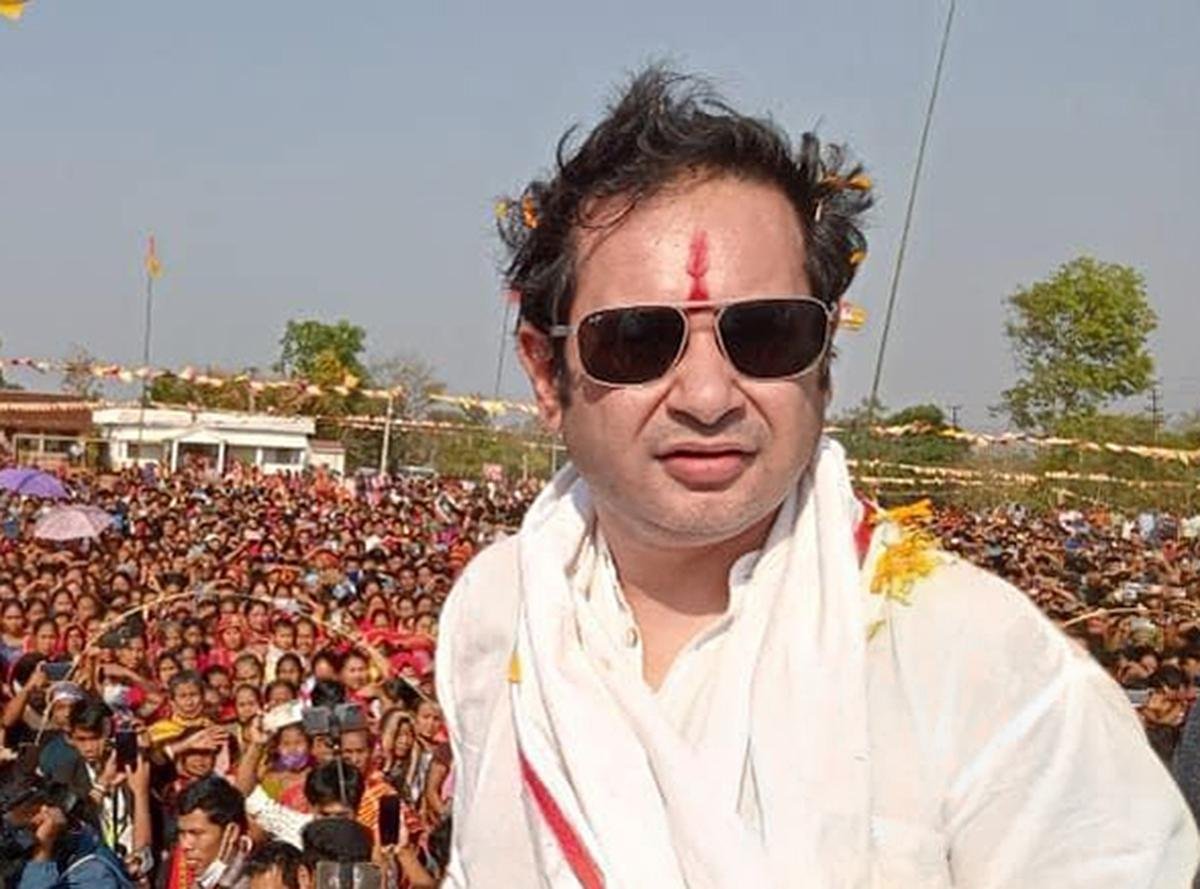
TIPRA Motha founder Pradyot Kishore Manikya Debbarma has ruled out an alliance with the BJP for Tripura’s upcoming village elections, reinforcing the party’s decision to maintain an independent political path. The position could reshape electoral calculations across the state’s tribal areas ahead of the September 2026 polls.
Debbarma’s stance comes as political parties prepare for a competitive grassroots contest involving hundreds of village committees. Moreover, TIPRA Motha’s decision to avoid an electoral arrangement with the BJP could lead to more direct contests between the two parties in areas where they compete for overlapping support.
The disagreement reflects wider differences over indigenous rights, constitutional safeguards, land protection, political representation, and implementation of political commitments. However, the decision should be viewed within the context of the upcoming village elections and does not necessarily determine the parties’ relationship on every future political issue.
Supreme Court Allows Kuki Legal Groups Access to Biren Singh Forensic Report
Pradyot Debbarma Draws Clear Political Line
Pradyot Debbarma’s position establishes a clear distinction between TIPRA Motha and the BJP ahead of the village elections.
The decision allows TIPRA Motha to campaign independently and maintain control over its candidates and election messaging. Furthermore, the party can place its core demands at the centre of the campaign without adjusting them to accommodate an alliance partner.
This approach reinforces TIPRA Motha’s separate political identity.
However, an independent strategy also requires the party to maintain strong grassroots organisation across the areas it contests.
TIPRA Motha Prioritises Independent Strategy
TIPRA Motha has increasingly emphasised an independent electoral approach.
The party has focused on indigenous rights, constitutional safeguards, land protection, language, cultural identity, and greater political representation. Additionally, maintaining distance from the BJP allows TIPRA Motha to present these issues without the constraints of a formal seat-sharing arrangement.
The strategy could help the party strengthen its position among tribal voters.
However, independence can also increase electoral competition and the risk of vote division.
BJP Faces Direct Competition
The absence of an alliance could create more direct contests between TIPRA Motha and the BJP.
Both parties may seek support among voters in Tripura’s tribal areas, particularly where their organisational networks overlap. Moreover, closely contested village elections could make candidate selection and local campaigning particularly important.
The BJP may therefore need to strengthen its own grassroots campaign.
However, other political organisations and independent candidates could also influence individual contests.
Constitutional Rights Remain Central
Constitutional safeguards remain a major component of TIPRA Motha’s political agenda.
The party has argued for stronger protection of indigenous interests and greater political representation. Furthermore, it has sought concrete commitments on issues affecting tribal communities rather than relying solely on broad political assurances.
Debbarma’s rejection of an alliance allows TIPRA Motha to keep these demands at the centre of its campaign.
However, constitutional changes require formal legal and institutional processes.
Tripartite Agreement Adds Political Pressure
The relationship between TIPRA Motha and the BJP also involves disagreements over commitments linked to the Tripartite Agreement.
TIPRA Motha has continued to press for progress on issues concerning indigenous communities. Moreover, questions surrounding implementation can influence the party’s willingness to cooperate electorally with the BJP.
The village elections therefore provide a fresh political test of that relationship.
However, differences over implementation do not automatically eliminate the possibility of future political dialogue.
Land Protection Could Influence Voters
Land protection is likely to remain one of TIPRA Motha’s major campaign themes.
Land affects livelihoods, agriculture, settlement, and cultural identity in many tribal communities. Additionally, voters may expect political representatives to defend existing safeguards and address concerns surrounding land administration.
TIPRA Motha can use its independent campaign to emphasise these issues.
However, voters will also consider development and economic concerns.
Village Elections Increase Political Stakes
The upcoming village elections provide a direct test of political strength at the grassroots level.
Candidates will need to build strong relationships within their communities and address local concerns. Furthermore, parties will have to mobilise supporters across numerous village committees.
TIPRA Motha’s decision to remain separate from the BJP could make these contests particularly competitive.
However, local political dynamics can differ significantly from broader state-level relationships.
Development Remains a Major Issue
Political identity alone will not determine the village election results.
Voters may focus on roads, healthcare, schools, drinking water, electricity, employment, agriculture, and welfare access. Moreover, candidates who demonstrate a clear understanding of local development problems could gain an advantage.
TIPRA Motha and the BJP will therefore need to combine broader political messaging with practical proposals.
However, individual villages may prioritise different development needs.
Candidate Selection Could Decide Contests
Independent campaigns place greater importance on candidate selection.
Candidates with strong community networks and local credibility can influence voter preferences significantly. Additionally, experienced local leaders may help parties mobilise supporters and respond quickly to constituency-specific concerns.
Both TIPRA Motha and the BJP will therefore need strong candidates.
However, candidate popularity cannot guarantee victory in closely contested elections.
Vote Division Creates New Risks
The absence of an alliance could create multi-cornered contests across several village committees.
When multiple candidates compete for overlapping voter groups, votes can become divided. Furthermore, smaller parties and independent candidates could influence outcomes even when they do not emerge as the strongest contenders.
This makes the electoral arithmetic more difficult to predict.
However, TIPRA Motha may consider an independent campaign worthwhile if it believes its core support can deliver strong results.
Independent Performance Could Strengthen TIPRA Motha
A strong performance could validate Debbarma’s decision to reject an alliance with the BJP.
Winning a significant number of village committees would demonstrate that TIPRA Motha can maintain grassroots support without depending on electoral cooperation. Moreover, such a result could strengthen the party’s bargaining position in future political discussions.
The outcome could therefore influence TIPRA Motha’s longer-term strategy.
However, weaker results could prompt internal discussions about future electoral arrangements.
BJP Must Build Its Own Grassroots Network
The BJP will also have to rely on its own organisation if no alliance develops.
The party can focus on development programmes, welfare delivery, infrastructure, and local governance in its campaign. Furthermore, it may seek to strengthen its presence among tribal voters through village-level outreach.
The direct contest could therefore become an important organisational test for both parties.
However, the final results will depend on local candidates and voter priorities.
Future Political Cooperation Remains Uncertain
Rejecting an alliance for the village elections does not necessarily determine all future political relationships.
Political parties can change their strategies after assessing electoral results and broader political circumstances. Moreover, post-election developments could create new opportunities for cooperation or further competition.
For now, however, TIPRA Motha appears focused on maintaining its independent electoral identity.
Conclusion
Pradyot Debbarma’s decision to rule out an alliance with the BJP for Tripura’s village elections has sharpened the political contest across the state’s tribal areas. TIPRA Motha can now campaign independently while placing indigenous rights, constitutional safeguards, land protection, and political representation at the centre of its message.
Moreover, the absence of an alliance could create more direct contests and increase the importance of candidate selection and grassroots organisation. At the same time, independent campaigning carries the risk of vote division and greater competition.
Overall, the September 2026 village elections will provide a crucial test of TIPRA Motha’s independent strategy. A strong performance could strengthen Debbarma’s political position, while weaker results could encourage the party to reassess its approach to future electoral cooperation.
FAQs
1. Why has Pradyot Debbarma ruled out an alliance with the BJP?
The position allows TIPRA Motha to maintain an independent electoral identity and campaign around its own political priorities.
2. What issues does TIPRA Motha emphasise?
The party focuses on indigenous rights, constitutional safeguards, land protection, cultural identity, language, and political representation.
3. Could the decision affect the BJP?
Yes. The BJP may face more direct competition from TIPRA Motha in tribal areas and will need to rely on its own grassroots organisation.
4. Could vote division influence the elections?
Yes. Multi-cornered contests can divide support among several candidates and influence closely contested village committees.
5. Does this rule out future cooperation between TIPRA Motha and the BJP?
Not necessarily. The current position concerns the village elections, while future political cooperation could depend on electoral results and changing political circumstances.