


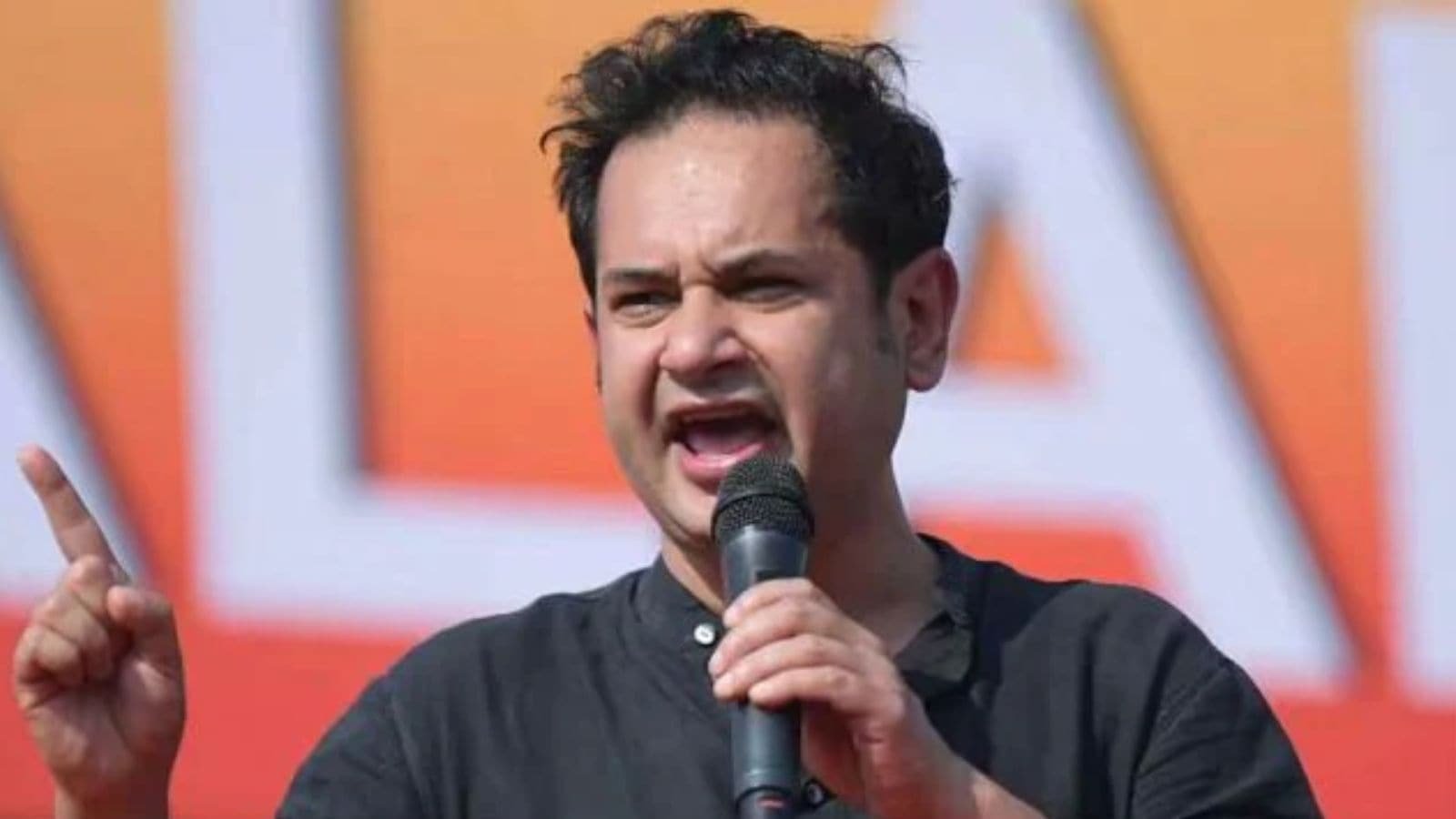
Tipra Motha founder and royal scion Pradyot Manikya Debbarma has lashed out at the Tripura government over what he described as an “unprecedented delay” in holding the long-pending village committee elections.
The delay, he said, has deprived the state’s indigenous communities of their constitutional right to local governance.
Addressing supporters and media persons on Monday, Pradyot accused the administration of intentionally postponing the polls to weaken the autonomous governance structure under the Tripura Tribal Areas Autonomous District Council (TTAADC).
“The people of the hills have been waiting for years. The government is playing with our rights,” he stated.
Tribal Governance Left in Limbo
Tripura has 587 village committees functioning as the grassroots administrative units under the TTAADC.
However, their terms expired over three years ago, and fresh elections have not yet been conducted.
Pradyot said that this delay has created a governance vacuum, leaving thousands of tribal residents without functioning local bodies.
He emphasized that essential development activities, welfare schemes, and public services in tribal areas have been severely hampered.
He further argued that the absence of elected representatives at the village level violates the Sixth Schedule of the Constitution, which guarantees self-rule for indigenous communities.
“This is not merely a political delay; it is a denial of democracy,” Pradyot remarked.
Tipra Motha Accuses State of Political Interference
The Tipra Motha chief alleged that the state administration and the ruling Bharatiya Janata Party (BJP) were deliberately holding up the election process for political convenience.
He claimed that the BJP fears losing its ground among tribal voters, which explains the continued postponement.
“The delay is strategic,” he said. “They know that if elections are held today, Tipra Motha will win a majority. That is why they are buying time.”
Pradyot also criticized the Tripura State Election Commission for not taking proactive steps to ensure the timely conduct of village committee polls.
He urged the commission to act independently and uphold democratic principles rather than bowing to political pressure.
A Demand for Immediate Election Schedule
Pradyot reiterated his demand for the immediate announcement of the election schedule.
He warned that Tipra Motha would launch a statewide agitation if the government continues to delay the process.
“The patience of the indigenous people has limits,” he said. “We will not remain silent if our rights are trampled.
The government must either announce the election dates or face a democratic movement.”
He also appealed to civil society organizations, student bodies, and other tribal groups to unite for the cause of local governance.
“This is not just about Tipra Motha. It’s about the constitutional rights of every indigenous person in Tripura,” he added.
Political Ripples Across the State
The statement by Pradyot has sent fresh ripples across Tripura’s political landscape.
Analysts believe his criticism could intensify pressure on the ruling BJP-led government ahead of the Tripura Tribal Areas Autonomous District Council (TTAADC) elections. Though, expected early next year.
The BJP, however, has maintained that the delay is due to administrative and logistical issues, including boundary reorganization and voter roll revision.
A senior BJP leader responded, “We are committed to holding free and fair elections. The process is underway, and every community’s interest will be protected.”
Still, opposition parties, including the CPI(M) and the Congress, have echoed Pradyot’s sentiment, accusing the government of undermining grassroots democracy.
They said the continued postponement reflects poor governance and a disregard for tribal welfare.
Growing Frustration in Tribal Areas
In the interior villages of the TTAADC region, frustration among tribal communities is evident.
Residents complain that without elected village committees, they face difficulties in accessing funds for development and local welfare.
“We feel abandoned,” said a villager from Gandacherra. “The leaders come only during elections, but for the last few years, we have no one to represent us.”
The absence of functioning committees has also stalled projects related to infrastructure, sanitation, and drinking water supply.
Tipra Motha leaders have been visiting these areas, rallying support for an early election.
They argue that restoring village-level governance is essential to empower tribal voices and ensure accountability in resource distribution.
Pradyot’s Broader Political Message
Pradyot’s sharp criticism is part of his broader campaign to demand greater autonomy and constitutional safeguards for Tripura’s indigenous communities under the banner of “Greater Tipraland.” He continues to position Tipra Motha as the primary defender of tribal rights in the state’s political discourse.
“This is not just about elections. It’s about respect and representation,” he declared.
“Our people deserve to make decisions for themselves not wait endlessly for permission from Agartala.”
As tensions mount, the demand for timely village committee polls is expected to become a central political issue in the coming months. Although, observers say that how the state government responds will influence its credibility among tribal voters.