


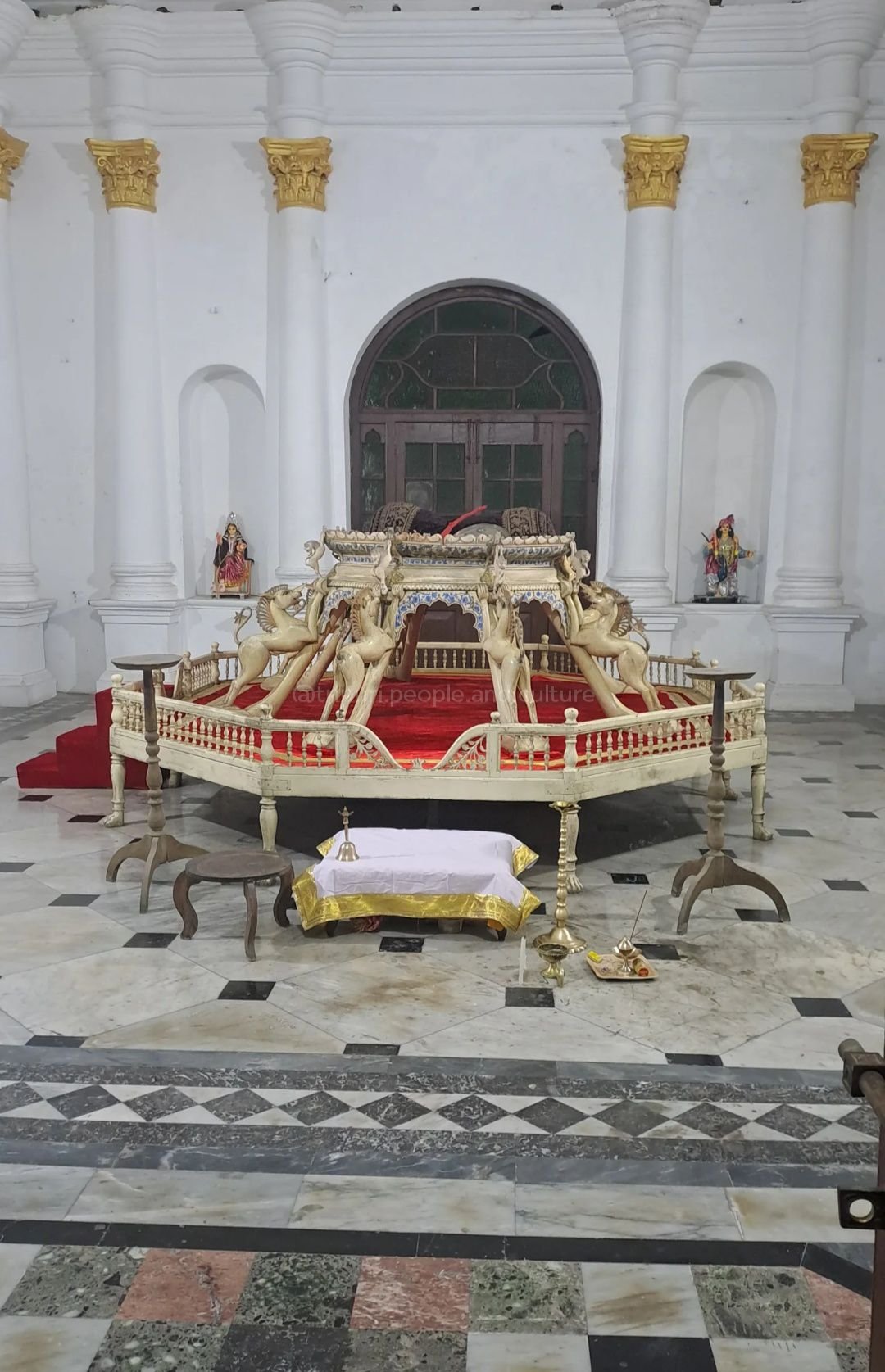
The Rajachukthai, also known as the Royal Throne of the Tripura Kingdom, holds immense historical and cultural significance. Considered a divine gift, the throne is believed to have been presented by Dharmaraj Yudhisthira to Maharaja Trilochan, the 47th ruler of the Tripuri dynasty. This sacred relic continues to symbolize the legacy, authority, and traditions of the royal lineage of Tripura.
The throne, known as Rajsinghasan, is not only a royal artifact but also a spiritual emblem associated with the faith and heritage of the state. What makes it particularly special is the annual Rajsinghasan Puja, a traditional ceremony observed only twice a year. The rituals are held on two auspicious days—Chaitra Dashami and Ashin Dashami. This year, the sacred puja took place on Ashin Dashami, bringing together devotees, priests, and members of the royal family who uphold the age-old customs.
During the Rajsinghasan Puja, special offerings, chants, and rituals are performed to honor the throne. The ceremony is steeped in symbolism, reflecting the connection between spiritual authority and royal responsibility. According to traditional beliefs, the throne not only represents the seat of power but also acts as a medium through which divine blessings are invoked for peace, prosperity, and well-being.
Historians highlight that the Rajachukthai embodies centuries of cultural continuity. Passed down through generations, it has witnessed the rule of several Tripuri kings and has been an integral part of royal ceremonies and religious traditions. The belief that it was originally a gift from the Mahabharata era underscores the throne’s spiritual importance and elevates its standing in the collective memory of the people of Tripura.
The throne is safeguarded with great reverence and is rarely displayed publicly, except on ritualistic occasions such as the biannual puja. These ceremonies not only preserve ancient traditions but also strengthen the cultural identity of Tripura. Locals believe that the observance of these rites ensures the protection of the land and its people.
Over the centuries, the Rajsinghasan Puja has been conducted with unwavering devotion. Despite the passage of time and changes in governance, the rituals continue to bind communities together, reinforcing their faith in the cultural heritage of Tripura. For many, witnessing the puja is not just a religious experience but also a reminder of the enduring history of the kingdom.
As the Rajachukthai remains central to Tripura’s heritage, the continuation of its rituals reflects the importance of preserving traditions that connect the present generation with its glorious past. The Rajsinghasan stands as a timeless symbol of royal authority, divine blessing, and cultural pride.