


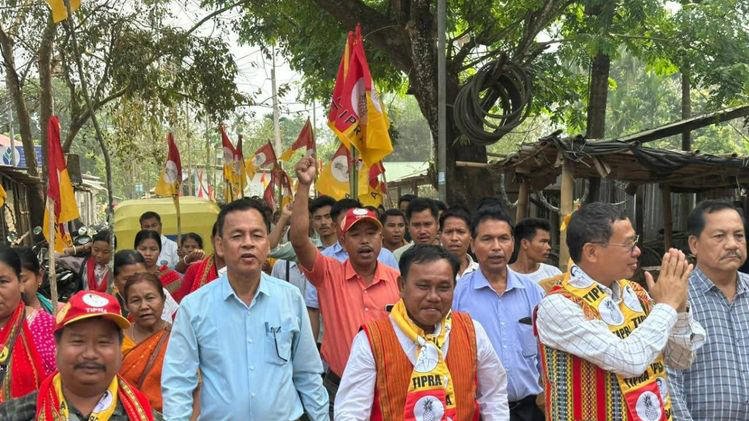
Tripura MLA Ranjit Debbarma has sharply criticized the Bharatiya Janata Party (BJP), claiming that support among indigenous communities is steadily shifting toward the Tipra Motha Party. His remarks have added a new dimension to the political discourse in Tripura, where regional identity and grassroots mobilization continue to shape electoral dynamics.
The statement from Debbarma comes at a time when political activity in Tripura is intensifying, with parties preparing to consolidate their voter base. His assertion about growing indigenous backing for the Tipra Motha Party signals a potential shift in political alignments in the state.
Read More: Pradyut Bordoloi Dispur Candidature Sparks BJP Rift
Debbarma Criticizes BJP’s Approach
Ranjit Debbarma openly criticized the BJP’s governance and policies, arguing that they have failed to address the concerns of indigenous communities. According to him, many people feel disconnected from the current administration and seek stronger representation of their identity and rights.
He stated that the BJP initially gained support by promising development and inclusive growth. However, he claimed that the delivery has not matched expectations, particularly in areas dominated by indigenous populations. As a result, dissatisfaction has started to grow among sections of voters.
Moreover, Debbarma emphasized that issues related to land rights, cultural preservation, and economic opportunities remain unresolved. Therefore, he believes that people are now looking toward alternative political platforms that prioritize these concerns.
Rising Support for Tipra Motha Party
Highlighting the growing influence of the Tipra Motha Party, Debbarma asserted that the party has gained significant traction among indigenous communities. He pointed out that grassroots campaigns and consistent engagement have strengthened the party’s connection with voters.
According to him, the Tipra Motha Party has successfully positioned itself as a voice for indigenous aspirations. Consequently, more people are aligning with its vision and leadership.
In addition, Debbarma noted that the party’s emphasis on regional identity has resonated strongly with younger voters. This growing support base could play a crucial role in shaping future electoral outcomes in Tripura.
He also highlighted that the party continues to expand its outreach efforts, aiming to connect with communities across different regions of the state.
Focus on Indigenous Rights and Identity
A key aspect of Debbarma’s statement revolves around the importance of protecting indigenous rights and identity. He stressed that political representation must reflect the unique cultural and social fabric of Tripura.
Furthermore, he argued that development should not come at the cost of cultural heritage. Instead, policies should balance economic growth with the preservation of traditions and community values.
The Tipra Motha Party, according to Debbarma, has consistently advocated for these principles. Therefore, it has emerged as a preferred choice for many indigenous voters who seek a stronger voice in governance.
At the same time, he called for greater dialogue between communities and policymakers to address long-standing issues effectively.
Political Implications for Tripura
Debbarma’s remarks have significant political implications for Tripura’s evolving landscape. If the trend of increasing support for the Tipra Motha Party continues, it could alter the balance of power in the state.
The BJP, which has maintained a strong presence in Tripura, may need to reassess its strategies to retain support among indigenous communities. Addressing grievances and strengthening outreach could become essential for the party.
Meanwhile, opposition parties are likely to monitor these developments closely. The shifting dynamics could open new opportunities for alliances and political realignments.
Moreover, voter sentiment will play a crucial role in determining the impact of these changes. As political narratives evolve, parties must adapt to the expectations of the electorate.
BJP’s Position and Possible Response
While Debbarma has voiced strong criticism, the BJP is expected to counter these claims by highlighting its achievements in the state. The party has previously emphasized development projects, infrastructure improvements, and welfare schemes as key accomplishments.
However, the challenge lies in bridging the gap between policy initiatives and public perception. Therefore, the BJP may focus on strengthening communication and engagement with communities.
In addition, party leaders could intensify grassroots campaigns to reconnect with voters. This approach may help address concerns and rebuild trust among sections that feel overlooked.
At the same time, the BJP is likely to project stability and governance experience as its strengths in the political contest.
Growing Importance of Regional Parties
The rise of the Tipra Motha Party reflects a broader trend of regional parties gaining influence in Indian politics. In states like Tripura, where identity and local issues hold significant importance, regional parties often resonate strongly with voters.
Debbarma’s statement underscores this shift, highlighting how regional narratives can shape political outcomes. As a result, national parties must adapt to local contexts and address specific concerns effectively.
Furthermore, the increasing prominence of regional parties adds complexity to electoral contests. Alliances, negotiations, and strategic planning become crucial in such scenarios.
A Changing Political Landscape
Tripura’s political landscape appears to be undergoing a transformation, with new narratives and alliances emerging. The claims made by Ranjit Debbarma about rising support for the Tipra Motha Party indicate a shift that could influence future elections.
As political competition intensifies, parties will need to focus on building trust, addressing community concerns, and presenting clear visions for development. Voters, on the other hand, will evaluate these factors while making their choices.
In conclusion, Debbarma’s remarks have brought attention to the changing dynamics in Tripura politics. The growing support for the Tipra Motha Party, as claimed by him, reflects the importance of grassroots engagement and representation. As the state moves forward, these developments will play a key role in shaping its political future.
Read More: BJP Expels Six Assam Leaders Over Anti-Party Activities