


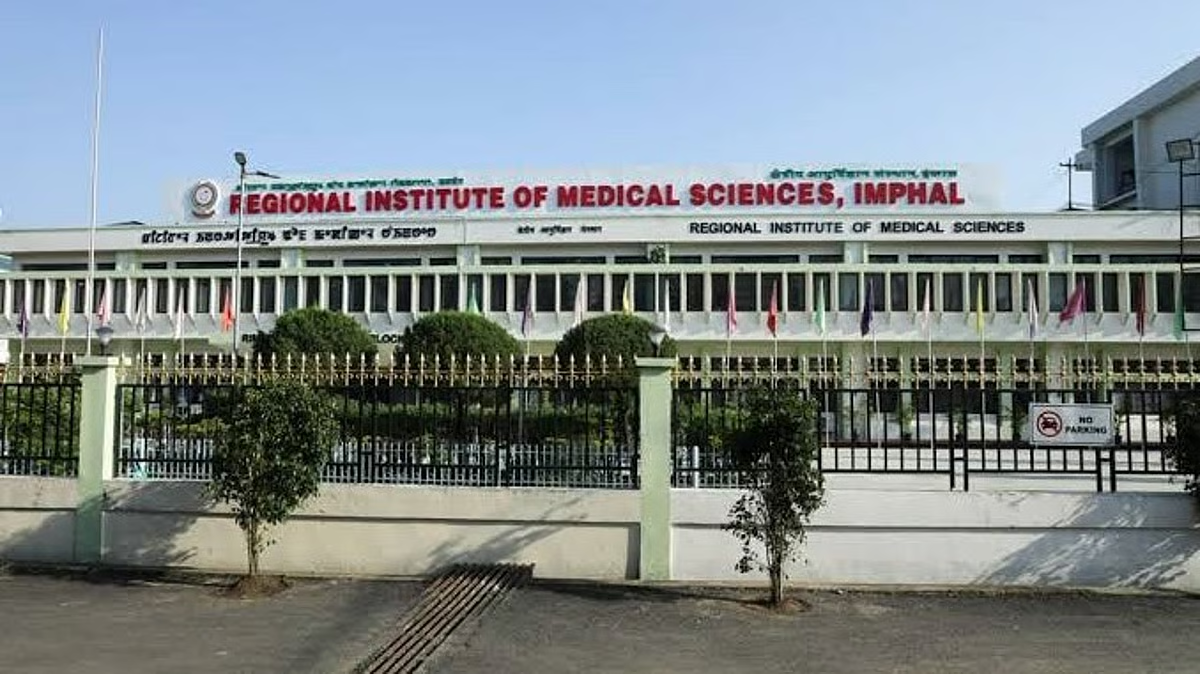
The RIMS upgraded to AIIMS status development marks a significant step for healthcare infrastructure in Northeast India. On August 31, the Union Health Ministry reportedly gave the green light for an infrastructural upgrade of the Regional Institute of Medical Sciences (RIMS) in Imphal.
The decision could strengthen the institute’s medical facilities, research capabilities, and capacity to serve patients from Manipur and neighbouring northeastern states. Moreover, the upgrade reflects continued efforts to improve advanced healthcare infrastructure in the region.
Meghalaya IT Park Phase 2: IT Firms Begin Occupying Units at Shillong Technology Park
RIMS Upgraded to AIIMS Status Gets Government Push
The Union Health Ministry’s August 31 decision focuses on strengthening the infrastructure of RIMS in Imphal.
RIMS serves as an important medical institution for Manipur and the wider Northeast. Therefore, improvements to its infrastructure could have an impact beyond the state itself.
The RIMS upgraded to AIIMS status plan is expected to support the institution’s long-term development. Better facilities can help medical professionals provide specialised treatment while also creating stronger opportunities for teaching and research.
Furthermore, infrastructure development can improve the overall environment for patients, doctors, nurses, researchers, and medical students.
RIMS Upgraded to AIIMS Status Could Strengthen Healthcare
RIMS already plays an important role in providing medical education and healthcare services in Northeast India. However, growing healthcare needs require institutions to continuously expand their facilities and capabilities.
An infrastructure upgrade can support the development of modern clinical facilities, academic spaces, laboratories, and other essential infrastructure.
Consequently, the initiative could help RIMS handle increasing demand for specialised medical services.
The institute also serves patients who may otherwise need to travel outside the Northeast for advanced treatment. Therefore, strengthening facilities in Imphal could reduce the need for some patients to seek specialised healthcare elsewhere.
Moreover, improved infrastructure can help attract and retain skilled healthcare professionals.
Impact on Medical Education and Research
Healthcare infrastructure also plays an important role in medical education.
RIMS trains medical students and healthcare professionals who can eventually serve communities across the Northeast. Better academic and clinical facilities can provide students with stronger opportunities for practical learning.
Additionally, upgraded laboratories and research facilities could encourage more medical research.
The Northeast faces several health challenges that require region-specific research. Researchers can study local disease patterns, public-health needs, and healthcare delivery challenges while working closely with communities.
The RIMS upgraded to AIIMS status development could therefore support both patient care and academic growth.
A stronger research environment could also encourage collaboration between RIMS and other medical institutions across India.
Benefits Could Extend Across Northeast India
The impact of the infrastructure upgrade could extend beyond Manipur.
RIMS attracts patients and medical students from different parts of Northeast India. Consequently, improvements at the institution could strengthen the region’s overall healthcare network.
Patients from neighbouring states could gain access to better-equipped facilities closer to home. Furthermore, medical professionals trained at RIMS can contribute to healthcare systems across the Northeast after completing their education.
The initiative could also encourage greater cooperation between healthcare institutions.
Improving Patient Care in Imphal
For patients, infrastructure improvements can make a direct difference to the healthcare experience.
Modern facilities can support better diagnosis, treatment, emergency care, and specialised services. Additionally, improved hospital infrastructure can help medical teams manage patients more efficiently.
However, infrastructure represents only one part of healthcare quality.
Hospitals also require adequate doctors, nurses, technicians, medicines, equipment, maintenance systems, and administrative support. Therefore, the long-term success of the upgrade will depend on combining physical development with sufficient human resources.
Strengthening Specialised Medical Services
Specialised healthcare remains an important requirement for northeastern states because patients often face geographical and transportation challenges.
Developing advanced facilities at RIMS could allow more complex medical cases to receive treatment within the region.
Moreover, stronger specialised departments could support referrals from hospitals and healthcare centres across Manipur and neighbouring states.
This approach could gradually strengthen Imphal’s position as an important medical centre in Northeast India.
Opportunities for Medical Professionals
Infrastructure development can also create opportunities for healthcare professionals.
As facilities expand, institutions may require additional specialists, technicians, researchers, nurses, and other trained personnel. Consequently, the upgrade could contribute to the development of a larger healthcare workforce.
Medical students could also benefit from exposure to improved clinical environments.
Furthermore, stronger research facilities could encourage young medical professionals to participate in research projects and specialised training.
RIMS Could Gain Greater Institutional Capacity
The proposed development could help RIMS expand its institutional capacity over time.
A stronger infrastructure base can allow the institute to accommodate changing healthcare demands and introduce new services when resources and approvals permit.
Additionally, modern facilities can support collaboration between different medical departments.
Such collaboration can improve the management of complex cases, where patients require expertise from multiple specialties.
The RIMS upgraded to AIIMS status initiative could therefore represent more than a construction or infrastructure project. It could become part of a broader effort to strengthen medical education, research, and healthcare delivery in the Northeast.
Challenges Ahead
Implementing a major infrastructure upgrade requires careful planning and sustained investment.
Authorities will need to ensure that construction progresses efficiently while existing medical services continue to operate. Moreover, new facilities must receive appropriate equipment and staffing once they become operational.
Maintenance will also remain important.
Modern infrastructure can deliver long-term benefits only when institutions maintain buildings, medical equipment, laboratories, and other facilities properly.
Therefore, coordination between the Union government, the institute, and relevant state authorities will remain essential.
Looking Toward Better Healthcare
The August 31 decision provides an opportunity to strengthen one of Northeast India’s important medical institutions.
The RIMS upgraded to AIIMS status development could improve healthcare access, medical education, research, and specialised treatment in the region.
At the same time, the effectiveness of the initiative will depend on how authorities implement the infrastructure plans and support them with adequate staffing, equipment, and operational resources.
Conclusion
The RIMS upgraded to AIIMS status development marks an important healthcare infrastructure push in Imphal after the Union Health Ministry approved the proposed upgrade on August 31.
Moreover, stronger facilities could benefit patients, medical students, researchers, and healthcare professionals across Manipur and the wider Northeast. With effective implementation, the initiative could strengthen RIMS’s role as a major centre for advanced healthcare and medical education in the region.
FAQs
1. What is the RIMS upgraded to AIIMS status development?
It refers to the Union Health Ministry’s approval of an infrastructural upgrade for the Regional Institute of Medical Sciences in Imphal.
2. When did the Union Health Ministry approve the upgrade?
The approval came on August 31.
3. Where is RIMS located?
The Regional Institute of Medical Sciences is located in Imphal, Manipur.
4. How could the upgrade benefit patients?
Improved infrastructure could support better specialised treatment, diagnosis, clinical services, and patient care.
5. Could the RIMS upgrade benefit other northeastern states?
Yes. RIMS serves patients and trains healthcare professionals from across the Northeast, so stronger facilities could have wider regional benefits.