


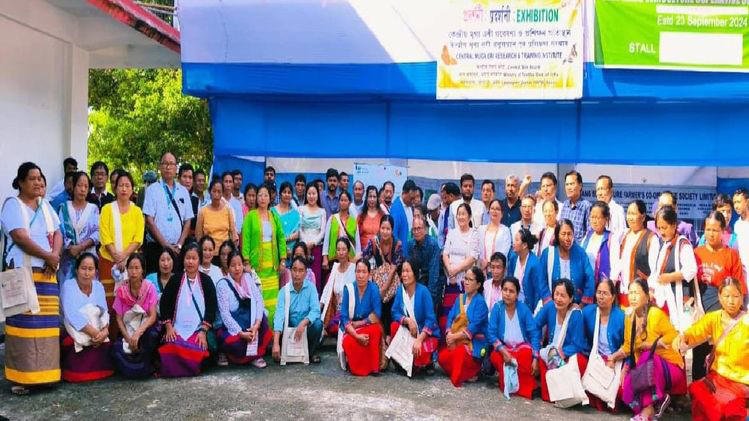
A new initiative in Pasighat, Arunachal Pradesh, is weaving a story of empowerment and sustainability. The Pasighat silk workshop has become a beacon of hope for local communities, offering hands-on training in silk cultivation and weaving. The program aims to transform traditional skills into profitable livelihoods, ensuring that tribal artisans can thrive in today’s competitive market.
Held under the guidance of the Department of Sericulture and Textiles, the workshop attracted artisans, farmers, and women entrepreneurs from across East Siang district. Experts from the Central Silk Board and regional institutions shared knowledge on rearing techniques, yarn quality improvement, and innovative weaving designs that blend tradition with modern demand.
Read More: Meghalaya Village Chief Denies Role in Assam Man’s Death, Border Security Tightened
Pasighat silk workshop revives traditional craft
The Pasighat silk workshop seeks to revive and modernize the region’s long-standing relationship with silk. Arunachal Pradesh has a rich history of sericulture, especially among tribal groups known for crafting exquisite handwoven fabrics. However, due to a lack of technical support and market exposure, many traditional weavers faced declining income.
The workshop aims to reverse that trend. Participants learned about eri, muga, and mulberry silk varieties—each holding unique cultural and economic significance. Trainers demonstrated improved silkworm rearing methods and eco-friendly dyeing techniques that enhance both quality and environmental sustainability.
One of the key objectives of the workshop is to encourage self-reliance. By improving production efficiency and design innovation, artisans can now connect their products to wider markets beyond the state. Officials believe that this initiative could make Pasighat a hub for sustainable silk production in the Northeast.
Empowering women and young entrepreneurs
The Pasighat silk workshop placed strong emphasis on empowering women and young entrepreneurs. A large number of participants were women from nearby villages, who traditionally manage weaving at home. For many of them, this program was the first formal training they had received in professional sericulture and textile management.
“I used to weave just for family needs,” said one participant from Mebo village. “Now I understand how to produce silk fabric that meets market demand. This training has opened new possibilities for me and my family.”
Organizers noted that encouraging women to engage in silk production directly improves rural livelihoods. The program also introduced financial literacy and small business management sessions to help participants run their enterprises independently.
Young people, too, showed great interest in silk rearing and fashion design. The workshop included sessions on branding, packaging, and e-commerce opportunities—allowing participants to see silk not just as a craft but as a viable business venture.
Silk as a tool for sustainable livelihood
The Pasighat silk workshop emphasizes sustainability as the cornerstone of economic development. Sericulture is known for being eco-friendly, requiring minimal water and land compared to other industries. This makes it ideal for the hilly terrains and forested regions of Arunachal Pradesh.
Officials explained that promoting silk aligns with both economic and environmental goals. The process of rearing silkworms encourages tree planting and biodiversity conservation. Moreover, silk waste can be reused, reducing ecological impact.
Dr. Tani Taloh, a senior sericulture officer, highlighted that silk rearing could be integrated into existing agricultural systems. “Farmers can earn additional income without giving up their traditional crops. It provides year-round employment and strengthens community resilience,” he said.
This balance between tradition and innovation ensures that the silk industry grows while preserving local ecosystems. The model introduced at the workshop may soon be replicated in other districts of Arunachal Pradesh.
Collaboration for long-term success
The success of the Pasighat silk workshop lies in collaboration between government departments, academic institutions, and local cooperatives. The Department of Sericulture and Textiles partnered with the Central Silk Board and the North East Institute of Science and Technology to provide technical expertise.
Participants received toolkits, rearing equipment, and access to online resources to continue their work beyond the workshop. The government also announced potential funding through self-help groups and rural development programs to support budding entrepreneurs.
Deputy Commissioner Tayi Taggu, who attended the closing session, appreciated the initiative and assured continuous support from the administration. “Pasighat has the potential to become a model for silk-based livelihood programs in the Northeast,” he said. “We are proud of our artisans, and we want to help them reach national and international markets.”
Building markets and preserving culture
The Pasighat silk workshop not only focuses on training but also aims to build market connections. Experts guided participants on product diversification—encouraging them to create scarves, shawls, and contemporary apparel suited for urban buyers.
Marketing experts explained how traditional motifs could appeal to a global audience when combined with modern aesthetics. By doing so, artisans can retain their cultural identity while expanding commercial reach.
Local cooperatives are expected to play a crucial role in linking weavers with buyers. Plans are underway to establish a silk cluster in Pasighat, where artisans can collectively process, package, and sell their products. Such infrastructure will ensure consistent quality and better income for participants.
Importantly, the workshop reinforced the cultural value of weaving in Arunachal’s heritage. For many communities, silk is not just a product—it represents stories, festivals, and identity. By keeping these traditions alive, the initiative protects intangible heritage while generating livelihoods.
Future plans and vision for Arunachal’s silk industry
Officials announced that the Pasighat silk workshop is just the beginning of a larger plan to boost sericulture across Arunachal Pradesh. Upcoming programs will include advanced training in silk spinning, design innovation, and business development.
The government aims to collaborate with private designers and export houses to create a market-ready brand for Arunachal silk. Such branding will give local weavers recognition beyond regional markets and attract tourism linked to traditional crafts.
Authorities are also exploring opportunities for youth internships and exchange programs with established silk clusters in Assam and Karnataka. These collaborations will help local artisans adopt best practices from leading sericulture regions in India.
With consistent training, infrastructure, and financial support, Pasighat could soon emerge as a central hub for silk innovation in Northeast India.
The Pasighat silk workshop represents a promising step toward sustainable and inclusive development in Arunachal Pradesh. By blending tradition with modern entrepreneurship, it has given artisans the tools to turn age-old weaving skills into stable livelihoods.
As the region continues to nurture its silk dreams, Pasighat stands as a shining example of how empowerment, skill, and sustainability can together weave a brighter future for tribal communities.
Read More: TMC Delegation Tripura Visit: Security Concerns Raised with DGP