


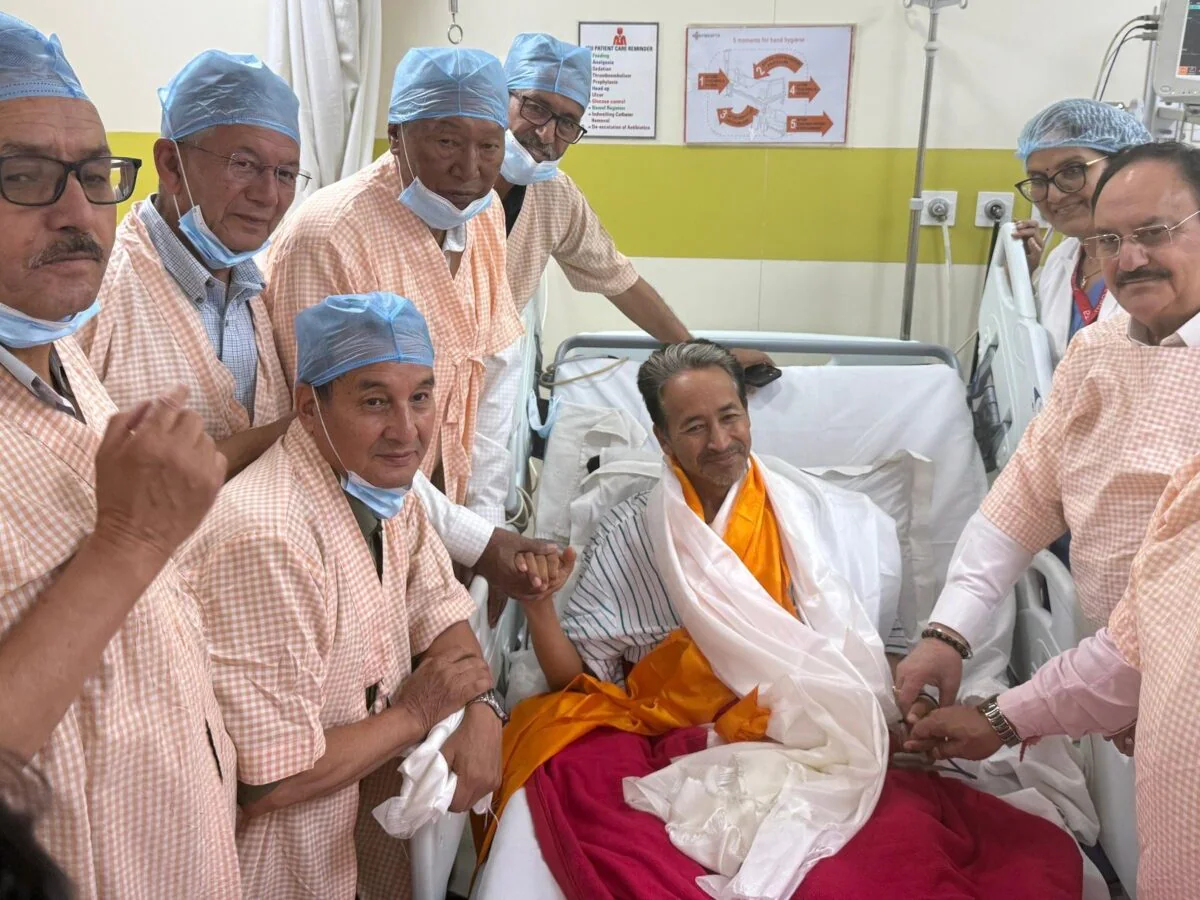
The Sonam Wangchuk Breaks Fast development marked the end of activist Sonam Wangchuk’s 26-day hunger strike after he received written assurances from the Central Government on key demands. According to reports, the assurances included parliamentary discussion on examination reforms, protection for peaceful protesters, and consideration of compensation for affected families.
Sonam Wangchuk Breaks Fast After 26 Days
The Sonam Wangchuk Breaks Fast announcement came after weeks of negotiations between representatives of the Central Government and the activist. According to reports, Wangchuk ended his hunger strike after receiving written commitments addressing several concerns linked to examination reforms and student protests.
The hunger strike had drawn nationwide attention because it highlighted demands for greater accountability in the examination system. Moreover, the prolonged protest prompted continued dialogue between government representatives and those supporting the movement.
Wangchuk confirmed that the written assurances played a decisive role in his decision to conclude the fast. Therefore, the announcement marked the end of one of the country’s most closely watched public protests.
The fast concluded at Medanta Hospital in Gurugram in the presence of Union Ministers J.P. Nadda and Jitendra Singh.
Sonam Wangchuk Breaks Fast Following Structural Legal Assurances
The Sonam Wangchuk Breaks Fast decision followed what he described as written structural and legal assurances from the government. According to reports, these assurances included a commitment that no legal action would be taken against peaceful protesters, a parliamentary discussion on examination reforms, and consideration of compensation for families affected by the NEET paper leak controversy.
Moreover, Wangchuk stated that he viewed the assurances as sufficient to conclude the hunger strike while allowing the broader movement for education reforms to continue through democratic means.
The activist also emphasized that ending the fast did not signify the end of public engagement on examination reforms. Consequently, he described the development as the beginning of the next phase of accountability efforts.
No formal agreement beyond the written assurances has been publicly disclosed.
Sonam Wangchuk Breaks Fast After Weeks of Negotiations
The Sonam Wangchuk Breaks Fast development followed extensive negotiations between the activist and senior representatives of the Central Government. According to reports, Union Ministers J.P. Nadda and Jitendra Singh met Wangchuk before he concluded his protest.
Additionally, Wangchuk said concerns about maintaining peace and preventing possible violence also influenced his decision to end the fast. He stated that protecting peaceful protesters remained an important consideration alongside the written assurances.
The conclusion of the hunger strike has shifted public attention toward the implementation of the government’s commitments. Therefore, future parliamentary discussions and policy measures are expected to receive close scrutiny.
Officials have not yet announced a detailed implementation timeline for the assurances.
Why the Sonam Wangchuk Breaks Fast Development Matters
The Sonam Wangchuk Breaks Fast development is significant because it concludes a 26-day hunger strike that brought national attention to examination reforms and public accountability. The written assurances provided by the government have become the foundation for the next stage of discussions on education policy.
Moreover, the conclusion of the fast demonstrates the role of negotiations in resolving public protests through dialogue rather than continued confrontation. The outcome also highlights the importance of structured engagement between civil society representatives and government officials.
The protest generated widespread public discussion regarding examination integrity, student welfare, and governance. Similarly, future developments will likely focus on how the announced commitments are implemented.
Further official announcements are expected regarding parliamentary discussions and examination reforms.
Conclusion
The Sonam Wangchuk Breaks Fast development marks the end of a 26-day hunger strike after the activist received written assurances from the Central Government addressing several of his key concerns. According to reports, these commitments included parliamentary discussion on examination reforms, protection for peaceful protesters, and consideration of compensation for affected families.
Furthermore, Wangchuk stated that the assurances, along with concerns about maintaining peace, influenced his decision to conclude the protest. The development reflects the importance of dialogue and negotiation in addressing issues of national significance.
Overall, the Sonam Wangchuk Breaks Fast announcement concludes an important phase of the protest while shifting attention toward the implementation of the government’s commitments. As authorities provide further updates, greater clarity is expected regarding the next steps in examination reforms and related policy initiatives.
FAQs
1. What is the Sonam Wangchuk Breaks Fast development?
The Sonam Wangchuk Breaks Fast development refers to the activist ending his 26-day hunger strike after receiving written assurances from the Central Government.
2. Why did Sonam Wangchuk end his hunger strike?
According to reports, he ended the fast after receiving written assurances on examination reforms, protection for peaceful protesters, and other key demands.
3. How long did the hunger strike last?
The hunger strike lasted 26 days.
4. Which Union Ministers met Sonam Wangchuk?
According to reports, Union Ministers J.P. Nadda and Jitendra Singh met him before he concluded the fast.
5. What happens after the hunger strike ends?
The focus is expected to shift toward implementing the written assurances and holding parliamentary discussions on examination reforms.