


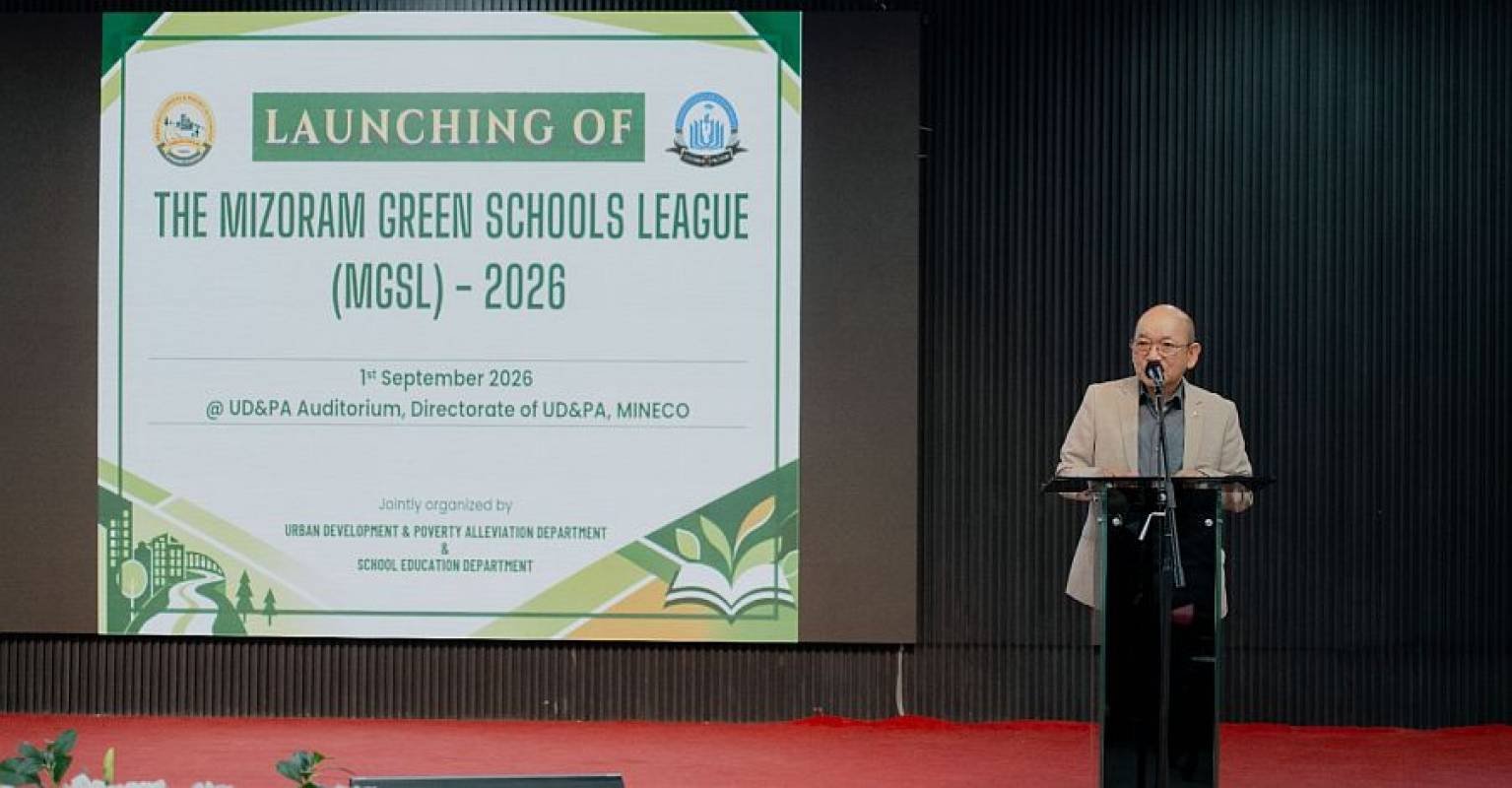
The Mizoram Cleanliness Drive marks a major push to strengthen hygiene and environmental awareness among students across the state. On September 1, Mizoram launched a statewide school cleanliness competition jointly organised by the Urban Development & Poverty Alleviation Department (UD&PA) and the School Education Department. The initiative encourages schools to adopt sustainable cleanliness practices and build responsible environmental habits. Moreover, the competition aims to make hygiene education a practical part of students’ everyday lives.
Aviation Boom: Northeast Functional Airports Count Hits 17, Up From 9 in 2014
Mizoram Drive Brings Schools Into Focus
The statewide competition places schools at the centre of Mizoram’s efforts. By involving students directly, the initiative seeks to turn cleanliness from a one-time activity into a regular habit.
Furthermore, participating schools can encourage students to take responsibility for maintaining clean classrooms, campuses and surrounding areas. Such activities can help students understand how everyday behaviour affects their environment.
The involvement of both UD&PA and the School Education Department also highlights the initiative’s cross-departmental approach. Therefore, the programme combines civic cleanliness objectives with education and student participation.
Additionally, school-based competitions can create a positive environment where students motivate one another to maintain better hygiene standards.
Mizoram Drive Promotes Sustainable Habits
The initiative focuses not only on cleaning school premises but also on developing sustainable habits. Students can learn the importance of responsible waste management, cleanliness and environmental care through regular participation.
Moreover, habits developed during school years can influence behaviour outside the classroom. Students can carry lessons about waste disposal, hygiene and environmental responsibility into their homes and communities.
The competition can also encourage schools to develop creative approaches to maintaining clean surroundings. Consequently, students can become active participants rather than simply receiving instructions about cleanliness.
Meanwhile, teachers and school administrators can play an important role in reinforcing these practices through daily routines and awareness activities.
The programme therefore connects cleanliness with long-term environmental responsibility.
Mizoram Drive Encourages Community Participation
School cleanliness can influence the wider community because students interact with families and neighbourhoods every day. Consequently, awareness generated through the competition can potentially extend beyond school boundaries.
Furthermore, students can encourage family members to adopt better waste-management and hygiene practices at home. Small behavioural changes, when repeated across many households, can contribute to cleaner communities.
The statewide nature of the competition also gives schools across different parts of Mizoram an opportunity to participate in a common initiative.
Moreover, friendly competition can motivate students and schools to maintain consistent standards. Recognition for strong performance can provide an additional incentive for schools to continue their efforts.
Therefore, the initiative has the potential to connect education, community participation and environmental awareness.
Mizoram Drive Builds Long-Term Awareness
The success of the initiative will depend on whether schools continue cleanliness practices after the competition ends. A sustainable programme should encourage students to maintain good habits throughout the academic year.
Additionally, schools can integrate cleanliness activities into regular routines rather than treating them as occasional campaigns. This approach can help make hygiene and environmental responsibility part of school culture.
However, lasting results also require adequate waste-management facilities, proper sanitation infrastructure and continued awareness. Students can contribute significantly, but schools and local authorities also need to provide supportive systems.
The Mizoram Cleanliness Drive consequently represents an effort to build environmental responsibility among the younger generation. By combining competition with education, the initiative can encourage students to view cleanliness as a shared responsibility and a long-term community value.
Conclusion
The Mizoram Cleanliness Drive, launched on September 1, brings schools across the state together through a statewide cleanliness competition. Jointly organised by UD&PA and the School Education Department, the initiative aims to develop sustainable hygiene and environmental habits among students. Moreover, continued participation by schools, teachers, students and communities can help turn the campaign into lasting cleanliness practices across Mizoram.
FAQs
1. When did Mizoram launch the statewide school cleanliness competition?
Mizoram launched the statewide school cleanliness competition on September 1.
2. Which departments organised the initiative?
The Urban Development & Poverty Alleviation Department (UD&PA) and the School Education Department jointly organised the initiative.
3. What is the main objective of the competition?
The competition aims to encourage sustainable hygiene, cleanliness and environmental habits among students.
4. Why involve students in cleanliness activities?
Student participation can help develop responsible habits at an early stage and encourage students to promote cleanliness in their homes and communities.
5. How can schools make the initiative sustainable?
Schools can incorporate cleanliness, responsible waste management and environmental awareness into their regular activities instead of limiting them to the competition period.