


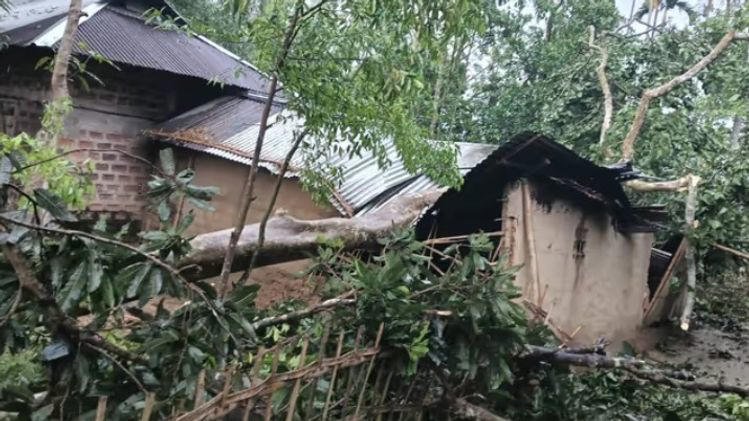
Severe storms struck Tripura, leaving two people dead and four others injured while causing widespread destruction to homes and infrastructure. Strong winds and heavy rainfall swept across several districts, disrupting normal life and damaging property.
Authorities confirmed that the storm caused fatalities in separate incidents. In addition, four individuals sustained injuries and received treatment at nearby health facilities. The sudden intensity of the storm caught many residents off guard, which increased the impact on vulnerable areas.
Moreover, the storm damaged houses, uprooted trees, and snapped power lines in multiple locations. As a result, several areas faced temporary power outages and transportation disruptions. Officials have begun assessing the full extent of the damage.
Read More: Assam Tightens Security Ahead of Vote Counting, CS Ravi Kota Warns of Zero Tolerance
Extensive Damage to Houses and Infrastructure
The Tripura storm damage affected both rural and urban areas. Strong winds tore off roofs, damaged walls, and destroyed temporary structures. In many places, fallen trees blocked roads and disrupted traffic movement.
Local residents reported significant losses, especially those living in weaker structures. Furthermore, heavy rainfall worsened the situation by causing waterlogging in low-lying areas. This made rescue and relief operations more challenging.
Authorities quickly mobilized teams to clear debris and restore normalcy. Workers removed fallen trees and repaired damaged roads. At the same time, officials continued to survey affected areas to identify urgent needs.
In addition, power infrastructure suffered considerable damage. Broken electricity poles and snapped wires led to widespread outages. Restoration teams have started repair work, although full restoration may take time.
Emergency Response and Relief Efforts
The state administration responded swiftly to the crisis. Disaster response teams reached affected areas soon after the storm subsided. They assisted injured individuals and ensured that emergency services remained active.
Officials arranged medical care for those injured. Health workers provided treatment and monitored their condition. Meanwhile, local authorities extended support to families affected by the fatalities.
Relief efforts also include distributing essential supplies such as food and drinking water. In addition, temporary shelters have been arranged for people whose homes suffered severe damage. These measures aim to provide immediate relief to affected communities.
Furthermore, authorities have urged residents to remain cautious as weather conditions may remain unstable. They advised people to avoid damaged structures and stay away from fallen power lines.
Weather Conditions and Impact
Meteorological conditions played a major role in the severity of the storm. Strong winds combined with heavy rainfall created hazardous conditions across Tripura. Consequently, the storm caused both human casualties and property damage.
Weather officials have indicated that such storms are not uncommon during seasonal transitions. However, the intensity of this particular event made it more destructive. Therefore, authorities are closely monitoring weather updates to prepare for any further developments.
Residents have been advised to follow official guidelines and stay informed about weather alerts. Taking precautions can help reduce risks during similar events in the future.
Government’s Measures and Preparedness
The Tripura government has taken steps to manage the situation effectively. Officials are coordinating with local administrations to ensure quick restoration of services.
In addition, authorities are evaluating the damage to provide compensation to affected families. This includes assistance for those who lost their homes or suffered injuries. The government aims to support recovery and rebuilding efforts.
Moreover, disaster management teams remain on alert. They are prepared to respond to any further emergencies if weather conditions worsen. This proactive approach reflects the administration’s commitment to public safety.
Officials have also emphasized the importance of preparedness. They plan to strengthen infrastructure and improve response mechanisms to handle future disasters more effectively.
Impact on Daily Life
The storm has disrupted daily life in several parts of Tripura. Power outages affected households and businesses, while damaged roads slowed transportation.
Schools and offices in some areas experienced temporary interruptions. However, authorities are working to restore normal operations as quickly as possible.
Local communities have come together to support each other during this difficult time. Neighbors helped clear debris and provided assistance to those in need. This collective effort has played a vital role in recovery.
Conclusion
The recent storm in Tripura has caused significant damage, claiming two lives and injuring four others. It has also highlighted the vulnerability of infrastructure and the importance of preparedness.
However, swift action by authorities and community support have helped manage the situation. Relief efforts continue as officials work to restore normalcy and assist affected families.
Going forward, strengthening disaster response systems and raising public awareness will be essential. These steps can help minimize the impact of such natural events in the future.
Read More: Nagaland Conducts Mega Mock Drill on Earthquake Preparedness