


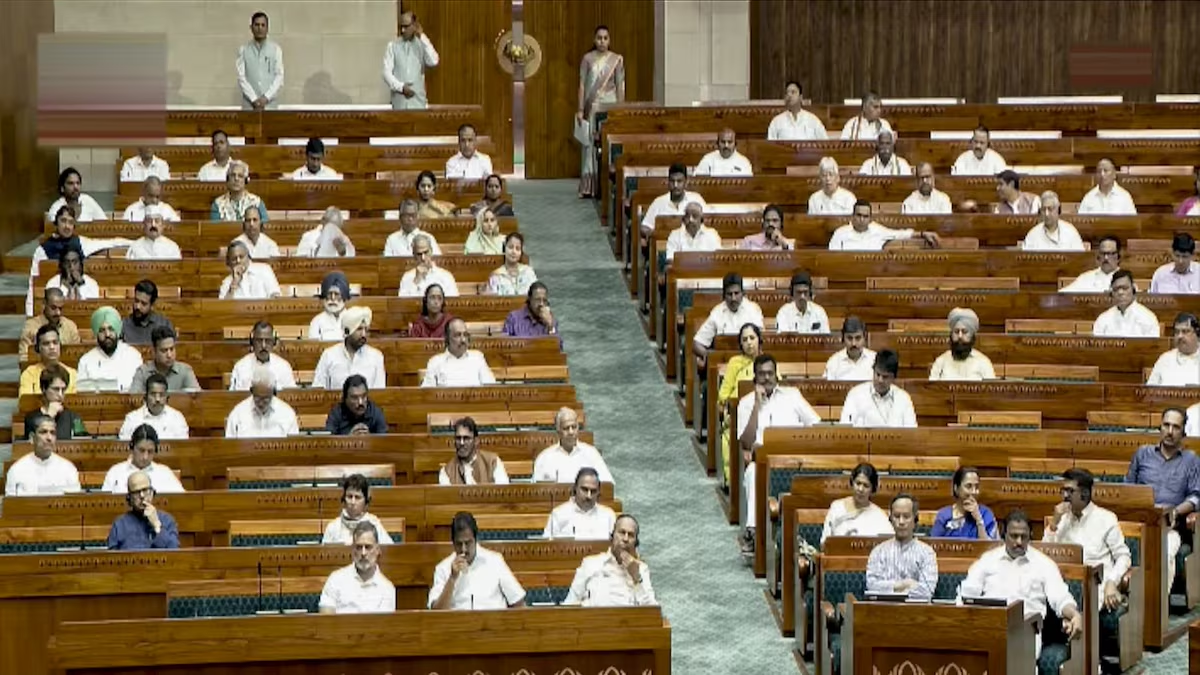
The Strict Punitive Terms Proposed under the new draft legislation introduce stringent penalties for those involved in organized examination paper leak operations. The proposed law provides for a maximum prison sentence of 10 years for individuals found operating examination leak cartels, reflecting the government’s efforts to strengthen the integrity of public examinations.
Panchayat Award Night Celebrates Excellence in Rural Governance
Strict Punitive Terms Proposed to Combat Examination Leak Cartels
The Strict Punitive Terms Proposed in the draft legislation represent a significant step toward addressing organized examination paper leaks. According to the available information, the proposed law prescribes a maximum prison sentence of 10 years for individuals who operate examination leak cartels.
The draft legislation aims to establish stronger legal consequences for those involved in activities that compromise the fairness of competitive and recruitment examinations. Moreover, the proposed punishment reflects the government’s intention to deter organized networks responsible for examination-related malpractice.
Examination paper leaks have repeatedly raised concerns about transparency and equal opportunity. Therefore, stricter legal provisions seek to reinforce confidence in the examination process while strengthening accountability.
The proposed penalties remain part of the draft legislation and will undergo the required legislative process before becoming law.
Strict Punitive Terms Proposed to Strengthen Legal Framework
The Strict Punitive Terms Proposed highlight the government’s emphasis on creating a more robust legal framework for addressing examination-related offenses. Stronger punishment provisions are intended to discourage individuals and organized groups from engaging in paper leak activities.
Moreover, a maximum prison sentence of 10 years signals the seriousness with which authorities view organized examination fraud. Such offenses can undermine the credibility of recruitment processes and educational assessments that affect large numbers of candidates.
The draft legislation also demonstrates an effort to provide law enforcement agencies with clearer legal provisions for investigating and prosecuting organized paper leak networks. Consequently, the proposed law seeks to improve enforcement against examination-related crimes.
However, the legislation remains subject to parliamentary consideration before any provisions take legal effect.
Draft Legislation Introduces Strict Punitive Terms Proposed
The draft legislation containing the Strict Punitive Terms Proposed forms part of broader efforts to strengthen examination security across the country. Legislative action aims to protect the integrity of examinations conducted for admissions, recruitment, and other competitive purposes.
Additionally, severe penalties may serve as a deterrent against criminal organizations that attempt to manipulate examination systems for financial or other gains. A clear legal framework can also support investigative agencies during enforcement actions.
The proposed punishment specifically targets operators of examination leak cartels, reflecting the government’s focus on organized criminal activity rather than isolated procedural violations.
Meanwhile, lawmakers are expected to examine the draft legislation during the parliamentary process before making any final decisions regarding its provisions.
Why the Strict Punitive Terms Proposed Matter
The Strict Punitive Terms Proposed are significant because examination integrity directly influences public confidence in educational institutions and recruitment systems. Fair examinations provide equal opportunities for candidates and support merit-based selection.
Moreover, stronger legal consequences may discourage organized criminal activities linked to examination paper leaks. Effective legislation can also improve institutional confidence by providing authorities with appropriate enforcement mechanisms.
The proposal reflects continued efforts to strengthen governance within the examination system. Similarly, clear legal penalties can help establish greater accountability among those who attempt to compromise examination processes.
Although the draft legislation outlines a maximum prison sentence of 10 years for examination leak cartels, its provisions will take effect only after the legislative process is completed. Therefore, further official developments are expected as Parliament considers the bill.
Conclusion
The Proposed in the draft legislation introduce a maximum prison sentence of 10 years for individuals operating examination leak cartels. The proposal reflects the government’s commitment to strengthening legal measures against organized examination fraud.
Furthermore, the draft law seeks to reinforce transparency and fairness in competitive examinations by establishing stronger penalties for serious offenses. The proposed provisions also aim to deter criminal networks that undermine the credibility of public examinations.
Overall, the Strict Punitive Terms Proposed mark an important legislative development in examination governance. As Parliament reviews the draft legislation, additional official details will clarify its final provisions and implementation.
FAQs
1. What are the Strict Punitive Terms Proposed in the draft legislation?
The Proposed include a maximum prison sentence of 10 years for individuals operating examination leak cartels.
2. Who will face the proposed 10-year prison sentence?
According to the draft legislation, those found operating organized examination leak cartels could face a maximum prison term of 10 years.
3. Why are the Strict Punitive Terms Proposed important?
The proposed penalties aim to strengthen examination integrity and deter organized paper leak activities.
4. Has the proposed legislation become law?
No. Based on the available information, the provisions remain part of draft legislation and must complete the legislative process.
5. What is the objective of the proposed punishment?
The objective is to strengthen legal action against organized examination fraud and protect the credibility of competitive examinations.