


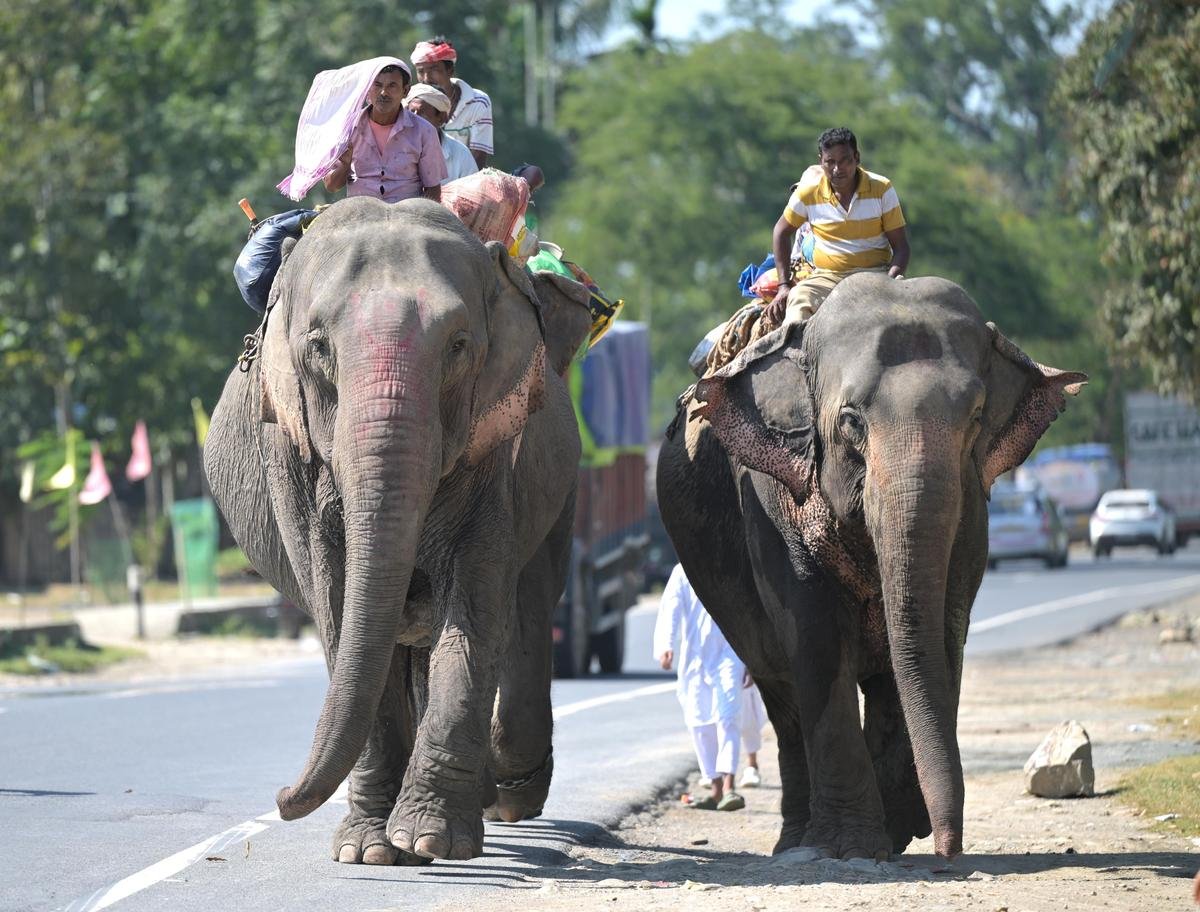
The Supreme Court has raised concerns over allegedly hurried interstate transfers of captive elephants from Assam to Tamil Nadu. On November 5, 2026, a bench led by Chief Justice of India Surya Kant stressed that authorities must strictly follow legal procedures before permitting such movements. The case involved five elephants transported from Assam to temples in Tamil Nadu. One elephant reportedly travelled nearly 3,000 kilometres to Chennai within nine days of the transfer request. The observations have renewed attention on ownership verification, animal welfare and the responsibilities of state forest departments during interstate transfers.
TTAADC Postpones Executive Members’ Oath Ceremony
Supreme Court Questions Speed of Elephant Transfers
The Supreme Court considered the issue while hearing a petition filed by People for Cattle in India (PFCI). The organisation challenged the procedures followed during the transfer of five captive elephants from Assam to Tamil Nadu.
Chief Justice Surya Kant and Justice Joymalya Bagchi heard the matter. Senior advocate Meenakshi Arora represented the petitioner and raised concerns about the speed of the approvals.
She explained that interstate transfers require several stages of verification, clearances and consultations. According to her submission, the process ordinarily takes around 50 days.
However, one elephant reached Chennai within nine days of the transfer request. The journey covered approximately 3,000 kilometres.
The petitioner questioned whether authorities could complete all the required checks within such a short period.
The bench reiterated that state authorities must comply with the Supreme Court’s earlier directions. It also observed that neither a High Court nor a state government can act contrary to those directions.
Chief Justice Surya Kant indicated that the Court would have intervened if the allegedly hurried process had been brought to its attention earlier.
Five Elephants Moved From Assam to Tamil Nadu
The controversy concerns five elephants transferred from Assam to temples in Tamil Nadu during September 2026.
Their names are Durga, Hiralal, Shiva, Rupsing and Bijuli. The transfers attracted attention because of concerns about the verification process and the conditions at their proposed destinations.
One case involved Durga, a five-year-old female elephant transported to Chennai. The transfer request reportedly reached the authorities on September 4, while the elephant arrived in Chennai on September 13.
PFCI questioned how officials completed the required inspections and approvals within that period.
The organisation also raised concerns about whether the proposed destination would provide suitable living conditions for the elephant.
These objections remain claims made by the petitioner. The Assam Forest Department, meanwhile, has maintained that the elephants were legally captive and that officials followed the applicable transfer framework.
The department also referred to ownership documents, microchips and DNA profiling as part of its verification process.
Captive Elephant Transfer Rules Require Multiple Checks
The Captive Elephant (Transfer or Transport) Rules, 2024, establish procedures for moving captive elephants within and between states.
The Ministry of Environment, Forest and Climate Change notified these rules on March 14, 2024, under the Wildlife (Protection) Act, 1972.
The framework requires applicants to submit transfer requests to the competent forest authority. Officials must examine ownership records and obtain veterinary certification.
The rules also require physical verification of the elephant’s existing and proposed housing facilities.
For interstate transfers, authorities in both the donor and recipient states have responsibilities. Their respective Chief Wildlife Wardens and designated forest officers must examine the application and supporting reports.
The recipient state’s authorities must inspect the proposed facility and submit their findings. The donor state’s Chief Wildlife Warden then considers the recommendations before deciding whether to permit the transfer.
Furthermore, the rules require the elephant’s genetic profile to appear in the Ministry’s electronic monitoring application before permission can be granted.
These requirements aim to prevent unlawful transfers and ensure that elephants receive appropriate care.
Advocate Questions Verification Timeline
During the Supreme Court hearing, Meenakshi Arora argued that the statutory framework requires several procedural stages that cannot reasonably be completed within a few days.
She referred to the September 4 transfer request and Durga’s arrival in Chennai on September 13.
The advocate also questioned the timing of the inspection and approval documents. She submitted that the High Court had directed authorities to decide the pending application but had not ordered immediate transportation.
The petitioner argued that the speed of the approvals raised questions about whether officials completed the required checks properly.
These submissions formed the basis of PFCI’s challenge. However, the Supreme Court did not deliver a final finding that the transfers violated the law during the November 5 hearing.
The Court instead reiterated the need for strict compliance with existing legal safeguards and earlier judicial directions.
Supreme Court Earlier Issued Directions on Captive Elephants
The November hearing also connects with the Supreme Court’s ongoing proceedings concerning captive elephant welfare.
In an order dated August 18, 2026, the Court addressed broader questions involving ownership records, DNA profiling, healthcare and transportation.
It directed the Union government and relevant authorities to provide information about DNA profiling of captive elephants across different categories.
The Court also highlighted the need for specialised elephant clinics and regular medical examinations. It stressed that owners must maintain proper healthcare records for captive elephants.
Importantly, the August order stated that changes in ownership and transfers must follow the applicable statutory framework.
Authorities must record the identities of transferors and recipients, along with the purpose of each transfer. The order also called for periodic renewal and verification of ownership certificates.
These directions reinforce the importance of transparent records and proper monitoring throughout an elephant’s life.
Supreme Court Allows Petitioner to Withdraw Case
During the November 5 hearing, the bench noted that all five elephants had already reached their destinations.
The Court indicated that it could not order their return at that stage. Therefore, the immediate petition did not result in an order reversing the completed transfers.
Meenakshi Arora subsequently requested permission to withdraw the petition. She sought liberty to place the relevant facts and supporting documents before the Supreme Court in its ongoing captive elephant proceedings.
The bench allowed the withdrawal with permission to pursue an appropriate application.
This decision gives PFCI an opportunity to present its concerns within the broader proceedings concerning captive elephants.
The development does not amount to a final judicial determination that the officials involved acted unlawfully. Further consideration will depend on the material placed before the Court.
Northeast Forest Departments Face Greater Scrutiny
The controversy has renewed attention on the responsibilities of forest departments in states that manage captive elephant populations.
Assam, in particular, plays an important role in elephant conservation and captive elephant management across the Northeast.
Interstate transfers require coordination between the authorities of the state releasing an elephant and the state receiving it.
Both sides must examine ownership records, medical fitness and housing arrangements. They must also ensure that the proposed movement satisfies the legal conditions.
The Supreme Court’s observations reinforce the need for careful scrutiny rather than rushed administrative approvals.
However, the November 5 hearing did not announce a separate new verification order specifically directed at every Northeastern state forest department.
Instead, the bench reiterated the existing legal requirements and judicial directions governing captive elephant transfers across India.
Conclusion
The Supreme Court’s November 5 observations have renewed scrutiny of interstate captive elephant transfers after five elephants moved from Assam to Tamil Nadu. The bench stressed strict compliance with ownership verification, identity checks and transportation requirements. The controversy centres on the speed of the approvals, particularly the nine-day journey involving Durga. Although the Court allowed the petitioner to withdraw its case, it granted liberty to raise the concerns in ongoing proceedings. The development reinforces the importance of protecting captive elephants through transparent procedures and proper welfare monitoring.
FAQs
1. Why did the Supreme Court question the captive elephant transfers?
The Court raised concerns about the allegedly hurried transfer of five elephants from Assam to Tamil Nadu and reiterated the need to follow statutory verification procedures.
2. How many elephants were transferred from Assam?
Five elephants named Durga, Hiralal, Shiva, Rupsing and Bijuli were moved to temples in Tamil Nadu.
3. How long did Durga’s transfer reportedly take?
Durga reportedly reached Chennai on September 13, nine days after the transfer request dated September 4.
4. Which rules govern interstate captive elephant transfers?
The Captive Elephant (Transfer or Transport) Rules, 2024, issued under the Wildlife (Protection) Act, 1972, govern these transfers.
5. What verification procedures do the rules require?
They require ownership documentation, veterinary certification, physical inspection of housing facilities, coordination between state authorities and genetic profiling.
6. Did the Supreme Court order the elephants to return to Assam?
No. The bench noted that all five elephants had already been transferred and permitted the petitioner to withdraw its case with liberty to approach the Court through an appropriate application.