


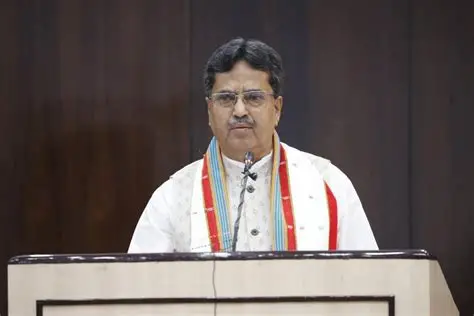
Tripura is a land defined by lush green valleys and ancient royal legacies. Currently, the state is undergoing a massive transformation. Often called the “Queen of the Northeast,” it is moving beyond its traditional identity. The goal is to become a global hub for mindful travelers. Consequently, the recent announcement by Tourism Minister Sushanta Chowdhury regarding the Swadesh Darshan 2.0 project marks a turning point. The state plans to redefine sustainable tourism in Tripura by merging its rich cultural DNA with modern ecological practices.
Read More: Tripura Identifies 10 River Sites for 185 MW Hydrokinetic Power Projects
The heart of this transformation lies in a massive 35-acre development project. This initiative falls under the Central Government’s flagship Swadesh Darshan 2.0 scheme. Specifically, the state is crafting a blueprint that respects the environment while celebrating indigenous history. This plan is not merely about building infrastructure. Instead, it is about creating a holistic ecosystem. The project aims to provide a “New Agartala” experience. In this new space, visitors can enjoy modern amenities without losing the soul of the land. By focusing on sustainable tourism in Tripura, the government ensures that growth does not harm the state’s pristine biodiversity.
Furthermore, Tripura has always been a sanctuary of art and music. The Tourism Minister recently highlighted a unique aspect of this new project. He introduced the concept of a dedicated Sangeet experience. According to the Minister, integrating this musical journey with eco-tourism creates a unique destination. This approach celebrates local roots while inviting the world to explore the state. This musical integration pays homage to legends like S.D. Burman and R.D. Burman. Their artistic roots are deeply embedded in Tripura’s soil. Therefore, visitors might soon walk through eco-trails where the air carries the rhythm of tribal folk instruments. This creates a beautiful blend of auditory heritage and visual splendor.
In addition to cultural sites, the government is focusing on diverse entertainment. For instance, an Amusement Park is being established at Sachindranagar, Jirania. This move aims to broaden the state’s appeal to different demographics. While eco-trails attract trekkers and nature lovers, the amusement park will cater to families. This strategic placement in Jirania ensures that tourism benefits extend beyond the capital city of Agartala. As a result, the project encourages decentralized growth. It also provides vital employment opportunities to local communities in rural areas.
There are several reasons why sustainable tourism in Tripura represents the future of the region. First, the global traveler today seeks “slow travel” experiences. People want to connect with nature without leaving a heavy carbon footprint. Tripura is perfectly positioned to meet this specific demand. For example, the state offers unexplored landscapes from the hills of Jampui to the rock carvings of Unakoti. These sites remain beautiful because they have not been marred by over-tourism. The new 35-acre project will serve as a modern gateway to these hidden gems.
Moreover, the plans for a “New Agartala” include improved connectivity. The government is prioritizing eco-friendly transport modes to reduce pollution. This makes it easier for visitors to navigate between cultural sites and natural reserves. Additionally, a core pillar of this vision is community-led growth. The economic benefits of the Swadesh Darshan 2.0 scheme should flow directly to local people. This includes support for artisans who create bamboo handicrafts and hand-woven Rignai fabrics. Thus, tourism becomes a tool for social empowerment as well as environmental conservation.
If you are planning a visit, now is the perfect time to explore. Travelers can witness a state in transition. It is a place where the old-world charm of the Manikya Dynasty meets an eco-conscious future. Whether you are exploring the Neermahal water palace or participating in the vibrant Garia Puja, you are part of a responsible travel movement. The commitment to sustainable tourism in Tripura ensures that these wonders remain intact for future generations. Ultimately, the vision for a “New Agartala” proves that progress and preservation can coexist beautifully. By investing in these projects, Tripura is inviting the world to experience a harmonious and sustainable way of life.
Read More: The Revival of the 1950 Act: Assam’s New Tool to Expel Foreigners