


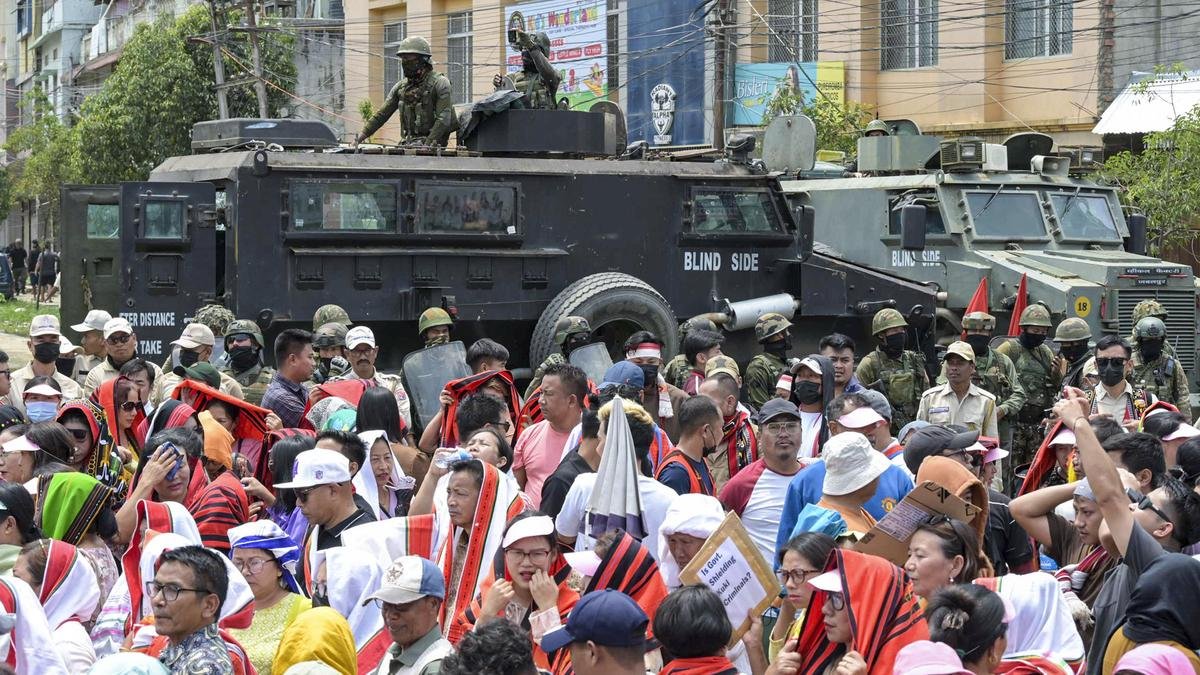
The Tensions in Manipur have intensified after eleven Naga youth organizations united to demand the immediate arrest of those responsible for the killing of six civilians. Meanwhile, a tribal council has refused to accept the bodies of the victims until authorities deliver justice, further escalating public concern.
The Tensions in Manipur have deepened following the killing of six civilians, prompting eleven Naga youth bodies to come together and seek immediate arrests. Moreover, a tribal council has refused to accept the bodies of the deceased until justice is delivered. The developments have drawn widespread attention and underscored the continuing challenges related to law and order in the state.
Nitin Gadkari Launches Six National Highway Projects Worth ₹3,214 Crore
North East India Infrastructure Summit 2026
Tensions in Manipur Rise After Killing of Six Civilians
The Tensions in Manipur escalated after reports emerged regarding the deaths of six civilians. Furthermore, the incident triggered strong reactions from several Naga youth organizations, which have collectively demanded swift action from authorities.
Public concern has grown in the wake of the tragedy. Consequently, community leaders and civil society groups have intensified their calls for accountability.
Moreover, incidents involving civilian casualties often generate widespread emotional responses. Therefore, the latest development has become a matter of significant concern.
Eleven Naga Youth Bodies Unite to Demand Immediate Arrests
Eleven Naga youth organizations have joined forces amid the Tensions in Manipur and called for the immediate arrest of those responsible for the killings. Furthermore, the groups have urged authorities to ensure that justice is delivered without delay.
Youth organizations frequently play an active role in expressing public concerns. Similarly, they often mobilize support to highlight issues affecting their communities.
Consequently, the united stance adopted by the organizations has amplified demands for accountability. Thus, pressure on the authorities has increased.
Tribal Council Refuses to Accept Bodies
A tribal council has taken a firm stand during the Tensions in Manipur by refusing to accept the bodies of the six victims. Moreover, the council stated that it would maintain its position until justice is served.
Such actions are often intended to emphasize the seriousness of public grievances. Additionally, they reflect the depth of concern within affected communities.
Consequently, the development has added another dimension to the ongoing situation. Therefore, authorities face increasing expectations regarding the investigation and legal process.
Calls for Justice Intensify Across Communities
The Tensions in Manipur have led to growing calls for justice from various sections of society. Furthermore, community organizations and representatives have stressed the importance of ensuring accountability.
Justice and transparency are frequently central demands in cases involving civilian deaths. Similarly, prompt action by authorities is often considered essential to maintaining public confidence.
Moreover, constructive engagement between stakeholders remains important in addressing sensitive situations. Thus, efforts aimed at restoring trust are likely to remain crucial.
Importance of Maintaining Peace and Stability
The Tensions in Manipur highlight the importance of maintaining peace and stability in areas affected by conflict and unrest. Furthermore, incidents involving civilian casualties often require careful handling and timely responses.
Authorities generally emphasize the need for lawful investigations and dialogue. Consequently, maintaining public order becomes a priority during periods of heightened tension.
Additionally, community cooperation plays an important role in preventing further escalation. Therefore, peace and stability remain essential objectives.
Communities Await Further Developments
The Tensions in Manipur have kept communities and observers focused on the actions taken by authorities. Moreover, the demands raised by youth organizations and tribal leaders continue to shape public discussions.
As investigations and responses proceed, stakeholders are expected to closely monitor developments. Similarly, community leaders are likely to continue advocating for justice and accountability.
Consequently, the situation remains under scrutiny. Thus, future developments are expected to have a significant impact on the state’s social and political landscape.
Conclusion
The Tensions in Manipur have intensified following the killing of six civilians, prompting eleven Naga youth bodies to demand immediate arrests. Meanwhile, the refusal of a tribal council to accept the bodies of the victims has further highlighted the depth of public concern surrounding the incident.
Moreover, the developments have reinforced calls for accountability and justice. Consequently, authorities face increasing pressure to address the demands raised by community organizations and affected families.
Looking ahead, timely investigations and continued efforts to maintain peace will remain essential. Therefore, the Tensions in Manipur represent a critical challenge that requires careful attention and constructive engagement.
FAQs
1. Why have tensions in Manipur increased?
The Tensions in Manipur intensified after the killing of six civilians, which led to widespread demands for justice.
2. How many Naga youth organizations have united over the issue?
Eleven Naga youth bodies have united to demand immediate arrests.
3. What demand have the youth organizations made?
They have called for the immediate arrest of those responsible for the killings.
4. Why has the tribal council refused to accept the bodies?
The tribal council has stated that it will not accept the bodies until justice is served.
5. Why is the situation receiving attention?
The incident has raised concerns regarding law and order, accountability, and the need to maintain peace and stability.