


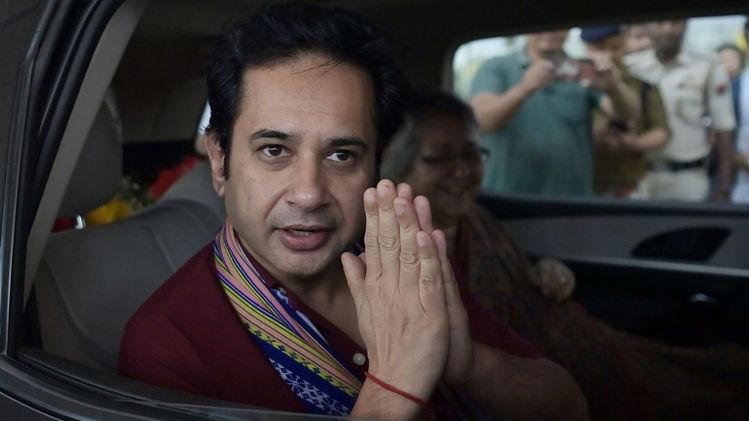
The political ripple of the recent West Bengal election results has reached beyond the state, drawing reactions from leaders across the Northeast. Pradyot Bikram Manikya Debbarma, chief of the Tipra Motha party, welcomed the Bharatiya Janata Party’s performance and described it as a sign of broader political transformation.
Speaking on the outcome, Debbarma said that the results reflect changing voter sentiment not just in West Bengal but across eastern and northeastern India. He suggested that the electorate is increasingly prioritising governance, development, and strong leadership over traditional political loyalties.
His remarks have added a new dimension to the political discourse, as regional leaders interpret the implications of the election beyond state boundaries.
Read More: Historic Victory for Assam Temporary Tea Workers on May Day
BJP’s West Bengal result sparks wider debate
The Bharatiya Janata Party, a major national force led by Narendra Modi, has been steadily expanding its footprint in eastern India. Its performance in West Bengal has once again highlighted its growing influence in a state historically dominated by regional and opposition parties.
Debbarma pointed out that such results indicate a shift in political narratives. According to him, voters are no longer confined to traditional party alignments. Instead, they are evaluating parties based on delivery, governance models, and leadership credibility.
Moreover, he argued that this trend could reshape electoral politics in the coming years. As a result, parties across regions may need to recalibrate their strategies to remain relevant.
Link to changing political dynamics in the Northeast
Pradyot Debbarma also connected the West Bengal results to evolving political dynamics in the Northeast. He stated that the region is witnessing similar shifts, where voters are becoming more issue-focused and less influenced by legacy politics.
He highlighted that regional parties like Tipra Motha must adapt to these changes. According to him, understanding voter expectations is crucial for maintaining political relevance. He emphasized that development, identity, and governance must go hand in hand.
Furthermore, Debbarma suggested that the Northeast is no longer politically isolated. Instead, it is increasingly integrated into national political trends. This integration, he said, is shaping new electoral patterns across states.
Emphasis on governance and development
A key aspect of Debbarma’s statement was his emphasis on governance. He noted that voters are rewarding parties that deliver tangible results. This includes infrastructure development, welfare schemes, and economic opportunities.
He argued that the BJP’s performance in West Bengal reflects this shift. According to him, the party’s focus on development narratives has resonated with a section of voters. Consequently, other political parties must also prioritise effective governance.
Additionally, Debbarma stressed that regional aspirations should not be overlooked. He said that while development is important, addressing local identity and cultural concerns remains equally critical. This balanced approach, he believes, is essential for long-term political success.
Political messaging ahead of future elections
The Tipra Motha chief’s remarks are also being seen as part of a broader political strategy. By acknowledging the BJP’s performance, he signalled an awareness of changing political realities. At the same time, he positioned his party as responsive to evolving voter expectations.
Political observers believe that such statements could influence future alliances and strategies in the Northeast. As elections approach in various states, parties are likely to reassess their positions and messaging.
Debbarma’s comments also highlight the importance of reading electoral signals accurately. In a rapidly changing political landscape, adaptability has become a key factor for success.
Reactions from other political quarters
The BJP welcomed Debbarma’s remarks, viewing them as validation of its growing appeal. Party leaders stated that the West Bengal results demonstrate public confidence in their policies and leadership.
On the other hand, opposition parties have downplayed the significance of the outcome. Leaders from rival parties argued that each state has its own political context and cannot be directly compared. They also maintained that regional dynamics continue to play a crucial role.
Despite differing opinions, the debate underscores the broader impact of the West Bengal elections. It has triggered discussions that extend well beyond the state’s borders.
Broader implications for Indian politics
The interpretation of West Bengal’s election results as part of a wider political shift reflects a larger trend in Indian politics. Increasingly, elections are being viewed through a national lens, even when they are fought on regional issues.
Debbarma’s comments align with this perspective. By linking the results to broader changes, he has highlighted the interconnected nature of political developments across states. This approach suggests that regional leaders are closely monitoring national trends.
Moreover, the emphasis on governance and development indicates a shift in voter priorities. As political competition intensifies, parties will need to deliver on these expectations to maintain support.
Conclusion
The response from Tipra Motha chief Pradyot Bikram Manikya Debbarma to the BJP’s performance in West Bengal has added an important voice to the ongoing political discourse. By linking the results to wider political shifts, he has highlighted changing voter behaviour and evolving electoral dynamics.
His remarks underscore the growing importance of governance, development, and adaptability in politics. At the same time, they reflect the increasing interconnectedness of regional and national political trends.
As India moves towards future elections, such interpretations are likely to shape strategies and narratives across parties. The West Bengal results, therefore, may have implications that extend far beyond the state itself.
Read More: Himanta Biswa Sarma Rebuts Pawan Khera Allegations After Assam Elections