


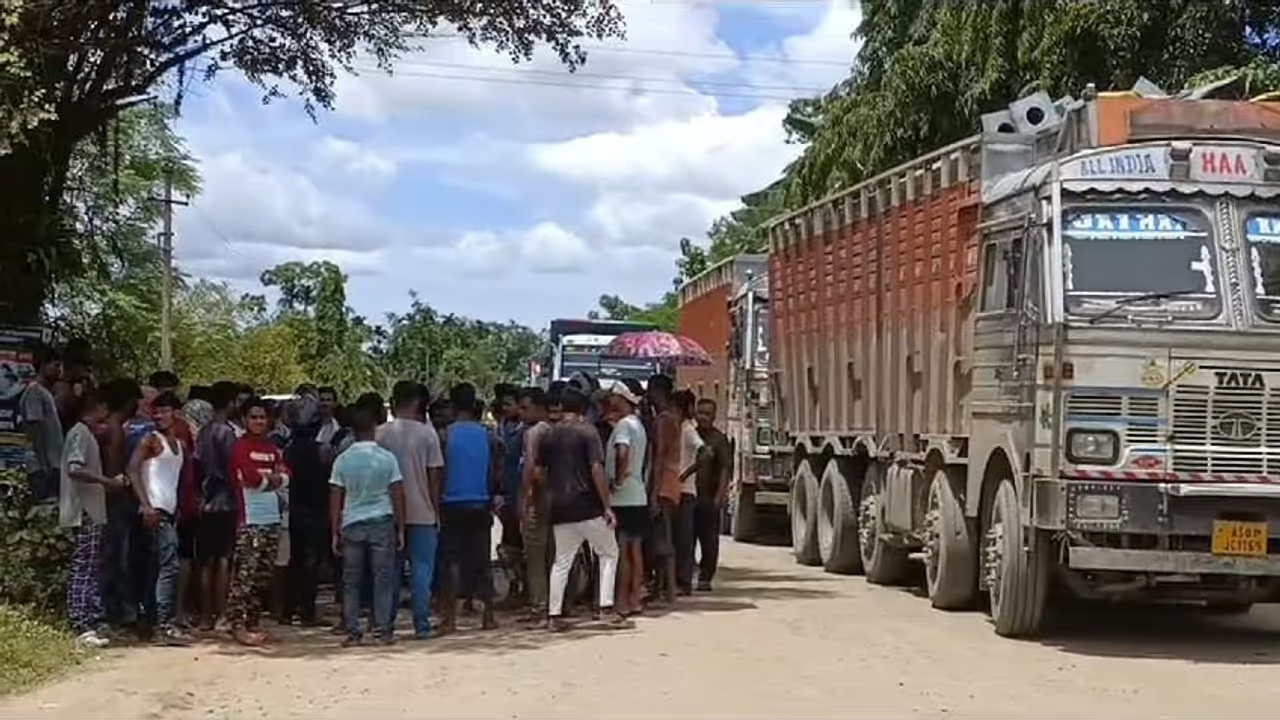
The political situation in Tripura has intensified following renewed demonstrations linked to the arrest of a party worker, as Tripura Party Worker Protest emerges as a key issue in ongoing public and political discourse. Supporters of a regional political organization staged a highway blockade on NH208 and NH108B, raising concerns over the circumstances surrounding the arrest and demanding greater judicial transparency. The incident has triggered continued mobilization by local party units, adding pressure on administrative authorities and highlighting tensions between law enforcement procedures and political expression.
Tripura Tech-Driven Governance Push Announced
Tripura PM-JANMAN Tribal Housing Expansion Boost
Background of the Highway Blockade
Highway blockades have historically been used as a form of protest in various parts of the country to draw attention to political and administrative grievances. In this case, supporters gathered along NH208 and NH108B following the arrest of a party worker, leading to disruptions in vehicular movement and public transportation.
The Tripura Party Worker Protest reflects growing political sensitivity around arrests involving party affiliates, particularly when supporters question procedural clarity. Local leaders have argued that transparency in legal proceedings is essential to maintain public trust and institutional credibility.
Authorities typically respond to such situations by maintaining law and order while ensuring that investigations proceed according to legal protocols.
Current Situation and Local Response
Following the blockade, local party units have continued to demand judicial transparency and clarity regarding the circumstances of the arrest. Protesters have emphasized the need for fair procedures and timely communication from relevant authorities.
The Tripura Party Worker Protest has also led to increased political engagement at the local level, with leaders calling for detailed explanations and procedural review where necessary. Administrative officials are expected to assess the situation while balancing law enforcement responsibilities and public order considerations.
In similar instances, state authorities often encourage dialogue and legal review mechanisms to address grievances raised through public demonstrations.
Law And Order Considerations
Highway blockades present logistical challenges as they affect transportation, emergency services, and daily public movement. In response, authorities generally prioritize restoring traffic flow while also monitoring the situation to prevent escalation.
The ongoing Tripura Party Worker Protest highlights the complexity of managing political demonstrations alongside legal proceedings. While public protest remains a democratic right, authorities also emphasize adherence to lawful protest guidelines and the importance of maintaining public safety.
Officials are expected to review the incident and determine appropriate administrative responses based on existing legal frameworks.
Political Reactions And Public Sentiment
The incident has sparked political debate across regional platforms, with differing perspectives on the arrest and subsequent protest. Supporters argue that transparency in judicial processes strengthens democratic accountability, while others emphasize the need to allow legal systems to function without external pressure.
Public sentiment remains divided, with attention focused on both the legality of the arrest and the impact of highway disruptions on daily life. The Tripura Party Worker Protest has therefore become both a legal and political issue, influencing discussions around governance and civic responsibility.
Observers note that such incidents often lead to broader conversations about political engagement and institutional trust.
Broader Implications
The situation underscores the intersection of political activity, law enforcement, and public administration. Frequent protests over arrests can lead to increased scrutiny of procedural standards and communication practices within governance systems.
At the same time, disruptions caused by blockades highlight the need for structured dialogue mechanisms to address grievances without affecting public infrastructure and essential services.
The evolving Tripura Party Worker Protest may influence how future demonstrations are managed and how authorities engage with political organizations during periods of tension.
What Happens Next
Authorities are expected to continue monitoring the situation and ensure that legal proceedings related to the arrest follow due process. Political groups may pursue further dialogue or formal representations seeking clarification.
Future developments will depend on administrative responses, judicial processes, and the willingness of stakeholders to engage in structured communication. The situation remains under observation as both governance and political considerations evolve.
Conclusion
The ongoing protest reflects deeper concerns about legal transparency, political accountability, and public order management. As demonstrations continue and discussions intensify, Tripura Party Worker Protest has become a significant issue shaping local political discourse. The outcome will likely depend on how effectively authorities balance judicial procedures with public communication and law enforcement responsibilities.
FAQs
1. Why did the protest begin?
The protest began after the arrest of a party worker, with supporters demanding clarity and transparency.
2. Where did the blockade take place?
The blockade was reported on NH208 and NH108B highways.
3. What are protesters demanding?
They are demanding judicial transparency and fair legal procedures.
4. What is Tripura Party Worker Protest referring to?
It refers to the ongoing demonstrations following the arrest and related political response.
5. How did authorities respond?
Authorities focused on restoring order while monitoring the situation and maintaining legal procedures.
6. Why is this issue politically significant?
It highlights tensions between political activism, legal processes, and public order management.