


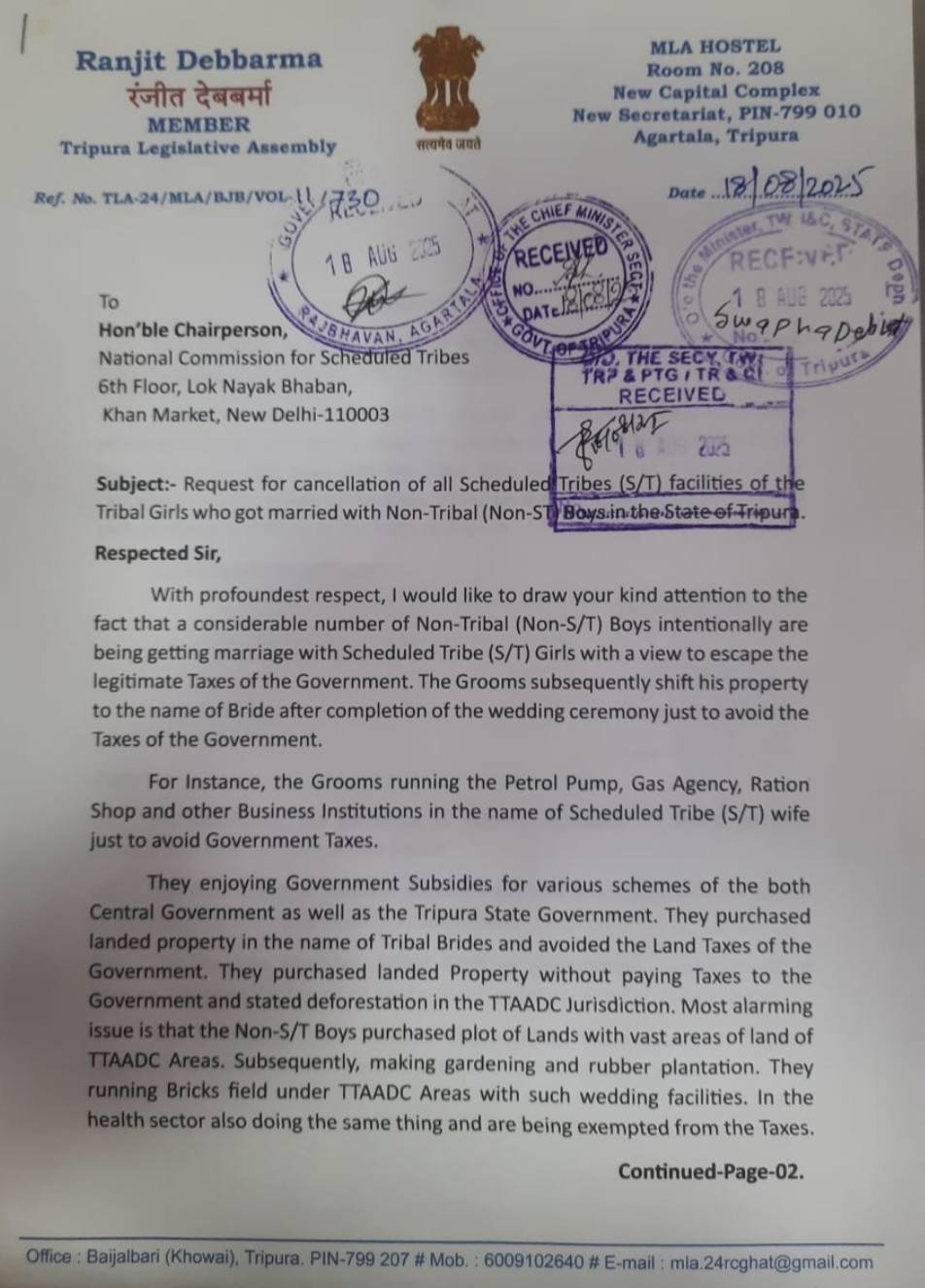
Agartala, August 18, 2025: A fresh political debate has emerged in Tripura after Tipra Motha legislator Ranjit Debbarma demanded the cancellation of Scheduled Tribe (ST) benefits for tribal women who marry non-tribal men. The MLA from Ramchandra Ghat constituency has written to the National Commission for Scheduled Tribes (NCST), raising concerns over the alleged misuse of tribal rights and government facilities through such marriages.
In his letter to the NCST Chairperson, dated August 18, 2025, Debbarma alleged that many non-tribal men marry tribal women with the hidden intention of availing financial benefits and evading taxes. He also forwarded copies of the letter to the Governor of Tripura, the Chief Minister, the Tribal Welfare Minister, and the Secretary of the Tribal Welfare Department, urging immediate intervention.
According to Debbarma, non-tribal grooms often transfer their properties and business licenses into the names of their tribal wives to secure exemptions from government taxes. He cited instances where petrol pumps, gas agencies, ration shops, and other businesses were registered in the names of tribal women to enjoy facilities meant exclusively for Scheduled Tribes.
The MLA further claimed that this practice is rampant in the Tripura Tribal Areas Autonomous District Council (TTAADC) region, where non-tribal men allegedly purchase land in the names of their tribal wives. This, he said, not only helps them avoid land taxes but also enables activities such as illegal deforestation, brick kiln operations, rubber plantations, and commercial gardening.
“In every sphere of life, they are exempted from government taxes by marrying tribal girls. Therefore, I strongly request the immediate cancellation of all ST facilities for those who have entered into such marriages in Tripura,” Debbarma wrote in his appeal.
The demand has stirred mixed reactions across political and social circles in the state. Supporters of the move argue that it could help protect the rights and resources of the tribal community from being exploited. Critics, however, see the proposal as regressive and discriminatory, claiming it interferes with personal choice and undermines the dignity of tribal women.
With the issue now before the NCST and the state government, stakeholders expect extensive discussions in the coming weeks. The controversy is likely to remain a hot topic in Tripura’s political discourse, especially given its sensitivity to tribal identity, land rights, and social justice.