


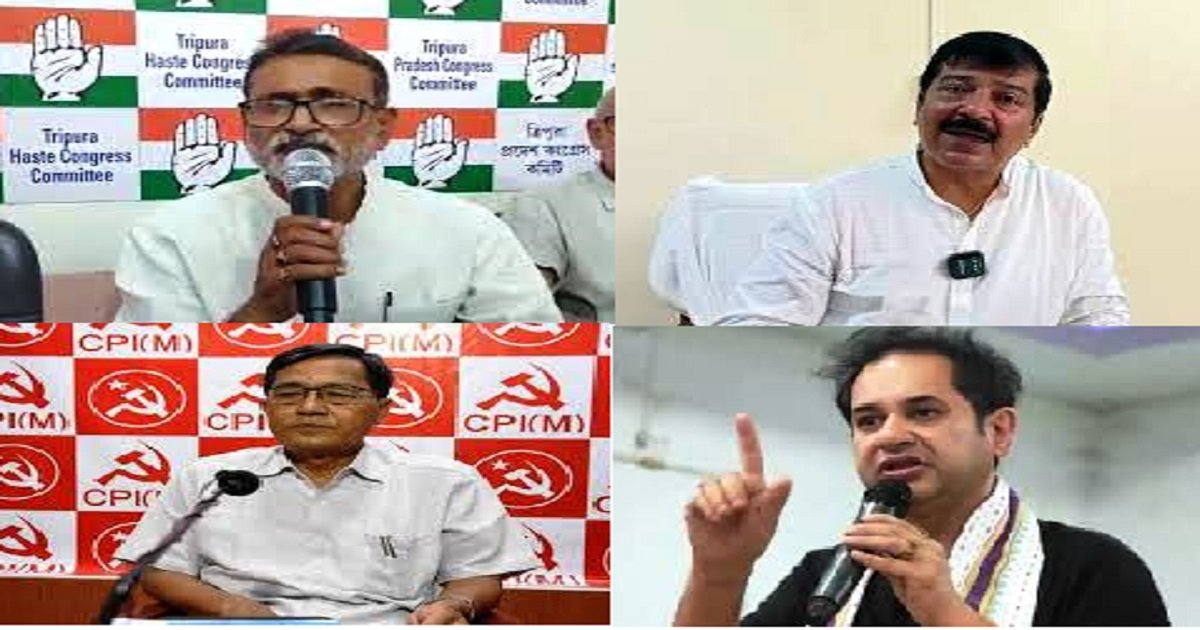
The Tipra Motha Party has secured a landslide victory in the Tripura Tribal Areas Autonomous District Council (ADC) elections, winning 24 out of 28 seats. Party founder Pradyot Bikram Manikya Deb Barma described the result as a reflection of public will and indigenous aspirations. However, opposition leaders from CPI(M) and Congress have raised concerns over the outcome and its underlying factors.They pointed to emotional voting patterns, governance issues, and political dynamics as key influences. The results have intensified political debate across the state.
Read More: Tripura Sees Violence After ADC Poll Results
Key Facts
- Election: Tripura Tribal Areas Autonomous District Council (ADC)
- Winning Party: Tipra Motha Party
- Seats Won: 24 out of 28
- Key Leader: Pradyot Bikram Manikya Deb Barma
- Opposition Voices: Jitendra Chaudhury, Ashish Kumar Saha, Sudip Roy Barman
- Main Issue: Debate over mandate and political factors
Tipra Motha Celebrates Strong Mandate
The Tipra Motha Party has achieved a decisive win in the ADC elections. With 24 seats, the party has strengthened its hold over tribal areas in Tripura.
Speaking in Agartala, Pradyot Bikram Manikya Deb Barma credited the victory to the people. He stated that the outcome reflects the aspirations of indigenous communities rather than individual leadership.
CPI(M) Questions Ground Reality
However, CPI(M) leader Jitendra Chaudhury expressed dissatisfaction with the results. He argued that the outcome does not fully reflect the ground realities in ADC areas.
He also blamed Chief Minister Manik Saha for influencing voter sentiment. According to him, political positioning created an emotional consolidation of tribal voters in favor of Tipra Motha.
Nevertheless, he acknowledged that CPI(M) candidates performed competitively in several constituencies.
Congress Highlights Tribal Sentiment
From the Congress side, Ashish Kumar Saha described the results as a clear expression of tribal sentiment. He stated that indigenous communities continue to feel connected to Tipra Motha’s leadership.
At the same time, he emphasized that Congress would continue working for tribal welfare. He also urged all parties to maintain peace and stability after the elections.
Therefore, the party has adopted a balanced stance.
BJP’s Performance Under Scrutiny
Senior Congress leader Sudip Roy Barman attributed the BJP’s poor performance to internal divisions. He pointed to factionalism and leadership issues within the party.
Additionally, he criticized what he described as a non-political approach by Chief Minister Manik Saha. He argued that these factors contributed to an emotional wave among voters.
As a result, BJP lost significant ground in the ADC regions.
Debate Over Identity Politics
The election outcome has reignited discussions on identity-based politics in Tripura’s tribal belt. Opposition leaders believe that emotional narratives and personality-driven campaigns influenced voter behavior.
They also argue that such factors are overshadowing policy-based politics. However, Tipra Motha leaders maintain that the results reflect genuine aspirations of indigenous communities.
Thus, the debate continues across political circles.
Focus on Governance and Stability
Despite political differences, all parties have emphasized the need for peace. Leaders have called for effective governance in the ADC areas.
They have also stressed the importance of addressing the expectations of tribal communities. Therefore, the focus now shifts from elections to governance and development.
Q&A Section
What happened in the Tripura ADC elections?
Tipra Motha Party won 24 out of 28 seats, securing a landslide victory.
Who led the winning party?
Pradyot Bikram Manikya Deb Barma led the party.
What concerns did CPI(M) raise?
CPI(M) questioned whether the results reflect ground realities.
What was the Congress reaction?
Congress said the results reflect tribal sentiment and called for peace.
Why did BJP perform poorly?
Opposition leaders cited internal factionalism and leadership issues.
Location Context
Tripura, a key state in Northeast India, has a strong tribal political landscape. Therefore, outcomes in ADC elections play a crucial role in shaping regional governance and indigenous representation.
Also Read: Tamang Supports National Legislative Index Proposal