


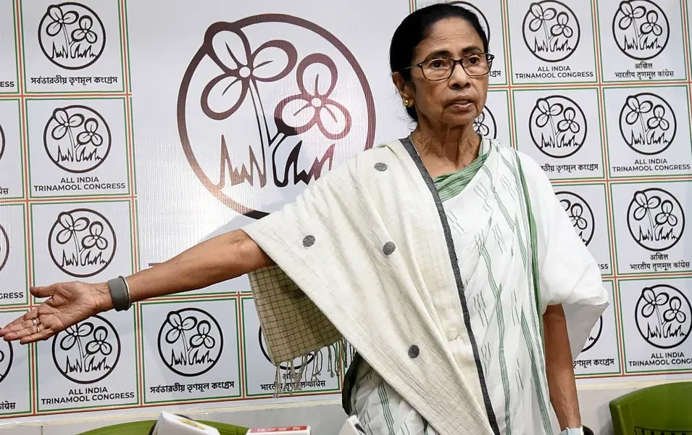
All India Trinamool Congress has approached the Supreme Court of India over allegations of “vote theft,” intensifying the political confrontation between the party and the Bharatiya Janata Party following recent electoral developments in West Bengal.
The Trinamool Congress alleged irregularities and manipulation in the electoral process and sought judicial intervention regarding issues linked to voter participation and election management. Party leaders claimed the matter concerns the protection of democratic rights and electoral transparency.
Read More: Suvendu Government Suspends 3 IPS Officers In RG Kar Case
However, the BJP strongly rejected the allegations and accused the TMC of attempting to divert attention from its political setbacks. BJP leaders described the accusations as baseless and politically motivated.
The development has further intensified the political atmosphere in West Bengal, where tensions between the ruling BJP government and the opposition Trinamool Congress remain high after the recent change in power.
TMC raises allegations before Supreme Court
Senior leaders of the Trinamool Congress said the party decided to move the Supreme Court after raising concerns regarding alleged irregularities in the electoral process. Party representatives argued that safeguarding electoral integrity remains essential in a democratic system.
TMC leaders claimed certain voters faced difficulties during the election process and alleged that irregularities affected the fairness of polling in some areas. The party reportedly requested judicial examination of the matter and appropriate directions from the court.
According to TMC representatives, the issue extends beyond party politics and concerns public confidence in democratic institutions. Leaders stated that voters must feel assured that elections remain transparent and free from manipulation.
The party also accused the BJP of using administrative influence during the electoral process. However, TMC leaders did not publicly disclose detailed legal arguments while the matter remains under judicial consideration.
Political observers noted that election-related legal disputes often become major flashpoints in highly competitive political environments like West Bengal.
BJP dismisses allegations as politically motivated
The BJP strongly rejected the allegations made by the Trinamool Congress and accused the opposition party of spreading misinformation. BJP leaders stated that the election process followed constitutional and legal procedures under the supervision of election authorities.
Party representatives claimed the TMC was attempting to create controversy after suffering political setbacks. BJP leaders argued that repeated allegations without evidence weaken public trust in democratic institutions.
Several BJP spokespersons also questioned why the Trinamool Congress raised the issue only after the election outcome. They maintained that the party should respect democratic verdicts instead of challenging the process politically.
The BJP further accused the TMC of trying to generate public sympathy and maintain political relevance through legal and political confrontations.
Political analysts believe the sharp exchange reflects the continuing rivalry between the two parties, which remains one of the most intense political contests in eastern India.
Political tensions continue in West Bengal
West Bengal’s political environment has remained highly charged following the recent shift in power and growing confrontation between the BJP and the Trinamool Congress.
The BJP government led by Suvendu Adhikari has already initiated several policy and administrative changes since taking office. Meanwhile, the TMC continues positioning itself as the primary opposition force in the state.
Political observers noted that legal battles and allegations regarding electoral processes often emerge during periods of intense political transition. Such disputes also influence public narratives and political mobilisation efforts.
The latest Supreme Court move has therefore become both a legal and political issue. Leaders from both parties continue using public platforms to strengthen their respective positions.
Analysts believe the confrontation may further intensify in the coming weeks as legal proceedings and political campaigns continue simultaneously.
Election integrity remains sensitive issue
Election-related allegations remain highly sensitive in Indian politics because they directly affect public trust in democratic systems. Political parties often approach courts or election authorities when disputes emerge regarding voting procedures, electoral rolls, or polling conduct.
Experts pointed out that judicial institutions play an important role in examining such disputes and ensuring constitutional safeguards remain protected.
At the same time, analysts cautioned that repeated political accusations without verified findings may create confusion and deepen public polarisation. Therefore, authorities and political leaders must handle such issues responsibly.
Several civil society observers also urged political parties to avoid inflammatory rhetoric while legal processes remain underway. They stressed the importance of maintaining public confidence in democratic institutions and peaceful political engagement.
The Election Commission and judicial institutions are expected to examine any legal and procedural issues raised through appropriate channels.
Opposition and ruling parties continue war of words
The Supreme Court move has triggered a fresh political war of words between the BJP and the Trinamool Congress. Leaders from both parties continue making strong statements regarding the electoral process and democratic accountability.
TMC leaders claimed they would continue raising issues related to voter rights and transparency. The party stated that democratic systems require continuous vigilance and accountability from both institutions and political organisations.
Meanwhile, BJP leaders accused the TMC of refusing to accept political reality after losing power in the state. They argued that governance and development should now become the focus instead of continuing political confrontation.
Political analysts observed that both parties are attempting to shape public perception through aggressive political messaging. Such confrontations often influence future political narratives and voter mobilisation strategies.
Observers also noted that the outcome of the legal process may carry political significance beyond the courtroom because of the larger political context in West Bengal.
Legal battle may shape political discourse
Experts believe the legal battle over alleged vote theft may influence political discussions in West Bengal for months to come. Election-related disputes often become central themes in political campaigns and public debates.
The Trinamool Congress appears determined to challenge the BJP politically and legally following the electoral outcome. At the same time, the BJP leadership continues focusing on consolidating governance and defending the legitimacy of the election process.
Political commentators said both parties are likely to use the issue strategically to strengthen support among their respective voter bases. The dispute may therefore remain prominent in political discussions across the state.
Several observers also highlighted the importance of maintaining institutional trust and avoiding escalation of tensions through unverified claims or provocative statements.
Supreme Court move intensifies political confrontation
The Trinamool Congress approaching the Supreme Court over alleged vote theft has added another chapter to the ongoing political confrontation in West Bengal. While the TMC claims it seeks protection of democratic rights, the BJP insists the allegations lack credibility and political substance.
As legal proceedings move forward, the issue is expected to remain at the centre of political debate in the state. Both parties continue presenting contrasting narratives regarding electoral fairness, democratic accountability, and governance.
The coming weeks may prove important as political leaders, legal institutions, and election authorities respond to the allegations and counterclaims surrounding the controversy.
Read More: NITI Aayog Approves Rs 2 Crore Projects for Tripura’s Dasda Block