


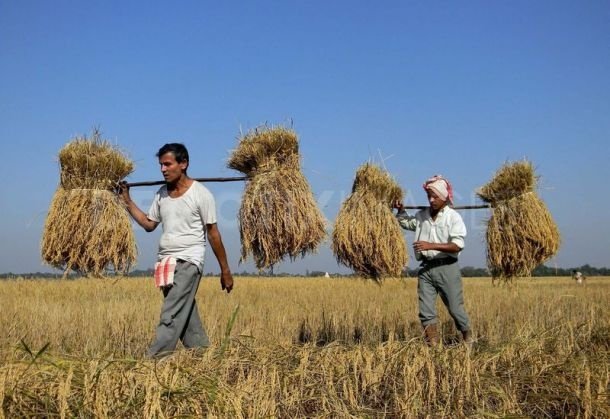
The hills of Dima Hasao came alive this week as the Dima Hasao Autonomous Council (DHAC) inaugurated the Tribal Farmers’ Conclave-cum-Exhibition 2025 at Haflong Government College. Held from November 6–7, the two-day event brought together tribal farmers, agri-scientists, and policy stakeholders to strengthen sustainable farming practices in the autonomous district.
The initiative reflects Assam’s growing focus on empowering indigenous farming communities through innovation, education, and collaboration.
Bringing Tribal Farmers and Experts Together
The conclave, held under the banner of tribal farmers’ conclave 2025, invited farmers from diverse tribal groups across the district. It also included scientists, government agencies, and private-sector experts in agriculture and allied sectors. The goal: strengthen tribal agriculture and boost livelihoods.
During the formal opening, Council Chief Executive Member Debolal Gorlosa highlighted the need for “scientific farming techniques and sustainable practices” in tribal areas. He stressed that such gatherings help preserve indigenous knowledge while encouraging innovation.
Key Features of the Conclave
Expert Talks and Interactive Sessions
Over two days, attendees will engage in sessions on crop diversification, value-addition, soil health, and market linkages. Tribal farmers will get hands-on advice from institutions such as ICAR‑ATARI Zone VI and Krishi Vigyan Kendra, Dima Hasao.
Exhibition of Indigenous Crops and Technologies
An exhibition space showcases indigenous crop varieties, processing equipment and value-added tribal products. The aim: encourage local entrepreneurs and present models for scaling agriculture in tribal regions.
“This platform gives us visibility,” said a local farmer. “People outside the hills can finally see our natural produce and traditional techniques.”
Collaboration & Networking
The event promotes partnerships between farmers, researchers and government agencies. This networking is vital to turn local knowledge into commercially viable solutions.
Why the Tribal Farmers’ Conclave 2025 Matters
The tribal population in districts like Dima Hasao relies heavily on agriculture and allied livelihoods. Yet many tribal farmers face challenges: limited access to technology, poor market linkages and climate stress.
By bringing experts into local contexts, the conclave seeks to narrow this gap. The focus on tribal farmers’ conclave 2025 highlights not only inclusion but also targeted intervention for tribal communities.
When a tribal farmer sees his crop yield improve or a value-chain model succeed, it stimulates wider regional change. Moreover, sustainable practices reduce environmental risks in fragile hill ecosystems.
Government & Institutional Support
The conclave is organised by ICAR-ATARI Zone VI, Guwahati in collaboration with Krishi Vigyan Kendra, Dima Hasao. Participating institutions include ICAR‑NRC on Mithun, Medziphema, ICAR Regional Centre for NEH Region, Umiam, ICAR‑IVRI, Izzatnagar, and others. The support also comes from the Coconut Development Board, Spices Board India and ICAR‑CCRI, Nagpur.
The backing of these institutions ensures that the tribal farmers’ conclave 2025 carries scientific depth, policy relevance and local adaptability.
What Participants Are Saying
One tribal farmer from Dima Hasao noted: “I have grown vegetables for years, but I lacked training on how to reach markets. This gathering gives us that platform.”
An agri-scientist commented that events like the tribal farmers’ conclave 2025 help shift the narrative from subsistence farming to sustainable entrepreneurship.
The hybrid of local traditions and modern farming techniques is central to this shift—and to the region’s long-term growth.
Challenges Ahead
Despite optimism, several challenges remain. Many farmers in Dima Hasao still struggle with poor road connectivity, limited cold-storage infrastructure, and fluctuating market prices. Experts urged policymakers to use insights from the conclave to push for targeted infrastructure development.
Additionally, greater coordination between local councils, the state agriculture department, and central research bodies will be crucial to ensure the conclave’s recommendations are implemented on the ground.
From Ideas to Implementation
Attending farmers will be encouraged to adopt a few tangible practices such as:
- organic composting with locally available resources
- seed banks of indigenous crops for climate resilience
- forming farmer producer organisations (FPOs) for better market access
The conclave’s impact, however, depends on follow-through. Government agencies in Assam must now help implement the ideas generated here. The tribal farmers’ conclave 2025 can only drive real change if seed funding, training modules and market linkages follow.
READ MORE: Assam Assembly Election 2026: Top Leaders Visit State Ahead of Polls